Many buyers struggle with a simple decision that isn't actually simple: DTG applies ink straight into the fabric, while DTF prints your design onto film first, then presses it on with heat. The gap between those two processes affects softness, fabric compatibility, print durability, and — often overlooked — how fast your order can move.
This guide breaks down both methods so businesses, schools, event organizers, and teams can pick the right one for their fabric, artwork, budget, and deadline.
Key Takeaways
- DTG works best on cotton and cotton-rich garments when a soft, breathable finish matters most.
- DTF handles a wider range of fabrics and produces vibrant, sharp-edged artwork on nearly any surface.
- The right method depends on fabric type, design detail, order quantity, and timeline.
- Compare price by garment, print size, artwork complexity, and order volume—not a flat "cheaper" label.
DTG vs. DTF Printing: Quick Comparison
Cost
DTG has minimal setup, so one-off pieces and small runs can be priced competitively. But garment type, pretreatment needs, and how much ink the design requires all shift the final number.
DTF often makes more sense for repeat designs or mixed-garment orders, since a printed transfer can be stored and applied later. The tradeoff: film, adhesive powder, curing, and a heat-press step all add to production time.
Composition and Process
| Step | DTG | DTF |
|---|---|---|
| Print target | Directly onto the garment | Onto specialty film |
| Prep needed | Pretreatment (job-dependent) | Adhesive powder application |
| Curing | Ink cured on fabric | Film cured, then heat-pressed onto garment |
| Extra equipment | Flatbed printer | Printer, powder shaker, heat press |
Fabric Compatibility
DTG performs best on cotton and cotton-rich blends. According to Kornit's guide to DTG printing, effectiveness depends heavily on proper fabric prep and garment composition.
DTF stretches further. Cotton, polyester, blends, fleece, and nylon are all fair game, as long as the provider tests heat tolerance first.
Print Appearance and Feel
Hand-feel is the difference buyers notice first. Epson's comparison of DTG and DTFilm printing describes DTG ink as sinking into the fibers for a soft, breathable result. DTF sits more on the surface, so prints stay vibrant and sharp with a bit more texture, especially across large solid-color areas.

Best Fit by Order Type
- DTG: Soft cotton apparel, one-off pieces, small custom runs, breathability-focused designs
- DTF: Mixed-fabric orders, vivid logos, detailed artwork, uniforms, hats, and bags
What Are DTG and DTF Printing?
Direct-to-Garment (DTG) Printing
DTG is a digital process that sprays water-based textile ink directly onto a garment, usually after pretreatment, then cures the ink with heat. The workflow in practice:
- Select a compatible blank: cotton or cotton-rich fabric works best.
- Pretreat the garment so ink adheres properly.
- Load it flat on the printer platen.
- Print the artwork in full color.
- Cure the finished piece with heat.
You get a soft hand feel, breathable coverage, unlimited colors, and fine photographic detail. Low setup requirements make DTG a natural fit for short runs or one-off personalized pieces.
The limitations matter too. Results depend heavily on fabric composition, pretreatment has to be dialed in, print areas need to sit flat, and vibrancy can dip on some dark or synthetic garments.
Where DTG fits:
- Cotton T-shirts, hoodies, and tote bags
- Family reunion apparel, small team orders, and branded merch
- Photo-based designs where a natural hand feel is the priority
- Made-to-order and short-run production with no screens required
Direct-to-Film (DTF) Printing
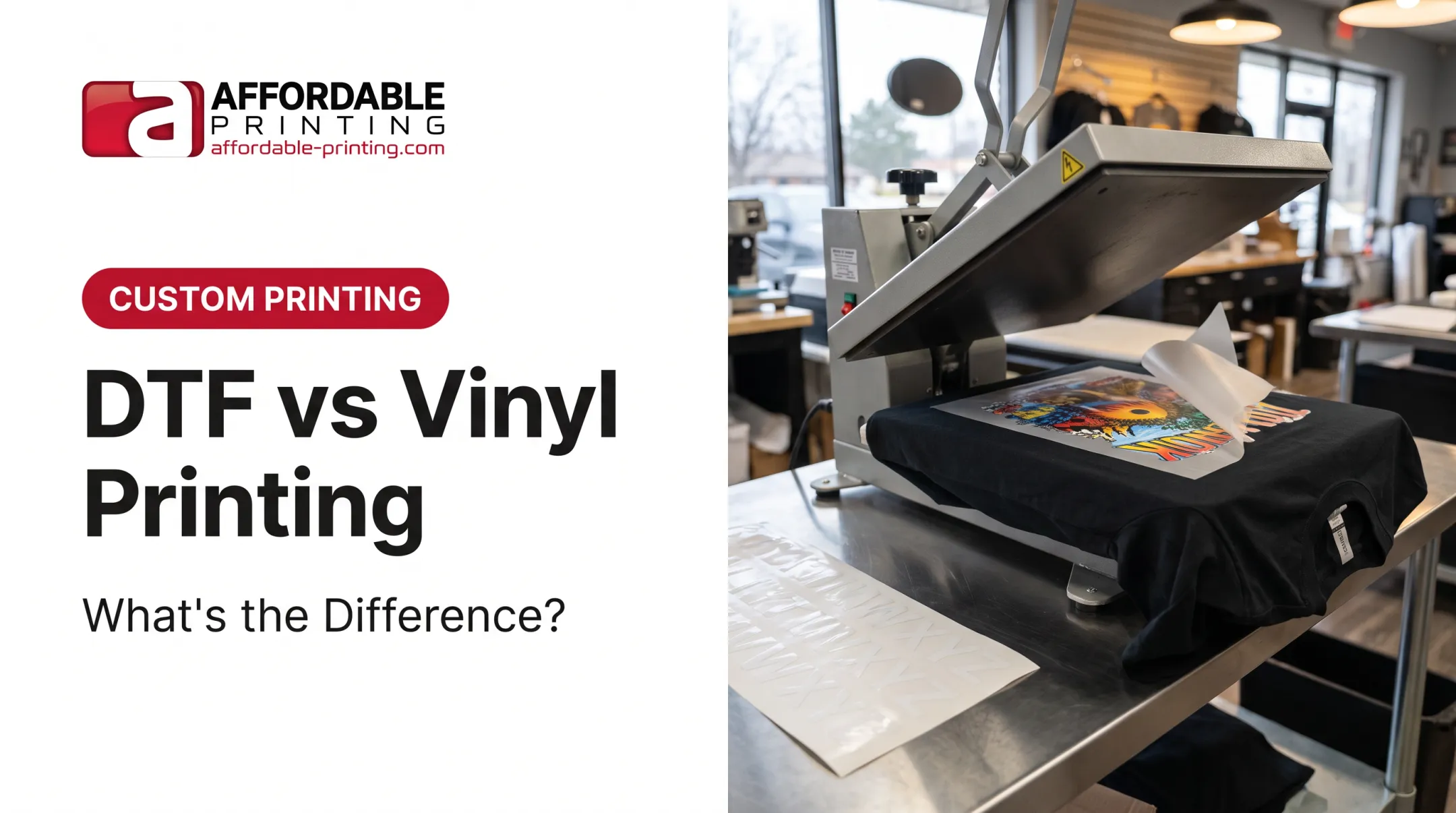
DTF prints artwork onto coated film, adds adhesive powder, cures it, then transfers the whole thing onto fabric with a heat press. The workflow in practice:
- Print the artwork onto coated transfer film.
- Apply adhesive powder while the ink is wet.
- Cure the film so the powder sets.
- Heat-press the transfer onto the garment.

Separating printing from pressing has a practical benefit: transfers can be produced ahead of time, stored, and applied across multiple garment types whenever orders come in.
Roland DG's breakdown of DTF advantages points to strong color vibrancy, sharp edges, and broad fabric compatibility as the method's core strengths, useful for apparel and select accessories alike.
The tradeoffs: the print layer is more noticeable, breathability drops on large solid-coverage designs, and the process needs careful heat-press handling plus extra steps for film, powder, and curing.
Where DTF fits: polyester uniforms, performance apparel, workwear, mixed-fabric garments, hats, bags, event shirts, and detailed logos. It's a strong option for:
- Construction, landscaping, and HVAC crews needing durable branded workwear
- Sports teams with polyester jerseys
- Restaurants, nonprofits, and events running orders across different product types
A care note for both methods: follow the decorator's washing instructions, skip unnecessarily high heat, and remember that application quality and garment care both influence how long a print lasts, not the printing method alone.
DTG vs. DTF Printing: Which Is Better?
Neither. "Better" depends entirely on what you're printing on and what result you need. Before choosing, weigh the garment, artwork, quantity, placement, budget, and deadline together.
Choose DTG when:
- Soft, breathable prints on cotton or cotton-rich fabric are the priority
- Orders are one-offs or short runs
- Artwork should blend naturally into the garment
Choose DTF when:
- Fabric versatility across cotton, poly, blends, or accessories is required
- Vivid color on light or dark garments matters
- Sharp detail must hold consistently, including on items that don't fit a DTG platen
DTG ink sinks into the fibers, so full-color art can look softer and more garment-like—especially on cotton—but results shift with fabric color and absorbency. DTF sits on a transfer film, so contrast and fine detail stay consistent on dark or synthetic pieces, with a slightly more noticeable hand on large filled areas.

Operationally, DTG means direct garment prep and curing. DTF adds a transfer-production stage and a heat-press step, but that separation lets you produce ahead of time and apply designs to a wider range of products later.
If you're still weighing hand feel against contrast, durability, or a fixed event date, ask for a sample first. Affordable Printing offers both DTG and DTF printing plus design assistance, so you can review garment, artwork, quantity, and deadline before you place the order.
Real-World Examples and Order Scenarios
Seeing how the decision plays out on real orders makes it easier to apply:
- Soft cotton family reunion shirt: Simple one-color or two-color design, small quantity, comfort matters for all-day wear. DTG is typically the better route.
- Polyester sports jersey: Bold team colors, numbers, and logos on performance fabric. DTF handles the polyester and the vibrancy better.
- Mixed-fabric work crew order: Hi-vis shirts, polos, and hats across different materials for one crew. DTF's cross-fabric compatibility avoids running two separate production methods.
- Detailed nonprofit event design: Multi-color graphic with fine detail for a fundraiser. Either method can work. A printed sample settles it.
One Affordable Printing customer, James Wheatley, switched family T-shirt suppliers and ordered custom DTF shirts with a patriotic "1776 ★ 2026" design and "250" lettering on gray tees. He called the shirt and print quality "incredible." Bold, high-contrast DTF graphics hold up well on everyday cotton blends.
Affordable Printing has produced apparel for organizations ranging from the Ogden Marathon to Salt Lake County, working with businesses, schools, nonprofits, and event organizers across Utah. If you're planning a team order, workwear rollout, promotional run, or event merchandise, reach out for a quote and a method recommendation suited to your garment and timeline.
Conclusion
DTG and DTF each win in different situations:
- DTG for a soft, breathable print on cotton apparel
- DTF for fabric versatility, vivid detail, or consistency across product types
Neither method is universal. The right choice depends on your specific order.
Print quality and durability come down to more than the method itself. Garment quality, artwork preparation, proper curing or pressing, and how the piece is washed afterward all play a role.
When your order is deadline-sensitive, color-critical, or spread across multiple garment types, compare samples or talk with Affordable Printing before committing to a quantity.
Frequently Asked Questions
Which is cheaper, DTG or DTF printing?
It depends on the garment, artwork coverage, quantity, and shop setup. DTG often costs less for small one-off runs, while DTF is usually more efficient for repeat designs across multiple garment types.
Which lasts longer, DTG or DTF printing?
Either lasts well when applied correctly. DTG durability hinges on proper curing; DTF depends on quality film, adhesive, and heat-press settings. Washing habits affect both.
What is the difference between DTG and DTF printing?
DTG prints ink straight onto the garment. DTF prints the design on film first, then heat-transfers it onto the fabric.
Which is better, DTG or DTF printing?
DTG is the stronger pick for soft, cotton-focused apparel. DTF wins for broader fabric compatibility, vivid detail, and mixed garment or accessory runs.
Is DTG higher quality than DTF printing?
Both produce high-quality, full-color artwork. DTG prioritizes integrated softness; DTF prioritizes strong color and crisp detail across more fabric types.
Which feels better, DTG or DTF printing?
DTG usually feels softer and more breathable because the ink bonds into the fabric. DTF can feel slightly more raised since the print sits on the surface.