That said, fabric type is only one piece of the puzzle. Garment color, blend ratio, press temperature, pressure, peel timing, and wash care all affect how the finished print looks and performs. Skip any one of these and even a cotton-compatible transfer can fail.
This guide covers how DTF actually bonds to cotton, how to press it correctly, what results you should expect, and when a different printing method might serve your project better.
Key Takeaways
- DTF adhesive powder bonds the design directly to cotton fibers during heat pressing, with no dye absorption required
- Cotton tolerates heat better than many synthetics, but every garment still needs a test press
- Follow transfer supplier instructions over generic temperature charts every time
- Even pressure, correct peel timing, and proper wash care determine how long the print lasts
How DTF Printing Works on Cotton
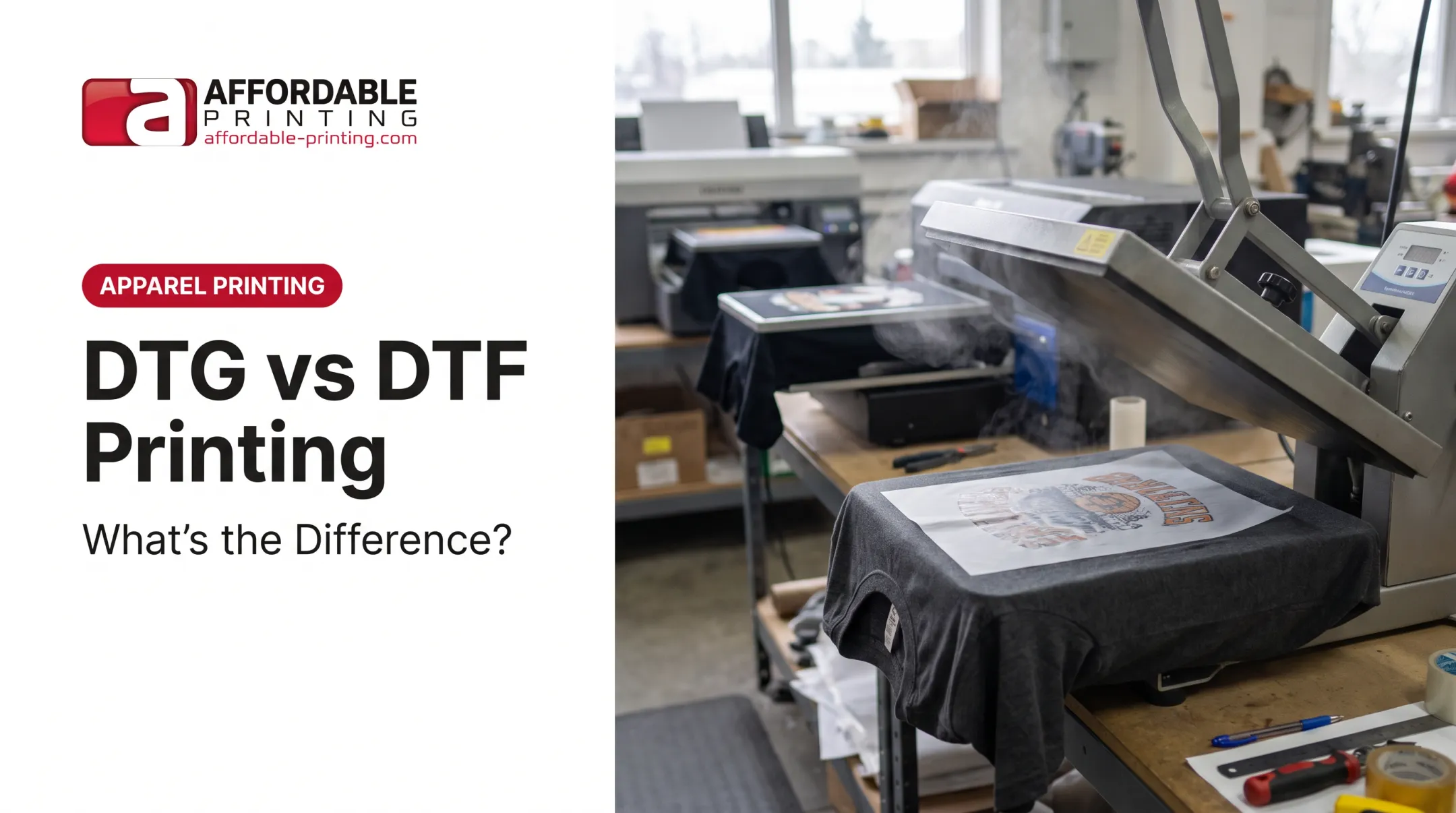
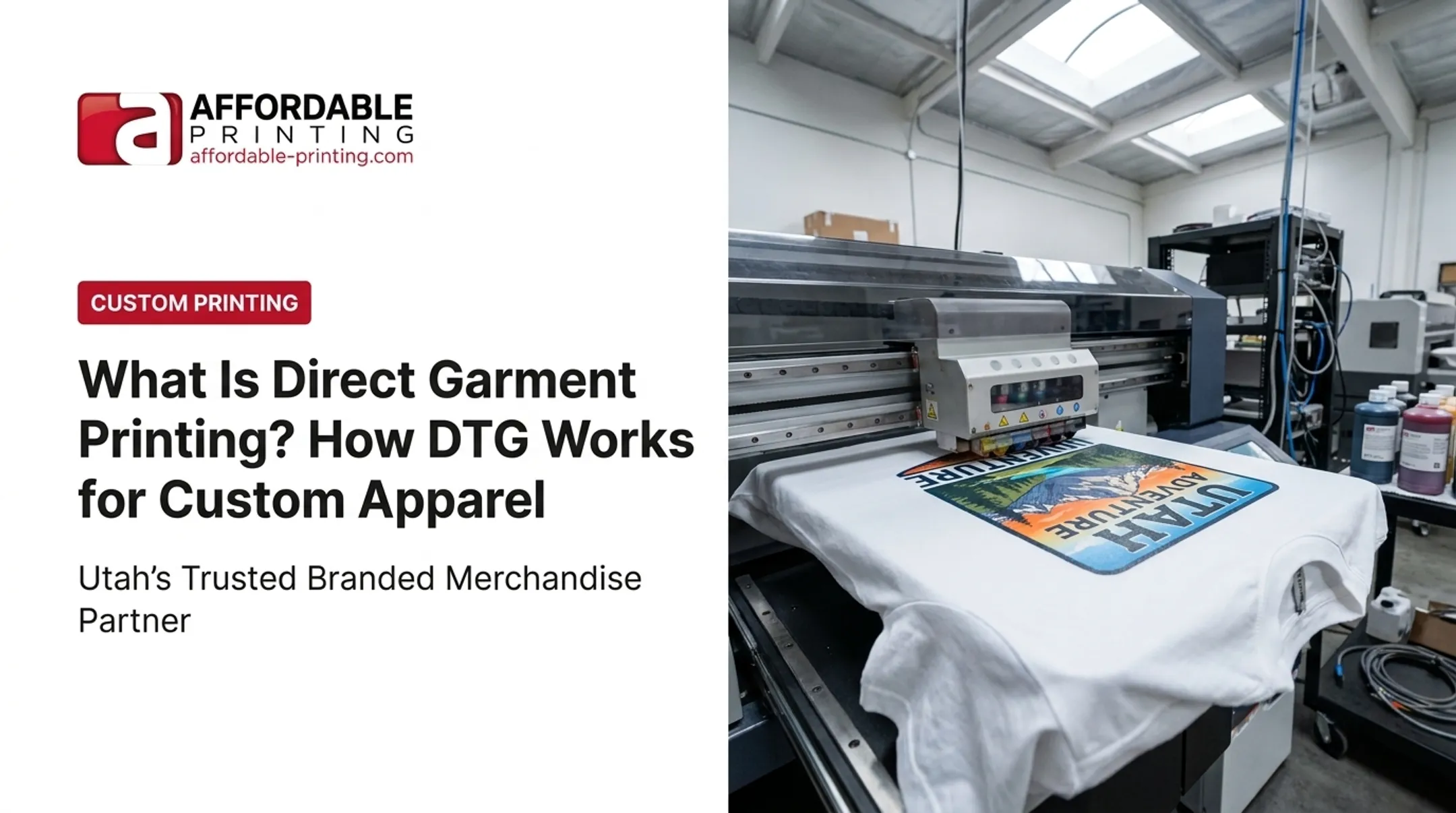
DTF stands for Direct-to-Film. Unlike DTG (Direct-to-Garment), which prints ink straight onto a pretreated shirt, DTF prints the design onto a special PET film first, then transfers it to the garment with heat.
It also differs from sublimation, which dyes fabric fibers directly, and from generic heat-transfer vinyl, which is usually cut from solid-color sheets rather than digitally printed.
The Production Process
A standard DTF transfer moves through a specific sequence before it ever touches fabric:
- Print the design onto coated film using textile inks, adding a white-ink layer underneath colors when needed
- Apply adhesive powder over the wet ink, shake off the excess, then cure it under heat
- Position the cured transfer on the garment and press with heat and pressure to bond it
- Peel the film using the specified hot, warm, or cold method, then complete any final press

Why Cotton Works So Well
Cotton doesn't need to absorb dye for DTF to succeed. The hot-melt adhesive forms the actual bond between design and fabric, sitting on top of the fibers rather than inside them. That differs from sublimation, which needs polyester's synthetic fibers to open up and accept dye at a molecular level. That process does not work on cotton the same way.
That white-ink underbase also means DTF handles dark cotton garments without losing color vibrancy, something dye-sublimation on standard cotton can't achieve. STAHLS lists both 100% cotton and cotton-poly blends as supported substrates for its UltraColor MAX DTF transfers, confirming cotton is a primary supported fabric, not a workaround.
Applying a ready-made transfer is very different from producing DTF film in-house. In-house production needs a dedicated printer, film stock, powder, a curing oven, ventilation, and ongoing equipment maintenance.
Affordable Printing runs that full production chain in-house on commercial-grade equipment, which helps keep color consistency tight from batch to batch.
How to Apply a DTF Transfer to Cotton
Getting a clean bond starts before the press ever heats up.
Preparation Steps
- Confirm the garment's exact cotton content and check for coatings, water-repellent finishes, or unusual dye treatments
- Smooth wrinkles from the print area and pre-press briefly to remove residual moisture
- Verify the transfer was designed for that specific fabric type
- Keep seams, zippers, pockets, and buttons out of the pressing zone so contact stays even
Setting the Press
There's no single universal setting. One example is Transfer Express's recipe for its UltraColor MAX transfers on cotton: a 3-5 second garment prepress, then 290°F for 12-15 seconds at medium pressure, with an immediate hot peel.
That recipe applies to one product from one manufacturer—not every DTF film on the market.
Settings shift based on:
- 100% cotton versus cotton-poly blends
- Garment dye and fabric weight
- Transfer construction and adhesive formulation
- Heat press calibration accuracy
- Hot-peel versus cold-peel requirements
Always test on a spare garment first, especially on dark, dyed, textured, or specialty-finished cotton, before running a full order.
Troubleshooting Common Issues
| Problem | Likely cause |
|---|---|
| Transfer won't stick | Insufficient heat, pressure, or time; leftover moisture; miscalibrated press |
| Print cracks or lifts | Incomplete curing, over-stretching, wrong wash care, incompatible transfer |
| Fabric looks shiny or scorched | Temperature too high, dwell time too long, missing protective sheet |
If scorching shows up:
- Drop temperature or shorten dwell time only within the transfer maker's approved range
- Use a cover sheet
- Check the garment care label first—some cotton finishes react to heat differently than plain cotton
Benefits, Limitations, and Care of DTF on Cotton
DTF earns its popularity on cotton for a few concrete reasons:
- Full-color, photo-detail artwork with no color-count restrictions
- Strong performance on both light and dark garments
- No pretreatment step required before pressing
- Practical for small runs: Affordable Printing's DTF minimum is just 12 units
One honest trade-off: DTF typically produces a slightly raised, film-like feel rather than ink that fully sinks into the fabric. Large designs with heavy ink coverage feel more noticeable than small logos or line art. If you need the softest possible hand feel on cotton, DTG may edge it out. DTF still works across a far wider range of fabrics and colors.

Wash Care That Actually Protects the Print
- Turn the garment inside out before washing
- Follow the care label's recommended cycle and water temperature
- Skip harsh detergents and bleach where the label advises against them
- Never iron directly over the design; press from the reverse side or through a cloth if ironing is unavoidable
For uniforms, event shirts, and team apparel where a reprint isn't an option before the deadline, running a professional test sample first is worth the extra day. Inconsistent adhesion on a 200-shirt order costs far more to fix than to prevent.
DTF on Cotton Compared With Other Printing Methods
DTF vs. DTG
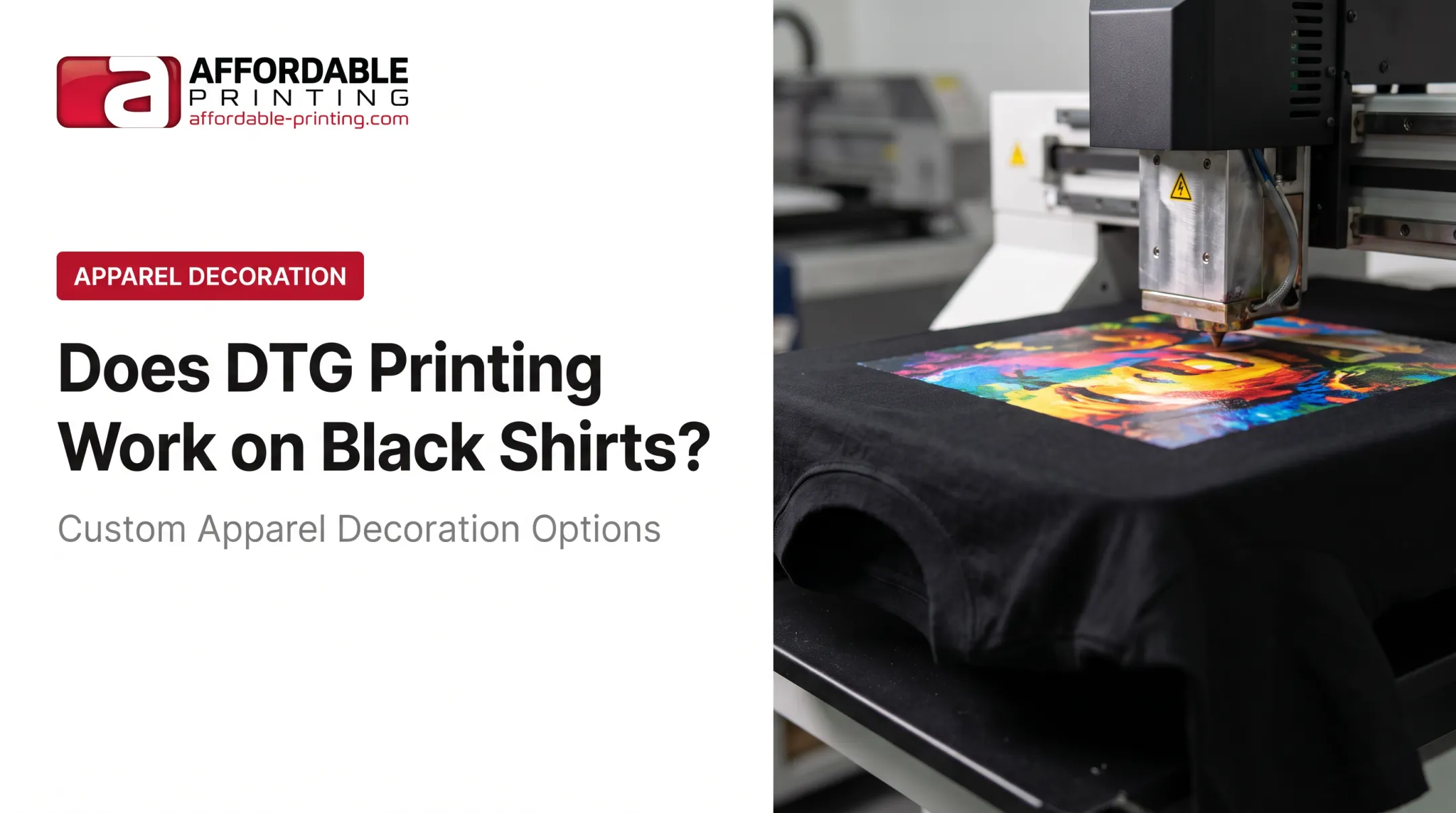
DTF prints on film first, then heat-applies to the garment. DTG prints ink directly onto a pretreated shirt. Epson notes that DTG is best suited to cotton with a softer feel, while DTF carries a slightly more raised texture but works across a broader range of fabrics and garment colors. Choose DTG for pure cotton softness; choose DTF when the same design needs to work on blends, dark shirts, or mixed fabric orders too.
DTF vs. Screen Printing
Screen printing shines on repeat, large-quantity runs with limited colors. DTF handles detailed, full-color, or variable artwork better, especially at smaller or mixed order sizes. Neither is universally faster or cheaper — it depends on artwork complexity, color count, quantity, and your deadline.
DTF vs. Sublimation
Standard sublimation dyes polyester fibers directly and works best on light-colored synthetic fabric. It doesn't decorate ordinary cotton or dark garments the way DTF does. Any cotton-specific sublimation workaround is a specialty process requiring its own separate testing, not a standard substitute.
DTF vs. HTV
HTV suits simple shapes, single-color lettering, and basic logos well. DTF handles intricate, photographic, or multi-colored artwork with far less setup complexity.
Quick decision guide: Choose DTF when you need:
- Detailed or full-color designs on cotton
- Small-to-medium runs or mixed garment colors
- One method that covers multiple fabric types
Lean toward another method when its finish, volume efficiency, or fabric match fits the project better.

Affordable Printing offers commercial-grade DTF alongside screen printing, embroidery, and DTG under one roof, so switching methods for a specific order doesn't mean switching vendors.
Choosing the Right Cotton Garment and Professional Workflow
Not every cotton item behaves identically under a heat press. Common DTF-friendly cotton garments include:
- T-shirts and tote bags
- Sweatshirts and hoodies
- Uniforms and workwear
- Event apparel and promotional clothing
What Affects the Outcome
Garment construction matters as much as fiber content. These factors affect how evenly the adhesive bonds:
- Pre-shrunk vs. untreated cotton under heat
- Dye that can shift slightly during pressing
- Seams, moisture, fabric weight, and coatings
Before committing to a large order: request or produce a test sample. Check color accuracy, adhesion strength, hand feel, stretch recovery, and wash durability.
These checks matter most for groups that order cotton apparel often: school programs, sports teams, family reunions, nonprofit fundraisers, and business uniforms.
When you request a professional quote, come prepared with:
- Artwork file
- Garment details and quantity
- Delivery date
- Any special-care requirements
That prep cuts back-and-forth on the quote.
Is DTF Printing a Good Choice for Cotton?
Yes. DTF printing is a practical decoration method for cotton fabric, including most 100% cotton garments. Strong results depend on a few controllable factors:
- Use a transfer designed for your fabric
- Follow the supplier's exact press and peel instructions
- Test a sample before a full production run
- Apply even pressure across the garment
- Give customers clear wash-care guidance
Affordable Printing has produced custom apparel and promotional merchandise since 2003 for businesses, schools, events, and organizations across South Jordan, Salt Lake City, and the Wasatch Front. For cotton apparel projects, from a dozen event shirts to a full team order, the team runs DTF in-house on commercial-grade equipment and provides hands-on design support.
Frequently Asked Questions
What type of fabric is best for DTF printing?
DTF works across cotton, polyester, and blends, so there's no single "best" fabric. The right choice depends on the transfer formulation, garment finish, design detail, and the manufacturer's application instructions.
What temperature should I use for DTF heat transfer on cotton?
There's no universal number. Follow the transfer manufacturer's exact temperature, time, and pressure guidance, then verify it with a test press since equipment calibration and peel method also affect results.
Can DTF transfers be applied to 100% cotton?
Yes. Standard DTF transfers apply successfully to 100% cotton garments when the transfer is designed for that fabric and the recommended heat-press process is followed closely.
How do you wash cotton shirts with DTF prints?
Turn the shirt inside out, wash on the cycle and temperature the care label recommends, and never iron directly over the design. Always check the transfer supplier's specific care instructions too.
Why is my DTF transfer not sticking to cotton?
The usual culprits are insufficient heat, time, or pressure, leftover moisture in the fabric, an uneven pressing surface, incorrect peel timing, or a garment finish that resists adhesion.