Many shop owners assume direct-to-garment printing behaves the same way regardless of shirt color. It doesn't. Getting a crisp, vibrant design on black cotton depends on pretreatment, a white ink underbase, the shirt's fabric content, artwork contrast, and proper curing.
Skip any one of these steps, and you'll end up with a dull, faded, or patchy print instead of the bold graphic you had in mind.
This guide walks through how black-shirt DTG actually works, which garments and designs perform best, when DTF or screen printing might serve you better, and how to avoid the common pitfalls that turn a great design into a disappointing print.
Key Takeaways
- DTG produces detailed, full-color artwork on black shirts when pretreated correctly with a white underbase
- High-cotton garments and high-contrast artwork deliver the strongest black-shirt results
- DTF suits polyester, performance fabrics, and mixed-fabric orders needing bold opacity
- Proper curing and washing habits determine how long the print stays vibrant
How Does DTG Printing Work on Black Shirts?
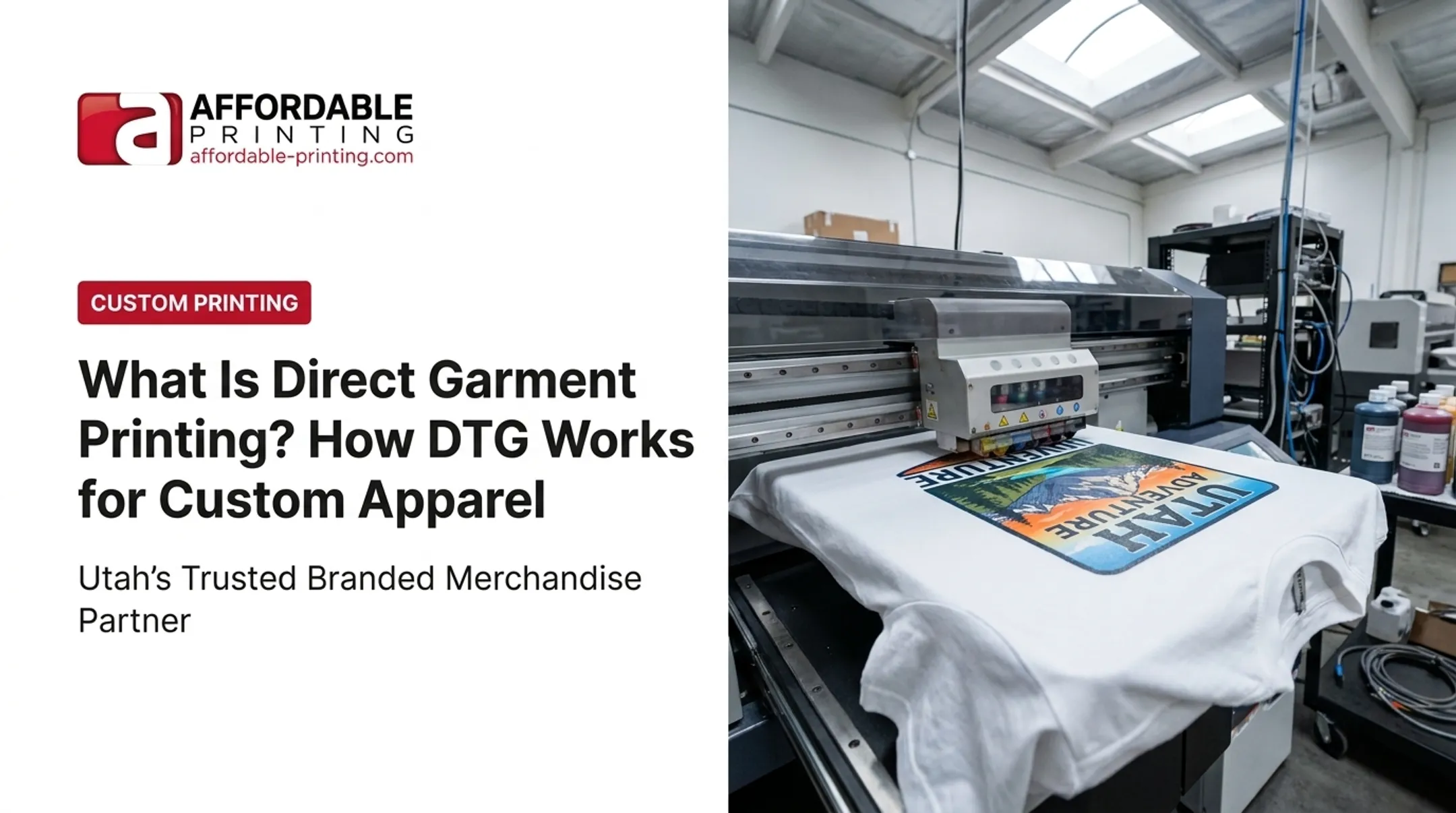
DTG jets water-based ink directly onto fabric, no screens, no transfer film, no setup fees per color. That's part of why it's popular for detailed, full-color designs.
Black fabric creates a specific technical problem, though. Standard CMYK inks are translucent. Print them straight onto a dark shirt and your colors sink into the black background instead of standing out. That's why a white underbase is necessary for dark-colored garment printing.
The Black-Shirt Printing Sequence
Here's the order of operations that makes a black DTG print work:
- Pretreatment — A liquid solution is applied to the fabric, helping white ink adhere and bond properly. Uneven application here creates dull patches or a visible rectangular halo where the pretreatment extends past the print area.
- White ink underbase — Printed beneath the colors, this layer gives the design a light foundation so colors don't vanish into the black fabric.
- Color layers — CMYK (or other) inks print over the white base to reproduce the actual artwork.
- Heat curing — Sets the ink into the fabric so the print survives normal wear and washing.
At Affordable Printing, this workflow includes an artwork review step before anything hits the press, checking resolution, print readiness, and color accuracy so problems get caught before pretreatment even starts.

Why Black Shirts Take More Work
Black-shirt DTG generally requires more ink, more handling, and more production time than a white-shirt job. Ask your printer for current specifics on cost or turnaround differences since these vary by shop and equipment.
The white underbase amount matters more than people expect:
- Too little white makes colors look muted or washed out
- Too much white makes the print feel heavier, working against DTG's soft-hand advantage
A quality black DTG print should show:
- Consistent color coverage across the design
- Clean edges with readable fine detail
- Minimal visible pretreatment marks
- Ink that stays bonded after curing and washing
If you see the opposite on a finished shirt, something in the process needs adjusting.
Which Shirts and Designs Are Best for DTG Printing on Black?
Not every black shirt performs the same way under a DTG printer. Fabric composition changes the outcome more than most people realize.
Fabric Matters More Than You'd Think
High-cotton-content or 100% cotton garments are the safest starting point for black-shirt DTG. Cotton fibers absorb water-based ink more readily than synthetic fibers, which is exactly what the printing process depends on.
Cotton-rich blends can still work, but results become less predictable as polyester content rises. Moisture-wicking or performance shirts, in particular, can produce inconsistent ink absorption. Confirm with your printer whether they've tested settings for that specific fabric before ordering in bulk.
Beyond fiber content, a few other variables shape the final print:
- Weight — Heavier cotton tends to hold pretreatment more evenly
- Weave — A smooth, tightly woven surface produces sharper detail
- Surface texture — Combed, ring-spun cotton with a tight knit reduces fiber interference during printing
- Dye quality — Inconsistent dye lots can affect how evenly pretreatment absorbs
Designing Artwork for Dark Fabric
Artwork that looks fantastic on a white background can fall flat on black. Keep these points in mind:
- Build in strong contrast so key details stay visible against the dark garment
- Treat gradients and soft fades carefully; the white underbase can make them print unevenly
- Check small text and thin lines at actual print size before sending the file to production
- Submit high-resolution artwork in whatever format and color profile your printer specifies
A digital mockup helps, but a physical sample tells you things a screen never will: how opaque the underbase actually looks, how the fabric feels, and whether fine detail holds up in person.
Before placing your order, confirm:
- Garment fabric composition
- Print size and placement
- Artwork contrast and file resolution
- Proof approval process
- Whether your printer has actual experience with dark-garment DTG
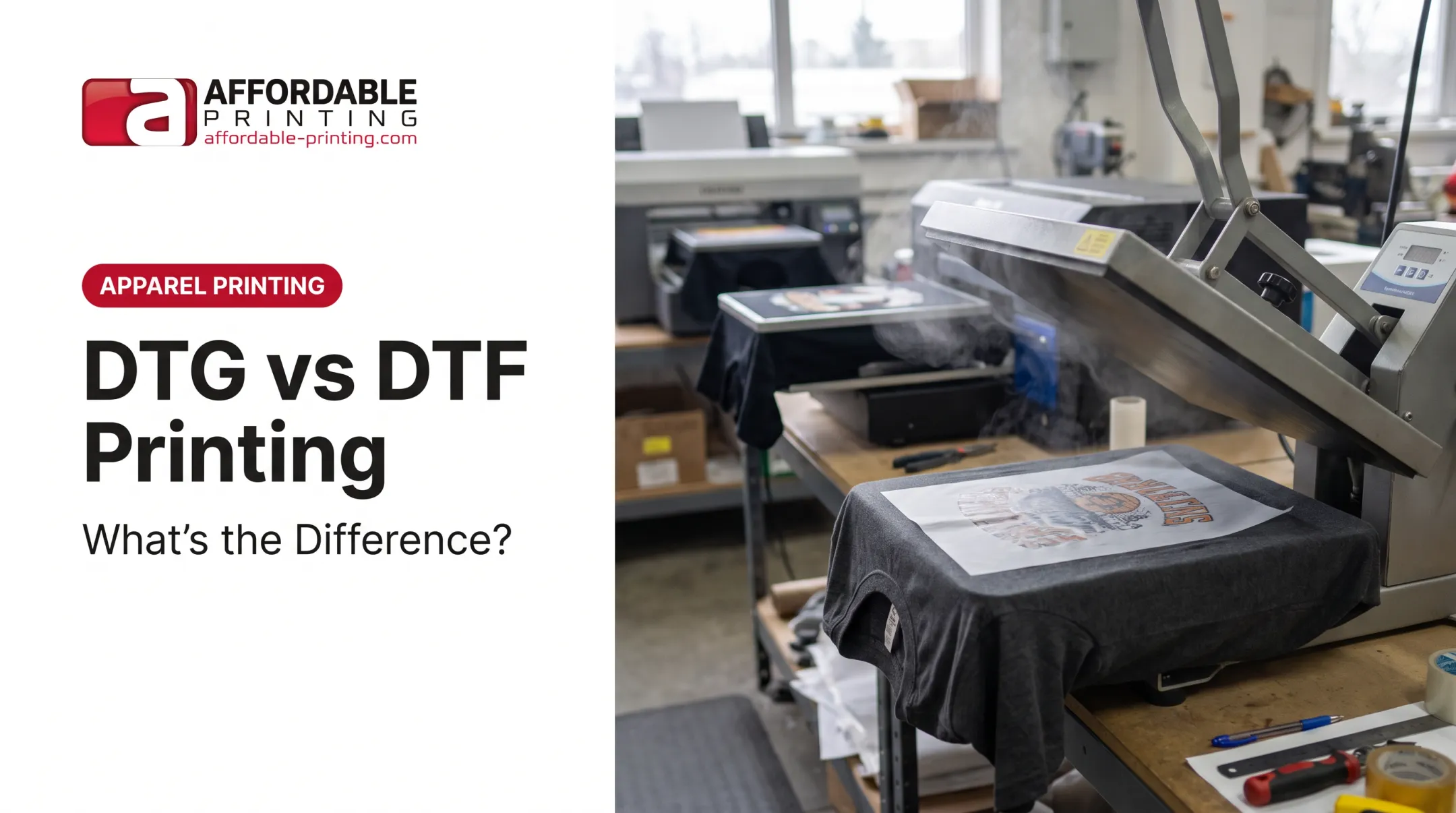
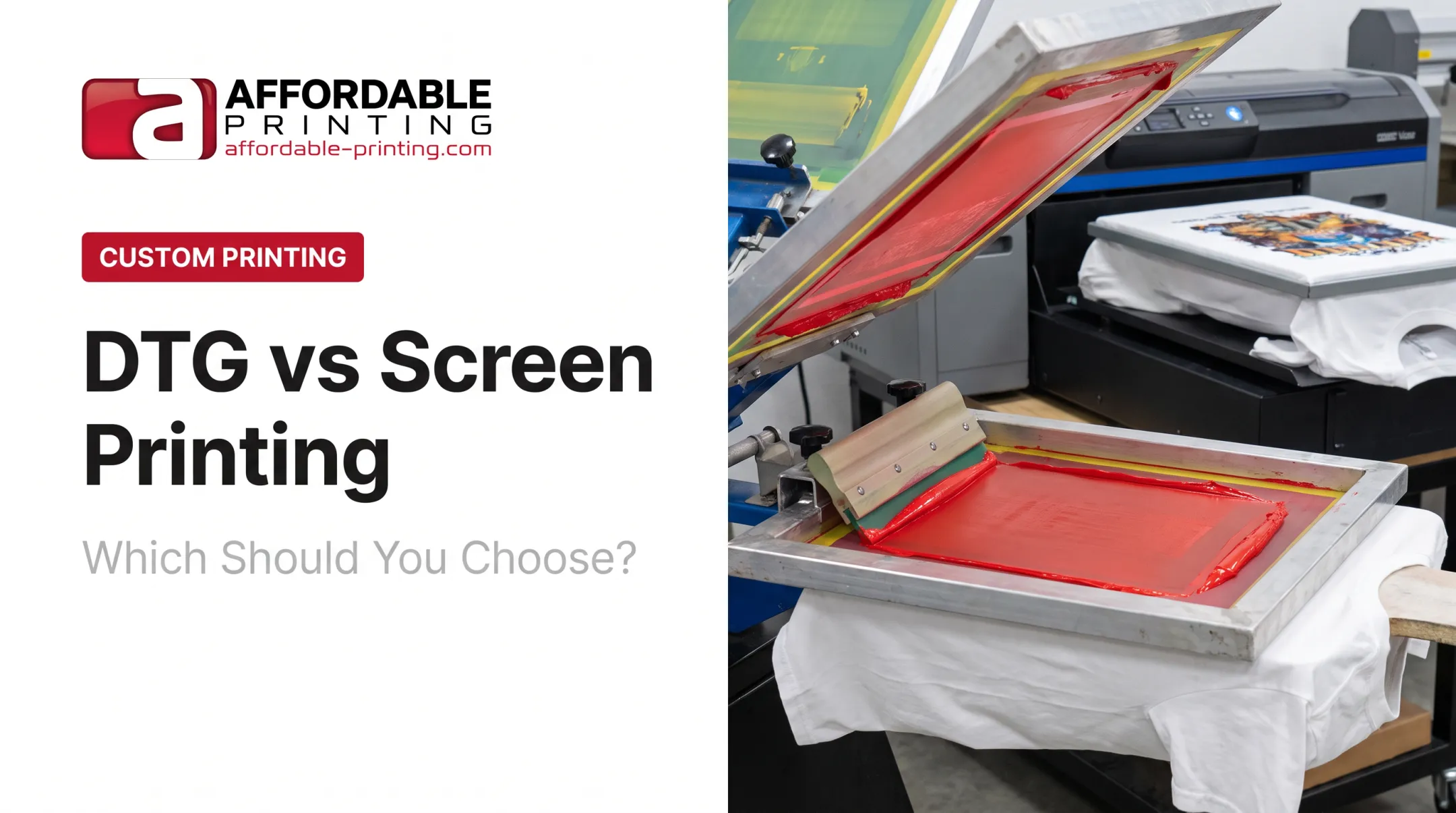
DTG vs. DTF vs. Screen Printing for Black Shirts
No single method wins every job. The right choice depends on fabric, design complexity, quantity, and budget.
| Factor | DTG | DTF | Screen Printing |
|---|---|---|---|
| Best fabric | Cotton, high-cotton blends | Cotton, polyester, blends | Cotton, performance fabrics |
| Print feel | Soft, ink absorbed into fabric | Slightly thicker surface layer | Varies by ink deposit |
| Color complexity | Unlimited colors, photo detail | Unlimited colors, bold opacity | Best for limited spot colors |
| Order size | Small runs to large orders | Small runs, no minimum needed | Cost-effective at higher volume |
| Setup | No per-color setup | No garment pretreatment needed | Screens required per color |
When DTG Makes the Most Sense
- Black or dark cotton shirts with detailed, full-color artwork
- Photographs, illustrations, or gradient-heavy designs
- One-off pieces or small runs where screen setup would add unnecessary cost
- Jobs where a soft, integrated hand feel matters more than maximum opacity
When DTF Is Likely the Better Call
- Polyester, performance fabrics, or nylon garments
- Mixed-fabric orders needing one consistent decoration method
- Designs requiring especially bold, opaque color on black fabric
- Situations where a transfer-based process is acceptable
Per Impressions Magazine, DTF needs no garment pretreatment and holds up through multiple washes—so it is a practical fallback when the design or fabric is a poor fit for DTG.
When Screen Printing Wins
- Larger orders repeating the same simple design across many shirts
- Bold graphics using a limited number of solid colors
- Workwear, uniforms, or event apparel where volume efficiency matters
- Jobs needing spot-color consistency (confirm exact matching with your printer before production)
The simplest decision rule: match the fabric and design complexity to the method, then let quantity and budget settle the rest.

Black DTG Printing: Cost, Durability, and Care Considerations
Black-shirt DTG typically costs more than the same job on a light shirt. The reasons are straightforward:
- Dark-garment pretreatment adds a processing step
- White ink underbase consumes more ink than color layers alone
- Artwork size, number of placements, and garment quality all factor in
- Order quantity affects per-unit pricing
Affordable Printing quotes DTG jobs individually rather than publishing flat pricing, since garment choice and design specifics change the math. A 12-piece minimum applies to DTG orders, with free quotes available by phone or through an online request.
Durability Depends on the Process, Not Just the Ink
A properly pretreated, correctly cured black DTG print can hold up through regular washing. That said, no shop should promise a fixed number of washes without documented testing behind it. Affordable Printing heat-cures every DTG print specifically to lock ink in place and support long-term wear.
Care instructions that protect your print:
- Wash inside out in cold or cool water
- Use a gentle cycle with mild detergent
- Skip bleach unless the garment's care label allows it
- Avoid high heat in the dryer
Reading the Warning Signs
- Faded color usually points to insufficient underbase or incomplete curing
- A visible halo around the design suggests uneven pretreatment application
- Cracking or peeling often signals a process mismatch or a production issue
Not sure whether your project calls for DTG, DTF, or screen printing? Affordable Printing can walk through fabric type, design complexity, and budget to land on the most cost-conscious approach for your order.
Frequently Asked Questions
How much does DTG cost per shirt?
Pricing depends on the blank garment, black-shirt pretreatment and white ink use, artwork size, print placements, and order quantity. Request a current quote from Affordable Printing rather than relying on a generic estimate.
Does DTG work on black shirts?
Yes, DTG works well on black shirts when the garment is properly pretreated and printed with a white ink underbase. Results still depend on fabric choice, artwork design, and correct curing.
What is the best T-shirt for direct-to-garment (DTG) printing?
A smooth, high-cotton or 100% cotton shirt gives the most predictable DTG results. Polyester-heavy performance garments are often better suited to DTF printing instead.
Which is better, DTG or DTF?
DTG is stronger for soft-feel, detailed artwork on cotton garments, while DTF offers wider fabric compatibility and stronger opacity on dark fabrics. The right choice comes down to your specific project needs.
Can DTF be used on any color shirt?
DTF can be applied to light, dark, and colored garments. Final suitability still depends on the fabric material, transfer specifications, and heat-press requirements for that particular job.