Introduction
Custom apparel orders don't always fit neatly into "small batch" or "mass production" categories. A school fundraiser might need 30 shirts with a photo-quality mascot. A startup might need 15 hoodies with a gradient logo before a trade show.
Direct-to-garment (DTG) printing was built for exactly these situations. It is a digital decoration method that sprays full-color artwork directly onto T-shirts, hoodies, sweatshirts, and other fabric goods. No screens. No transfer film.
Many buyers confuse DTG with screen printing or DTF, then choose the wrong method for their timeline or budget. This guide breaks down what DTG actually is, how each production stage works, what changes the final result, and when it makes more sense than the alternatives.
Key Takeaways
- DTG prints water-based ink directly onto fabric with specialized inkjet technology.
- Production follows five stages: artwork prep, garment selection, pretreatment, printing, and curing.
- DTG fits detailed multicolor artwork and small or personalized orders best.
- Cotton-rich garments give the most predictable results—factor in fabric, color, and quantity before you order.
What Is Direct-to-Garment Printing?
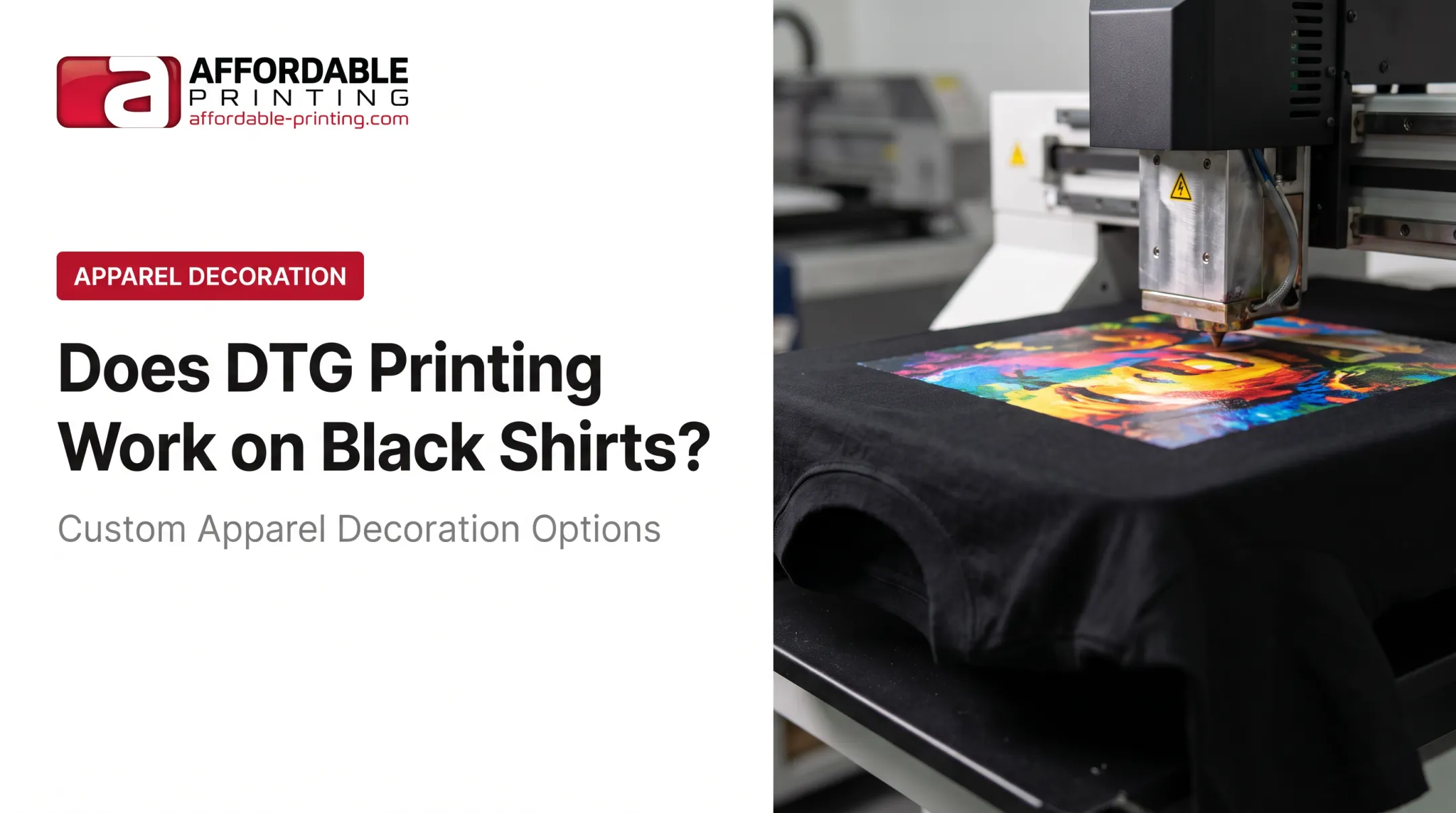
Direct-to-garment printing, or DTG, is a digital printing process where a specialized garment printer sprays water-based ink straight onto fabric. There's no screen to burn, no film to weed, no vinyl layer to press.
The printer reads a digital file and lays down ink pixel by pixel, much like a desktop inkjet printer, just built for fabric instead of paper.
That mechanism solves a real problem. Complex, full-color artwork used to require a separate screen for every color, which made short runs and one-off designs expensive. DTG removes that setup burden, making it practical for samples, personalized pieces, small batches, and designs that change from order to order.
DTG is not the same as:
- Screen printing: pushes ink through mesh screens, one per color, better suited to bold designs at volume
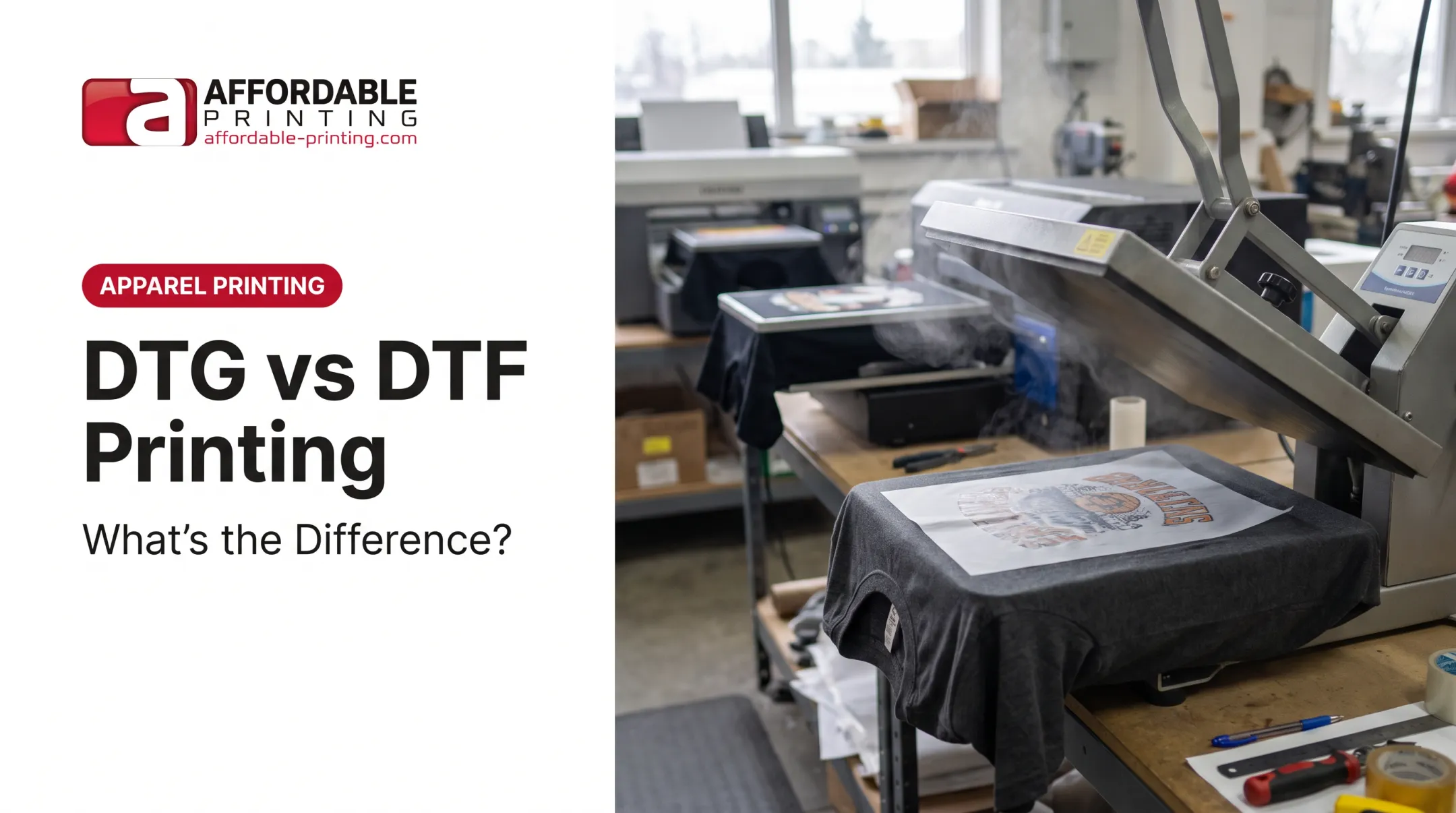
- DTF (direct-to-film): prints the design onto film first, then heat-transfers it onto the garment
- Sublimation: uses heat to turn dye into gas, generally limited to compatible synthetic fabrics
What to Expect from a DTG Print
When the garment, artwork, and settings line up, DTG delivers detailed imagery, smooth gradients, and fine color transitions. The print becomes part of the fabric rather than sitting on top of it, which gives it a soft hand feel.
A few variables shift from job to job and affect the outcome:
- Light versus dark garment color (dark fabrics need a white underbase)
- Cotton content and fabric texture (higher cotton holds water-based ink better)
- Print location and size
- Artwork resolution (low-res files print soft or pixelated)
- Order quantity and turnaround time
Brother's technical documentation for its GTX printers recommends source artwork at 300 dpi or higher, converted to RGB before printing, since leaving files in CMYK can throw off the color profile once printed.
That's a guideline for the file you send, not a guarantee about every printer's output, but it's a solid baseline when preparing artwork.

How Does Direct-to-Garment Printing Work?
DTG printing runs through a clear sequence of steps. Artwork, garment, ink, and heat all have to work together, or the print looks great on day one and falls apart in the wash.
Prepare the Artwork and Garment
Everything starts with a digital file prepared to the printer's specs: correct dimensions, resolution, color profile, file format, and a clear intended print placement. Files with transparent backgrounds usually need to be saved as PNGs.
Before production, shops check the file for:
- Fine lines and small text that might lose detail
- Transparent gradients that could shift color once printed on fabric
- Differences between the on-screen preview and how ink actually sits on cloth
The blank garment matters just as much as the file. Fiber content, weave, weight, color, seam placement, and surface texture all influence how much ink the fabric absorbs and how the finished print looks.
Pretreat the Garment
Pretreatment applies a specialized solution to the print area so fabric holds ink evenly instead of letting it spread or soak in unevenly. This step is non-negotiable on dark garments. It supports the white-ink underbase that keeps colors from disappearing into the fabric.
Brother's pretreatment guidance notes that white ink specifically requires a binding compound applied before printing, diluted and applied to spec, then dried or heat-set. Uneven application shows up later as faded patches, stiff spots, or discoloration.
Print the Design
The garment is loaded onto a flat platen so it stays aligned while the print head applies ink from the digital file. CMYK inks build the color image; white ink, when needed, goes down first on dark garments to create opacity underneath the design.
Print quality depends on:
- Image detail
- Color accuracy
- Garment color
- Printer calibration
- Ink coverage the design requires
Cure the Ink
Curing applies controlled heat so ink bonds to the fabric and survives normal wear and washing. Shops typically use a heat press or a conveyor dryer. Equipment on hand, order size, and workflow usually decide which one fits a given job.
Incomplete curing, too much heat, or the wrong time-and-temperature combination affects softness, color, adhesion, and how long the print lasts. Tight time-and-temperature control is what keeps the print soft, vibrant, and wash-ready.

Where Is Direct-to-Garment Printing Used?
DTG shows up anywhere detailed artwork and flexible order sizes matter more than cranking out one simple design at maximum volume. Common applications include:
- Branded staff apparel and uniforms
- Contractor and field-service crew shirts
- School and youth-team spirit wear
- Event shirts, charity runs, and fundraisers
- Family-reunion apparel
- Promotional merchandise and retail-facing gear
- Small apparel collections and creator merch
When DTG Is the Right Call
DTG tends to win when the order includes:
- Photographic or illustrated artwork
- Gradients or many-color designs
- Individualized pieces such as names, numbers, or one-off gifts
- Sample garments or design testing before a bigger run
- Short runs where setting up screens isn't worth it
When Another Method Fits Better
| Situation | Better Fit |
|---|---|
| Large quantities, identical design, few colors | Screen printing |
| Polyester or blended fabrics, surface transfer acceptable | DTF |
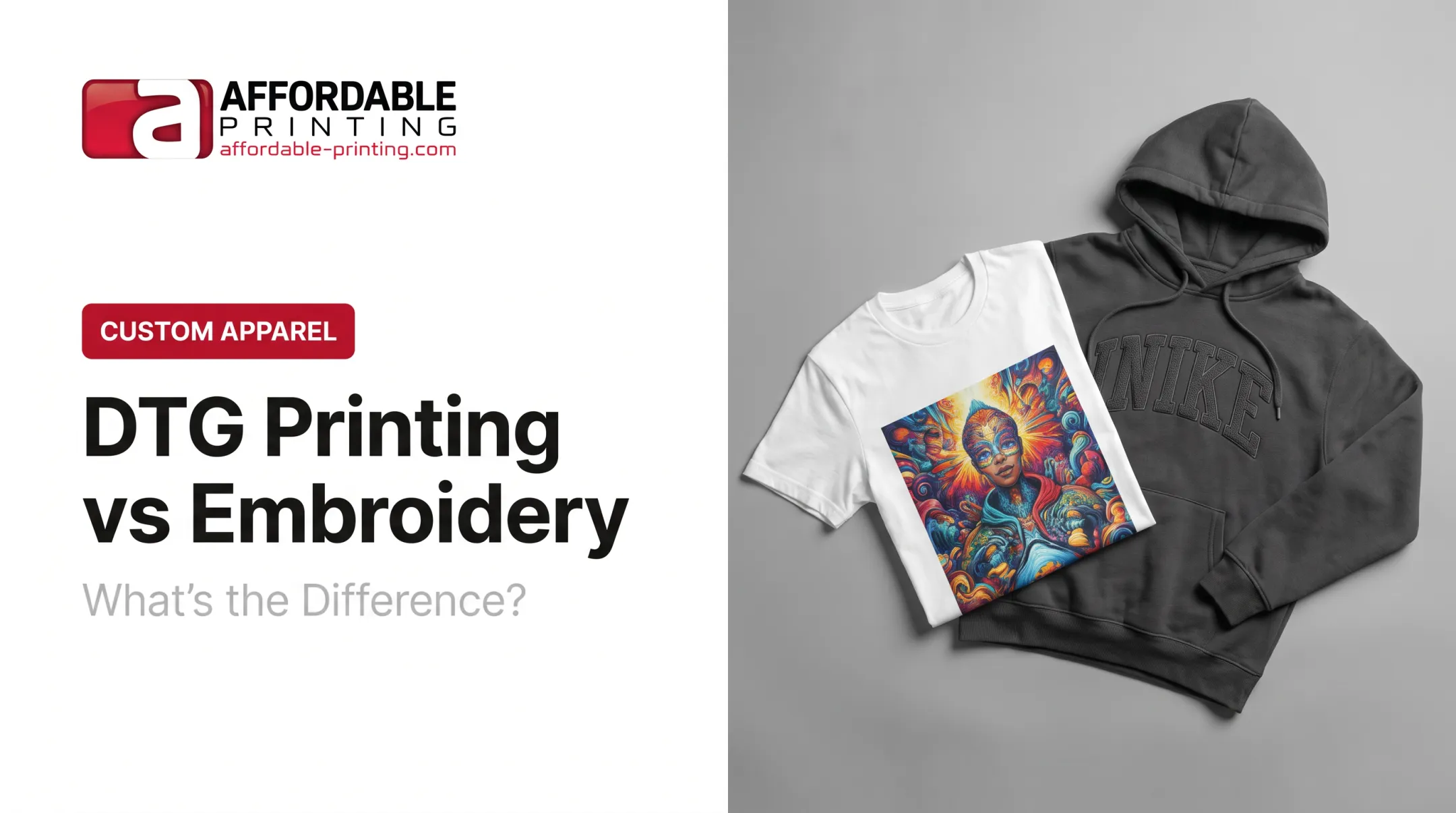
| Logos for polos, hats, jackets, or bags with a raised look | Embroidery |
Impressions Magazine's DTG vs. screen printing comparison notes that DTG's lighter setup and breakdown make it a natural fit for low-volume work, while screen printing pulls ahead once volume is high enough to spread out its prep cost. Neither method is universally cheaper. It depends on the order.
A Quick Decision Checklist
Before locking in a method, confirm:
- Garment fiber and color
- Design complexity and number of colors
- Desired print feel, soft versus thicker
- Quantity needed
- Print locations
- Budget and deadline
- Expected wear and wash frequency
When color accuracy or placement is critical, confirm fabric compatibility and approve a physical sample before the full run goes into production.
Affordable Printing offers DTG alongside DTF, screen printing, embroidery, promotional products, and design support. Businesses, schools, events, organizations, and charities across Salt Lake City, Provo, Ogden, and the rest of Utah can match the decoration method to the project instead of forcing every order into one process.
Conclusion
DTG works by turning a digital artwork file into a fabric print through pretreatment, direct ink application, and heat curing. No screens, no film, just ink meeting fabric under controlled conditions.
Choose DTG when detailed artwork, flexible order sizes, and a soft printed finish top the priority list. For everything else, from bulk screen-printed uniforms to DTF on synthetic blends, matching the method to the project is what keeps quality and budget in line.
Affordable Printing helps with garment selection, artwork prep, side-by-side method comparisons, and order planning that fits your deadline and quantity.
Frequently Asked Questions
How much does direct-to-garment (DTG) printing cost per shirt?
Cost depends on garment type, print size and location, garment color, artwork coverage, quantity, and turnaround time. Get a quote based on your specific design rather than relying on a flat industry number.
Is direct-to-garment (DTG) printing good quality?
Yes, when artwork, garment, pretreatment, and curing are all handled correctly. DTG produces sharp detail, smooth gradients, and full-color art with a soft feel. Ask for a sample or portfolio before committing to a large order.
Is DTG or DTF better for quality, cost, and durability?
Neither wins overall. DTG feels softer and works best on cotton-rich garments. DTF handles more materials, including polyester, with a slightly thicker feel. Cost and durability depend on garment, artwork, and care.
Is direct-to-garment printing the same as screen printing?
No. DTG prints digitally, straight from a file, while screen printing pushes ink through separate screens made for each color. DTG handles detail and short runs well; screen printing usually costs less for bold designs at high volume.
What is direct-to-garment (DTG) printing?
DTG is a digital inkjet process that sprays water-based ink directly onto a garment. Pretreatment and heat curing support color accuracy and wash durability.
What is the best t-shirt fabric for DTG printing?
Cotton and cotton-rich blends give the most predictable results, since natural fibers absorb water-based ink more readily than synthetics. Exact compatibility still depends on the printer, ink system, and garment construction, so testing matters.