
September 11, 2026
DTF Printing Review Guide for Business Apparel
A logo can look sharp in a digital proof and still disappoint once it is pressed onto a polo, hoodie, or work shirt. That is why a useful dtf printing review guide needs to look beyond the artwork itself. For Salt Lake City businesses, school programs, and event organizers, the real questions are whether the print fits the garment, holds up to regular wear, and makes sense for the size and purpose of the order.
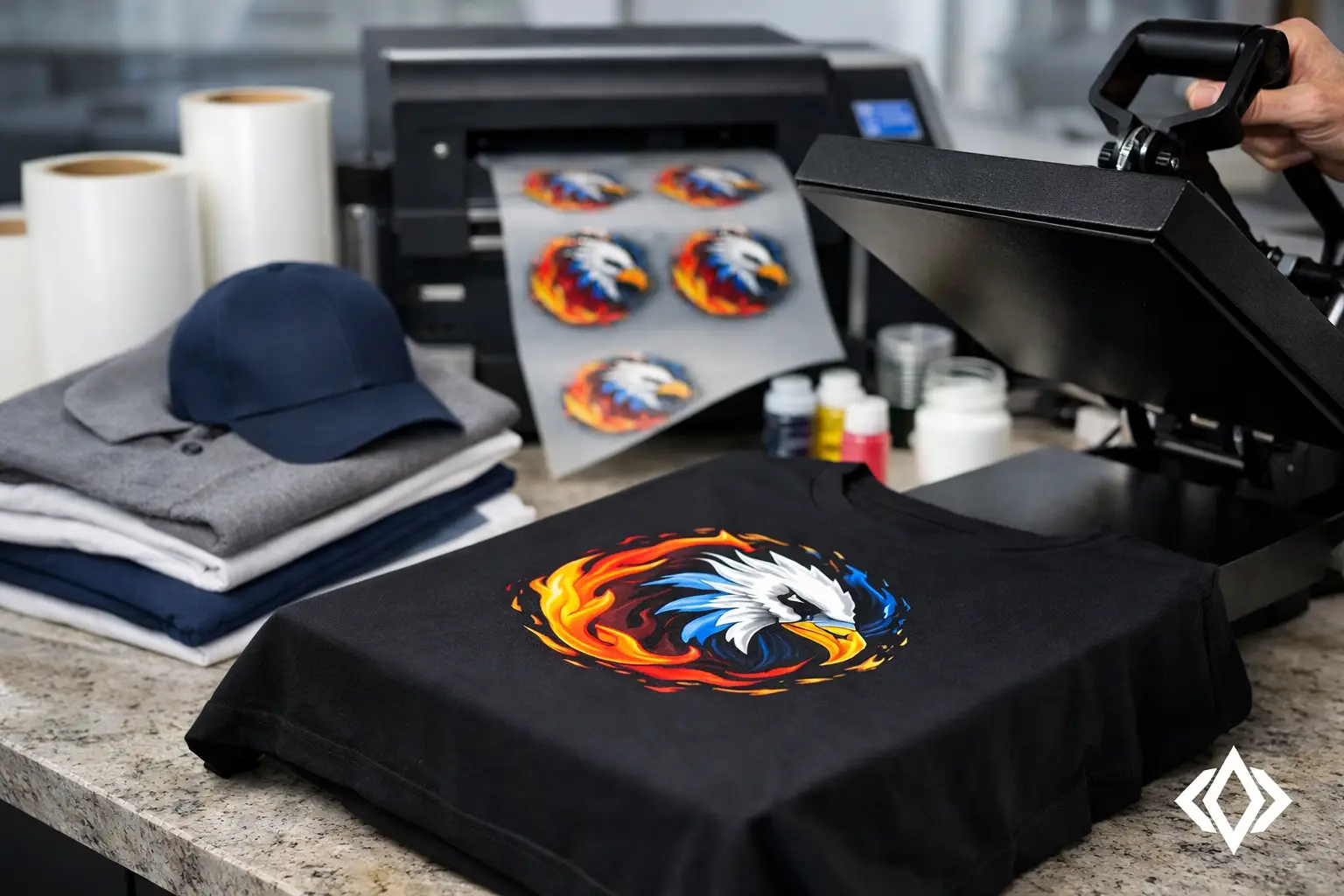
DTF stands for direct-to-film. Your design is printed onto a special film, covered with adhesive powder, cured, and heat pressed onto the garment. The finished design sits on top of the fabric rather than soaking into it. That process gives DTF a distinct set of strengths, along with a few trade-offs worth understanding before your company places an order.
What DTF Printing Does Well
DTF is especially useful when your design has several colors, fine details, small text, gradients, or a full-color logo. Unlike traditional screen printing, it does not require a separate screen for every ink color. That can make it a practical option for smaller group orders, detailed artwork, or designs where a simple one-color treatment would lose too much of the original look.
It also works on a wide range of garment types. Cotton, polyester, cotton-poly blends, performance apparel, fleece, and many darker garments can all be good candidates. That flexibility matters when outfitting an employee team with mixed sizes and garment preferences, or when a sports league needs names, numbers, and a detailed sponsor logo across several fabric types.
Color is another reason buyers consider DTF. Bright spot colors, photographic elements, and complex logos can reproduce well when the artwork is prepared correctly. For a corporate event shirt or branded giveaway, that can be a better fit than simplifying a multicolor design just to make another decoration method work.
At Affordable-Printing, our team reviews the garment, artwork, and intended use before recommending a method. DTF is one option alongside screen printing, embroidery, and DTG. The best choice is not always the newest or most flexible process. It is the one that gives your organization the right appearance, feel, and value.
DTF Printing Review Guide: What to Check First
A print sample should be judged in the same conditions where your team will use it. A transfer can look excellent on a folded shirt but feel different after a full day at a jobsite, a volunteer event, or a summer tournament. Start with the fabric and the placement, then consider the design itself.
Feel and breathability
DTF creates a smooth, flexible transfer, but it does add a layer to the garment. A small left-chest logo usually feels unobtrusive. A large full-front graphic has more coverage and will naturally be more noticeable, particularly on lightweight athletic shirts.
This is not necessarily a problem. For a company anniversary shirt, staff giveaway, or event merchandise, strong color and detailed artwork may be more valuable than the lightest possible print. For crews working outdoors, restaurant staff, or athletes wearing performance apparel, breathability may carry more weight. In those cases, smaller artwork, a different print location, or another decoration method may be the better call.
Detail and color accuracy
DTF handles small lines and full-color artwork well, but the source file still matters. Low-resolution images, fuzzy social media graphics, and screenshots do not improve simply because they are printed with a high-quality process. Clean vector artwork or a high-resolution file produces a better result.
If your brand has a precise color standard, ask how the design will be handled before production. Screen printing is generally the strongest choice when Pantone color matching is critical. DTF can achieve vivid, close visual color, but it is not the same process as mixing a Pantone ink. That distinction matters for companies with tightly controlled brand standards, especially when apparel must match existing signage, packaging, or uniforms.
Durability after washing
A well-produced DTF transfer is designed for regular laundering. It should remain flexible and maintain its color when the garment is washed and dried according to care instructions. As with any decorated apparel, harsh washing habits shorten the life of the print. Turning garments inside out, using cold or warm water, and avoiding high heat help preserve the design.
The more important question is how the garment will be used. A promotional tee worn a few times has different durability demands than a work shirt worn and washed every week. For high-use uniforms, we look at the fabric, print size, placement, and work environment before recommending DTF. Embroidery may be a stronger long-term fit for polos, jackets, hats, and professional uniforms. Screen printing can be the more efficient route for a large run of simple work shirts.
Placement and sizing
The same design can feel premium or awkward based on placement. A detailed logo may need room on the back, while a clean left-chest mark can keep a polo or button-up looking professional. Large designs should be sized carefully across youth, adult, and extended sizes so the artwork remains readable without overwhelming smaller garments.
This is where working with a local production team helps. We can flag when an image needs simplification, when a print is too large for a particular garment, or when embroidery will capture the intended look better. Those conversations are easier to have before approval than after a full order is printed.
When DTF Is a Better Choice Than Other Methods
DTF is often the right choice for full-color logos, short-to-mid-size runs, mixed garment fabrics, and artwork with gradients or fine details. It is also useful when an organization wants several names, numbers, or individualized elements without building a different screen setup for each variation.
Screen printing usually becomes more attractive as quantities increase and the design stays simple. It is durable, efficient for larger orders, and offers Pantone matching for brand-specific colors. A one- or two-color logo across several hundred event shirts is often a screen printing project, not a DTF project.
Embroidery is well suited to polos, jackets, hats, bags, and uniforms where texture and a professional finish matter. It does not reproduce tiny text, gradients, or photographic artwork as well as DTF, but it can be the strongest option for a durable, polished logo on employee apparel.
DTG prints directly into the garment and can give a softer feel on the right cotton garments, particularly for detailed art. It has different fabric and color considerations than DTF. There is no single winner across every order. Your artwork, garment, quantity, budget, and use case should drive the decision.
Planning a DTF Order for Your Team
For business buyers across South Jordan and the Wasatch Front, production planning prevents most avoidable problems. Provide your final logo file, estimated quantities by size, garment preferences, deadline, and any required print locations when requesting a quote. If different departments need different shirt colors or job titles, include that information early as well.
Our standard turnaround is 12 business days from artwork approval, and we often finish sooner. Rush orders may be available when production capacity and the garment choice allow it, so contact us as soon as your event date is known. Waiting until the last week limits garment availability and reduces the time available to review artwork properly.
We supply the garments and blanks as part of our service, which lets us recommend items that work with the decoration method. We are also happy to work with garments your organization supplies. For group apparel, our 12-piece minimum is a practical fit for most employee teams, schools, nonprofit events, and sports groups.
Before approving the order, confirm the spelling, dates, names, logo version, ink or transfer placement, garment colors, and size breakdown. A good proof is not just a formality. It is the last chance to catch a small issue that can affect every piece in the order.
A Better Standard for Reviewing DTF
The best DTF print is not simply the one with the brightest color. It is the one that supports the job your apparel needs to do: identify employees, promote a corporate event, recognize volunteers, outfit a team, or put a clear brand mark in front of customers. Choose the process around that purpose, not around a generic claim that one method is always better.
If your company, school, or organization needs help comparing DTF with screen printing, embroidery, or DTG, request a free quote at affordable-printing.com/request-a-quote/ or call Affordable-Printing at (801) 260-0606. We will help your team choose the right garment and decoration method before production begins.
Ready to start your order?
GET A FREE QUOTE