_1782777776334-CjnZ693B.png)
May 13, 2026
Best Embroidery Fabrics for Uniforms
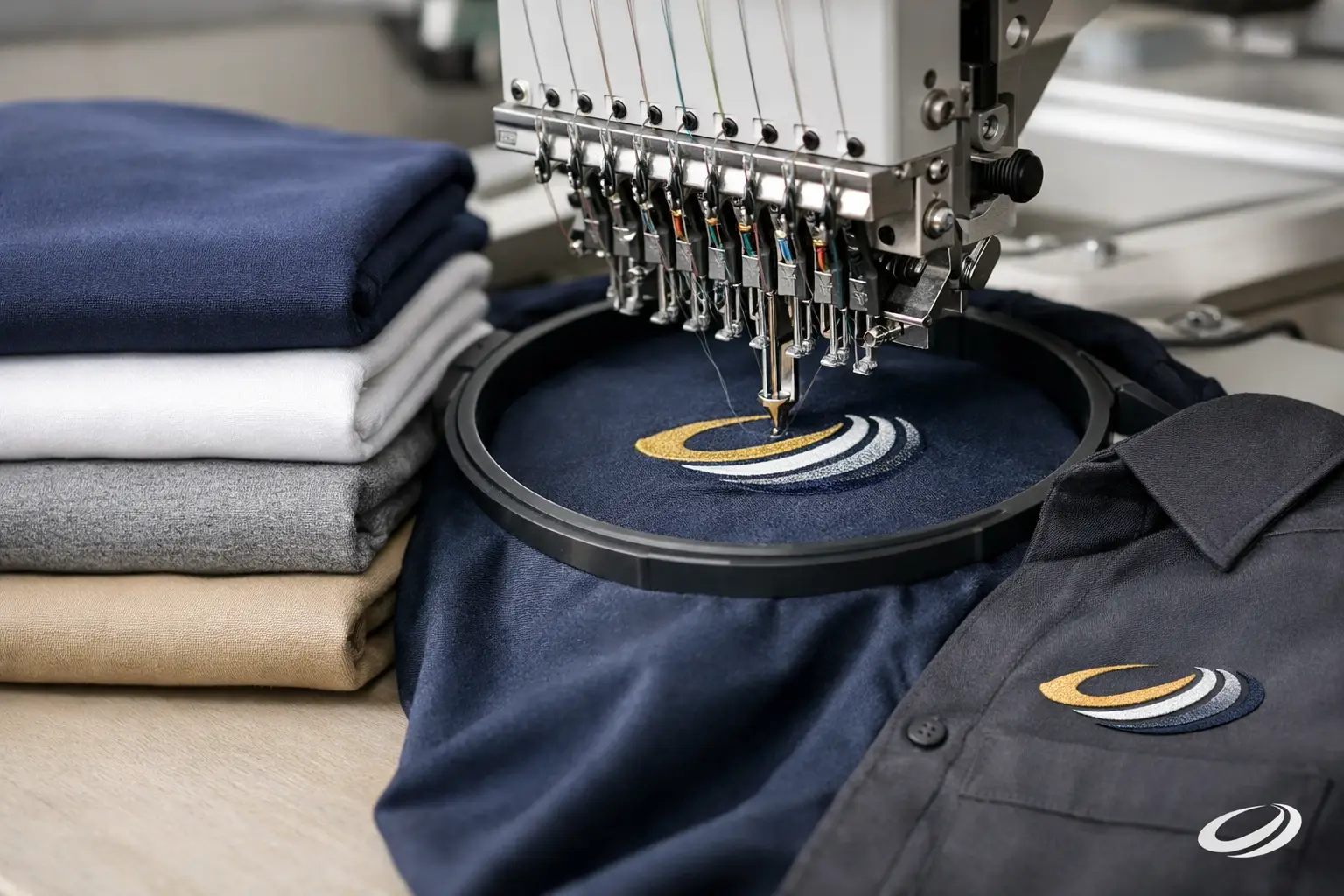
A uniform can look polished on the hanger and still turn into a problem after embroidery. The fabric puckers, the logo sinks in, or the shirt wears out long before the branding does. If you're choosing apparel for staff, students, volunteers, or field crews, the best embroidery fabrics for uniforms are the ones that hold stitching cleanly and keep their shape through repeat wear and washing.
That usually means looking past color and price alone. Fabric weight, weave, stretch, and surface texture all affect how embroidery performs. A good uniform fabric needs to do two jobs at once - wear comfortably in the real world and give your logo a stable surface.
What makes a fabric good for embroidered uniforms
Embroidery adds density and tension to fabric. That is why some garments look crisp with a stitched logo while others ripple around the design or distort after laundering. In practical terms, the best fabrics for embroidery have enough structure to support the stitch count without fighting the needle, thread, and backing.
Stability matters first. Tightly woven fabrics generally handle embroidery better than loose knits or very stretchy performance materials. A stable fabric gives the machine a cleaner surface and helps lettering stay readable, especially in small logos on the left chest.
Weight matters too. Very lightweight fabric can be embroidered, but it often needs extra support and more design restraint. Midweight fabrics are usually the safest choice for uniforms because they balance comfort, durability, and stitch quality.
Surface texture is another factor buyers often miss. Smooth fabrics tend to show embroidery with better definition. Heavily textured fleece, slub knits, or mesh can still work, but fine details may get lost. If your logo includes small text, thin outlines, or intricate icons, smoother fabric gives better results.
Best embroidery fabrics for uniforms by type
The right choice depends on how the uniform is used. Office staff, warehouse crews, restaurant teams, and school groups do not need the same garment.
Cotton twill
Cotton twill is one of the strongest options for embroidered uniforms, especially for button-down work shirts, shop shirts, and more structured staff apparel. Its tight weave and medium-to-heavy feel make it stable under embroidery, so logos stay sharp and flat.
This fabric also holds up well in repeated washing, which matters for uniforms used several days a week. The trade-off is that pure cotton twill can feel warmer and may wrinkle more than blended alternatives. For crews working indoors or in cooler conditions, that is often fine. For hot environments, it may not be the most comfortable option.
Poly-cotton twill
If you want a practical middle ground, poly-cotton twill is often the safest bet. It keeps much of the structure that makes twill embroidery-friendly while adding wrinkle resistance and easier care. That makes it a strong fit for service businesses, facility teams, retail staff, and school uniforms.
From a branding standpoint, poly-cotton twill is reliable. It supports clean stitching, wears well over time, and usually gives buyers a better balance of comfort and maintenance than 100% cotton. For many organizations, this is the default answer when they want durability without moving into heavy industrial garments.
Pique cotton and cotton blends
Pique is one of the most common polo fabrics for embroidery, and for good reason. The knit texture gives polos a professional but approachable look, while the fabric is substantial enough to support standard left-chest embroidery when the garment quality is decent.
That said, pique is not as stable as twill. Because it is a knit, it has more give, and the textured surface can slightly soften detail. For simple company logos, school emblems, and team names, that is usually not a problem. For very fine text or highly detailed marks, it helps to simplify the design or choose a smoother polo fabric.
Cotton-blend pique often performs better than very soft, lightweight cotton polos because it tends to hold its shape longer. If you are ordering polos for frequent wear, blend fabrics are often the smarter business choice.
Polyester performance fabric
Performance polos and uniform shirts are popular for active teams, outdoor work, hospitality, and warm-weather use. Moisture-wicking polyester can absolutely be embroidered, but this is where fabric choice gets more nuanced.
Some performance fabrics are smooth and stable enough to embroider well. Others are too thin, too stretchy, or too slick, which can lead to puckering or logo distortion if the garment and design are not matched carefully. The cleaner the surface and the more substantial the fabric, the better the result.
This is also a category where the logo itself may need adjustment. Dense fills, tiny lettering, and overly large chest designs can create issues on lightweight polyester. If comfort and heat management are a priority, performance fabric may still be the right call - but it works best with embroidery that is sized and digitized for that garment, not copied over from a heavier shirt.
Oxford cloth
Oxford cloth is a smart choice for front-office uniforms, sales teams, hospitality staff, and anyone who needs a more polished branded look. It has a firm weave, a refined appearance, and enough body to support crisp embroidery.
This fabric works particularly well for button-down shirts with small to medium logos. It presents well in client-facing settings and generally holds embroidery with strong edge definition. The main consideration is use case. Oxford is less suited to heavy physical work than twill or rugged blends, but for professional environments it is one of the better options available.
Denim and canvas
For tougher workwear uniforms, denim and canvas are strong embroidery performers. Both fabrics are dense, durable, and highly stable, which makes them excellent for larger logos, jacket embroidery, and garments used in demanding environments.
The downside is comfort and flexibility. These fabrics are heavier, and that does not fit every team or season. Still, for trades, outdoor crews, and branded outerwear, they offer a dependable surface that can take stitching well and last.
Fabrics that can be harder to embroider
Some fabrics are not bad, but they require more caution. Very lightweight poplin can work for embroidered uniforms, but if the logo is dense or oversized, the fabric may show strain around the stitch area. Very stretchy jersey knits can shift during embroidery and may not hold a clean shape afterward.
Fleece and softshell outerwear can also be tricky depending on pile and backing. They are common embroidered uniform items, especially for cooler weather, but the logo usually needs to be kept simple and placed carefully. Texture can swallow detail fast.
If the garment feels flimsy in hand, has obvious stretch, or has a highly uneven surface, it is worth asking whether embroidery is the best decoration method for that piece at all.
Matching the fabric to the job
The best embroidery fabrics for uniforms depend on where and how the apparel will be used. For office and customer-facing teams, oxford cloth and quality polos usually give the best mix of comfort and presentation. For service staff and daily wear uniforms, poly-cotton twill often delivers the most reliable long-term value.
For active roles or outdoor use, performance polyester may be the right fabric if the garment is substantial enough and the design is prepared for it. For industrial or rugged workwear, canvas, denim, and heavier twill fabrics are hard to beat.
Budget matters here too, but the cheapest shirt is not always the most affordable uniform decision. If a low-cost fabric does not embroider cleanly or wears out quickly, the branded result suffers. For organizations ordering at scale, it usually makes more sense to choose a fabric that supports the logo well and avoids replacement headaches.
Why logo design still matters
Even the best fabric cannot rescue a poor embroidery setup. Small text, thin lines, gradients, and packed detail may look good on a screen but fail on real garments. Uniform embroidery works best when the design is clean, readable, and sized appropriately for the fabric.
That is why fabric selection and decoration method should be decided together. A structured twill shirt can handle more stitch density than a lightweight performance polo. A smooth woven shirt will show detail better than textured pique. When buyers treat the garment and the logo as one decision instead of two separate ones, the final result is usually better.
For businesses and organizations ordering uniforms in the Salt Lake City area, that kind of planning helps avoid expensive reorders and mixed results across different apparel styles.
Choosing with confidence
If you need one safe answer, start with midweight poly-cotton twill for work shirts and quality cotton-blend pique for polos. Those fabrics cover a large percentage of uniform needs because they balance embroidery performance, comfort, durability, and cost.
If your team needs something more specialized, choose based on wear conditions first and logo detail second. A uniform has to function on the job, but it also has to represent your brand clearly every time someone puts it on. The best choice is the fabric that can do both without forcing a compromise you will notice later.
Ready to start your order?
GET A FREE QUOTE