
November 8, 2026
When DTF Printing Fits Your Company Apparel
A detailed logo with tiny lettering, a colorful event graphic, and a mix of cotton tees and performance polos can turn a simple apparel order into a production question. For many Salt Lake City companies and organizations, DTF printing is the practical answer when the design has more color or detail than a traditional screen print job calls for.
DTF stands for direct-to-film. It is a decoration method that gives teams a durable, full-color transfer applied with heat. It is not the right choice for every garment or every order, but it solves real problems for businesses that need sharp artwork, flexible placement, and dependable results without making a complicated project out of branded apparel.
What DTF Printing Is and How It Works
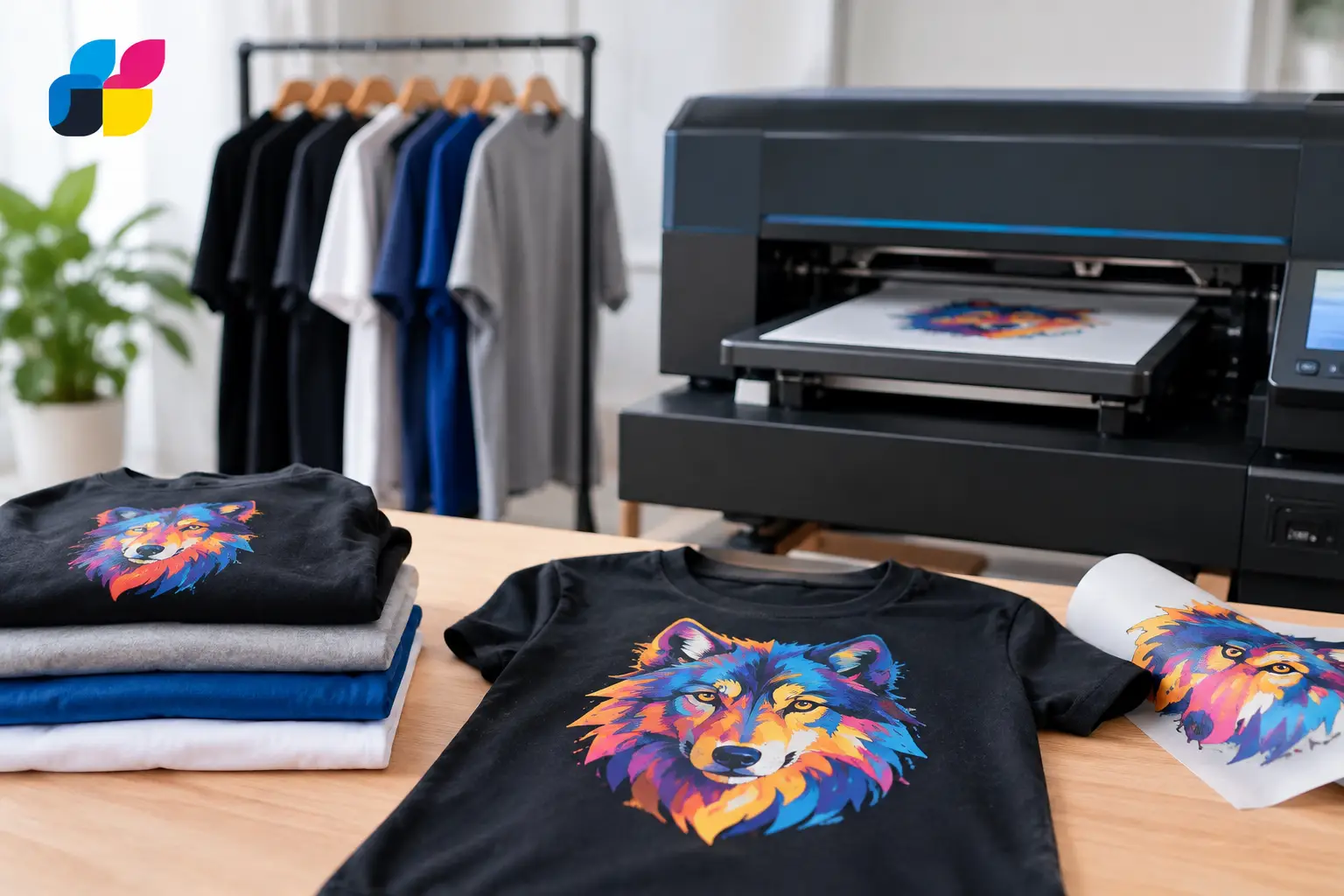
With DTF printing, we print your artwork onto a specialized film using textile inks. A powdered adhesive is applied to the printed design, then cured. The finished transfer is placed on the garment and heat pressed into place. After the film is removed, the design is ready to wear.
The key benefit is that the artwork is prepared as a transfer before it ever touches the shirt, hoodie, tote, or other blank. That allows for full-color graphics, gradients, fine lines, and small text that can be difficult or expensive to reproduce through other methods.
A DTF transfer also has a white ink base when needed. That matters on dark garments. A bright logo can stay bright on black, navy, charcoal, or other dark colors without requiring separate screen setup for every color in the design.
For your company, the result is a clean, colorful print with a slightly smooth finish on the fabric. It has more feel than ink printed directly into a shirt, but it is flexible and well suited to many everyday apparel uses.
When DTF Printing Makes the Most Sense
DTF is especially useful when your team needs a complex logo or event design but does not need a huge run of identical shirts. A company can use it for staff apparel, recruiting shirts, employee recognition items, trade show gear, or a corporate event where the artwork includes photographs, gradients, multiple colors, or detailed sponsor logos.
It also works well when the design needs to go on a variety of garment colors. For example, a West Jordan landscaping company may want the same bright logo on safety yellow tees, black hoodies, and gray work shirts. DTF can handle those changes efficiently while keeping the artwork consistent.
Small placement prints are another good fit. Think left-chest logos, sleeve graphics, names, or a detailed mark placed above a pocket. Screen printing can still be a great method for these applications, but DTF gives us more freedom when the artwork has fine detail or a lot of color.
Quantity matters, too. We work with group orders starting at 12 pieces. For a 12-piece to moderate-size order with full-color artwork, DTF is often more economical than building several screen setups. As the quantity rises and the art stays simple, screen printing may become the better value. The right method depends on the design, garment, quantity, and intended use, not just the number of colors in a logo.
DTF vs. Screen Printing vs. DTG
No decoration method wins every job. The best choice comes down to what your company needs the apparel to do.
DTF vs. screen printing
Screen printing remains one of the strongest choices for large orders with bold, simple artwork. It creates a durable print, works efficiently at volume, and allows for Pantone color matching. If your company has a two-color logo and needs several hundred staff shirts for locations across the Wasatch Front, screen printing is often the most cost-effective route.
DTF generally makes more sense when the design has many colors, shading, or fine photographic detail. It avoids the per-color screen setup involved in traditional screen printing. It can also be a smart option when the order contains several garment colors or a range of smaller design placements.
One trade-off is color control. DTF produces strong, attractive full-color graphics, but it is not the same as selecting a specific Pantone ink for a screen print. If exact brand-color matching is non-negotiable, especially for a large corporate apparel program, screen printing may be the better fit.
DTF vs. DTG
DTG, or direct-to-garment printing, prints ink directly into the fabric. It is a strong option for detailed art on suitable cotton garments, particularly when a softer print feel is the priority. DTG can be excellent for premium retail-style tees and designs that benefit from ink becoming part of the fabric surface.
DTF is usually more versatile across garment blends and performance fabrics. It can be applied to cotton, polyester, blends, and many other common apparel materials. That flexibility helps when an office team wants cotton shirts while field employees need moisture-wicking performance apparel.
The finish is different. DTG tends to feel softer when printed on the right garment. DTF tends to have a more noticeable but smooth transfer layer. We will be direct about that difference when we review your project, because the garment and the expected wear both matter.
Where embroidery fits
For polos, jackets, hats, and more polished uniforms, embroidery may be the best option. It creates texture and a professional appearance that works particularly well for smaller logos. Thread matching gives brands close control over logo colors, although embroidery is not ideal for every small line or detailed graphic.
Many companies combine methods. A property management team might choose embroidered polos for office staff, screen printed tees for maintenance crews, and DTF shirts for a company volunteer day. Keeping the artwork organized across those pieces helps the whole program look intentional.
Artwork That Produces Better DTF Results
Good apparel starts with usable art. A crisp vector logo is ideal for logos, lettering, and clean graphic elements. High-resolution PNG files can also work well for detailed artwork, especially when they have a transparent background. Screenshots, small web images, and compressed files may print poorly because the detail is not actually there to reproduce.
Pay close attention to thin lines and tiny text. Artwork may look readable on a computer screen but become too small when printed on a left chest or sleeve. Our team can help size the design so it reads clearly from a normal viewing distance.
Background handling is another common issue. If a logo is supplied with a white box around it, that box may become visible on a dark shirt. Transparent artwork or properly prepared art avoids that problem. If you are not sure what your file contains, send what you have. We can review it before production rather than making assumptions after the garments arrive.
Garment Selection Matters as Much as the Print
DTF works on a wide range of apparel, but not every garment is equally appropriate. Smooth, stable fabrics generally produce the cleanest result. Shirts with heavy texture, deep ribbing, unusual coatings, or substantial stretch may need a different approach or a test application.
Performance apparel deserves special attention. Many polyester garments are excellent DTF candidates, but some fabrics can react to heat or allow dye migration, where the garment color affects the white ink under a design. This is most common with certain dark or highly saturated polyester materials. Choosing the right blank and transfer process upfront prevents surprises.
We provide garments and blanks as part of our service, which keeps decoration and apparel selection coordinated. If your organization already has garments, we are happy to work with those as well. Let us know the brand, fabric content, and color before ordering so we can recommend the best decoration method.
Planning a Smooth Company Apparel Order
The fastest way to keep an order moving is to settle the basics before artwork approval: garment style and color, sizes, print locations, quantity, and the date the apparel is needed. For a corporate event, also decide whether shirts are for staff only, attendees, volunteers, or sponsors. Those groups may need different colors or print treatments.
Our standard turnaround is 12 business days from artwork approval, and we often finish sooner. Rush orders are available when timing is tight, but the earlier we see the project, the more options we can give you for garments and decoration.
It also helps to build a realistic size run. Office managers and event coordinators frequently order a few extra common sizes rather than trying to predict every last need exactly. That approach can reduce the headache of a late addition after production has started.
For teams across South Jordan, Salt Lake City, and the broader Wasatch Front, DTF is a useful tool, not a default answer. The best apparel program is the one that fits your artwork, budget, timeline, and how your employees or event staff will actually wear the garments. If you are planning a group order of 12 pieces or more, request a free quote at affordable-printing.com/request-a-quote/ or call our team at (801) 260-0606.
Ready to start your order?
GET A FREE QUOTE