
August 4, 2026
How to Design Giveaway Swag That Gets Kept
A giveaway table full of cheap, forgettable items does not help your company. The best branded products earn a place in a desk drawer, gym bag, car cupholder, or daily routine. That is the real goal when learning how to design giveaway swag: give people something useful enough to keep and branded clearly enough to remember where it came from.
For companies and event organizers in Salt Lake City and across the Wasatch Front, that usually means making a few smart decisions early. Product choice, artwork, color, quantity, and distribution plan all affect whether your swag feels worthwhile or gets left behind at the event.
Start With the Job Your Giveaway Swag Needs to Do
Do not start by asking, “What is the cheapest giveaway?” Start by asking what the item needs to accomplish for your company. Swag for employee appreciation has a different job than promotional items for a trade show, school fundraiser, recruiting event, or corporate tournament.
A practical item works well when you want repeat visibility. Drinkware, tote bags, notebooks, pens, lanyards, and hats can stay in use for months. A higher-value item may make sense for a smaller group of key clients, speakers, sponsors, or employees. If you need to reach a large crowd, a simple item with a clear logo can be the better use of the budget.
Think about where recipients will use the product. A branded water bottle is a natural fit for an outdoor event, wellness program, construction team, or youth sports group. Tote bags make sense for conferences, open houses, and community events where people need to carry materials. Lanyards are useful when guests need badges or access passes. The product should make sense before the logo ever goes on it.
It also helps to decide whether the giveaway is meant to start a conversation or extend one. At a booth, an item can draw people in, but your team still needs a reason to talk with them. For employee onboarding or a client gift, the item should reinforce the relationship after the handoff.
How to Design Giveaway Swag Around Your Audience
The most effective giveaway is rarely the item that appeals to everyone. It is the one that suits the people your company is trying to reach.
For an office-based audience, consider items that live at a workstation: quality pens, notebooks, drinkware, desk accessories, or apparel people can wear casually. For field crews, school groups, sports teams, and community volunteers, durable bags, hats, insulated drinkware, and branded shirts are often more useful. For an event with families, choose items that are easy to carry and appropriate for the setting.
Budget matters, but perceived value matters too. A lower-cost pen can be a good addition to a larger event package. On its own, it may not leave much of an impression. A well-made tumbler or embroidered cap costs more, but it can get used repeatedly and gives your brand more exposure over time.
There is no universal right answer. A company handing out 1,000 items at a public event may need a different approach than an HR team ordering 75 employee welcome kits. Match the product to the audience, quantity, and purpose rather than chasing a trend.
Keep the Artwork Simple and Readable
Giveaway swag has limited printable space. Treat that space like a billboard seen from a few feet away, not a brochure. Your company name or logo should be easy to recognize quickly.
A common mistake is trying to include the logo, phone number, website, tagline, social handles, event date, sponsor list, and several lines of small copy. That may fit technically, but it often does not read well on a pen, mug, tote, or shirt. Pick the one message that matters most. For many company giveaways, that is simply a clean logo and a strong brand color.
If your logo has fine lines, gradients, tiny type, or several colors, ask how it will reproduce on the actual item. Artwork that looks sharp on a screen can lose detail when printed small. Our team can help simplify or adjust artwork so it works with the chosen product and decoration method without changing the character of your brand.
Color contrast is especially important. Dark artwork on a dark product and light artwork on a light product are both hard to see. A white or light-colored imprint can make a major difference on black, navy, or dark green items. If accurate brand color is important, screen printing allows for Pantone color matching, while embroidery can be matched closely with thread colors.
Give Your Logo Room to Work
Empty space is not wasted space. A logo surrounded by breathing room usually looks more premium than one stretched edge to edge. This is particularly true on apparel, where a very large front print can feel more like a uniform than a giveaway people choose to wear outside work.
For shirts, hats, and jackets, consider whether a small left-chest logo, sleeve detail, or embroidered placement better fits the purpose. A larger back print can work well for staff shirts, volunteer apparel, race events, and teams, but it is not always necessary for a corporate giveaway.
Choose a Decoration Method That Fits the Product
The product and artwork should guide the decoration method. Each option has a practical use case.
Screen printing is a strong choice for larger apparel orders and bold artwork with defined colors. It produces durable, consistent results and is especially effective for company shirts, event tees, team apparel, and volunteer shirts. If your design uses one or a few spot colors, screen printing can be a cost-effective option.
Embroidery gives polos, hats, jackets, bags, and workwear a polished, long-lasting look. It is a good fit for employee uniforms, client gifts, and apparel your team will wear regularly. Fine details may need to be adjusted because thread has physical limits, but a well-prepared embroidered logo looks professional and holds up well.
DTF, or direct-to-film, is useful for detailed full-color designs, smaller runs, and artwork with multiple colors. DTG, or direct-to-garment, can be a good option for full-color designs on suitable garments. Both can help when a design would be difficult or expensive to separate into traditional screen print colors.
For promotional products such as drinkware, bags, and pens, available imprint methods depend on the item itself. The key is to choose the product before finalizing the artwork size and placement. A wide, horizontal logo may work beautifully on a tote but need a different layout for a bottle or cap.
Build a Budget That Protects the Important Parts
A useful swag budget accounts for more than the unit price. Product quality, decoration setup, number of imprint colors, packaging, and delivery timing can all affect the final cost. Ordering a slightly better item with a simpler print is often smarter than choosing the lowest-cost product and trying to add a complicated design.
Quantity affects price as well. A larger order can lower the per-piece cost, but only if your company can realistically distribute the items. Ordering too many products that sit in storage is not a bargain. For apparel and many group orders, our standard minimum is 12 pieces, which works well for company departments, sports teams, school groups, and event staff.
When comparing options, decide what cannot be compromised. If the product needs to survive daily use, prioritize durability. If the logo must match an established brand standard, prioritize color accuracy. If the event date is fixed, approve artwork early enough to protect the production schedule.
Our standard turnaround is 12 business days from artwork approval, and we often finish sooner. Rush orders may be available, but they are much easier to manage when your company has selected products, finalized artwork, and confirmed quantities before the last minute.
Plan How the Swag Will Be Given Away
Distribution changes what works. At a crowded event, lightweight items that are easy to grab and carry are practical. For a client meeting or executive retreat, presentation may matter more, and a smaller number of higher-quality items can make sense.
You can also use swag to encourage the action your company wants. A giveaway attached to a product demo, survey, meeting, social follow, or recruiting conversation can be more valuable than placing everything in an unattended bowl. Just keep the process simple. People should understand what they receive and why it is worth engaging.
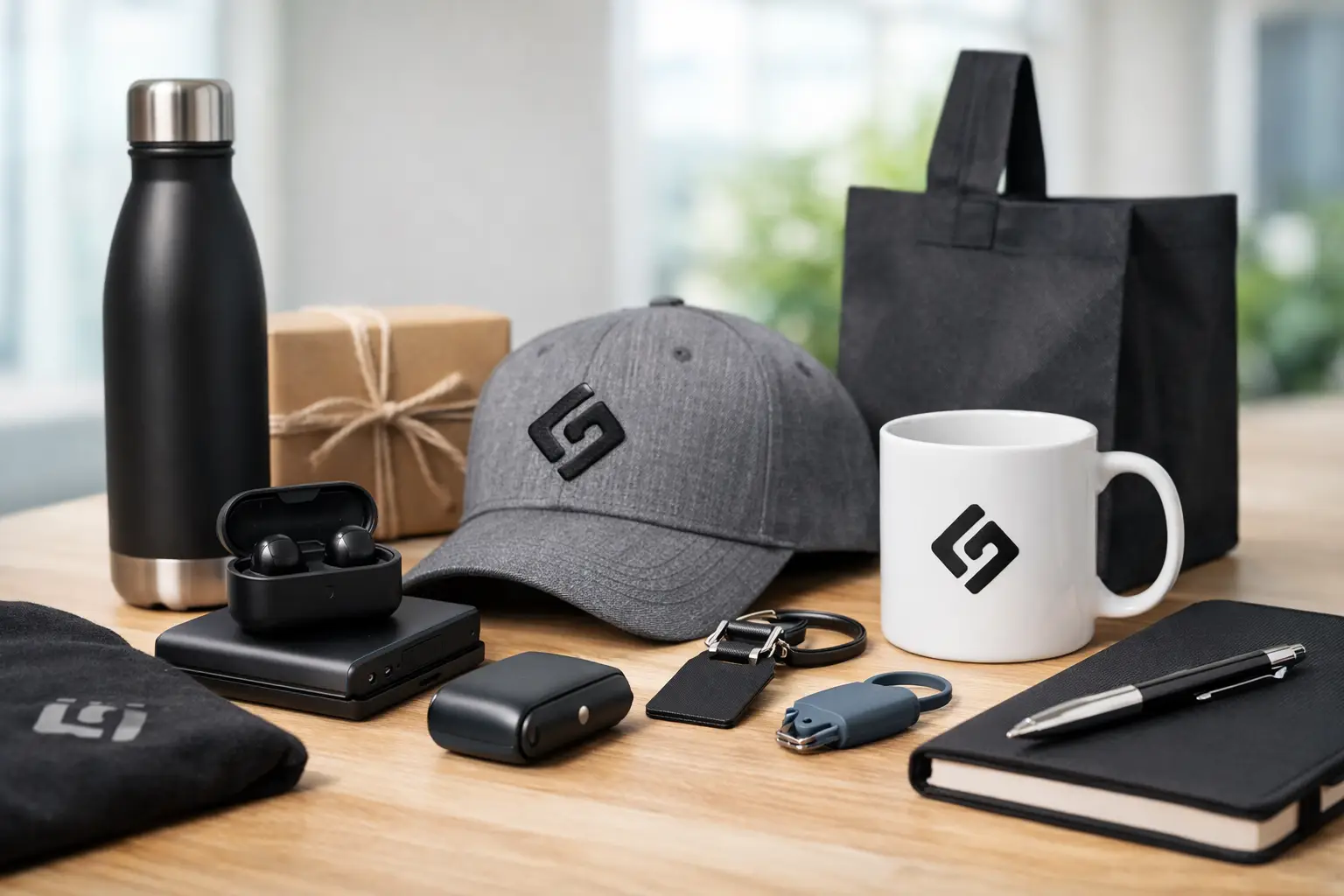
For employee gifts, consider creating a coordinated set instead of giving unrelated items. A branded shirt, cap, notebook, and drinkware item can feel intentional when the colors and artwork work together. That does not mean every item needs the same large logo. A consistent palette and clean mark are usually enough.
Good giveaway swag is not about putting a logo on the first available product. It is about choosing an item your audience will use, giving the artwork enough room to read, and ordering early enough that your company is not forced into a poor choice. Our South Jordan team can help your organization sort through product options, decoration methods, color matching, and timing. Call Affordable-Printing at (801) 260-0606 for a free quote.
Ready to start your order?
GET A FREE QUOTE