_1782777776334-CjnZ693B.png)
May 16, 2026
DTG vs DTF Printing: Which Fits Your Order?
If you are choosing between dtg vs dtf printing for a branded apparel order, the wrong decision usually shows up later - in higher costs, slower production, or shirts that do not match the job. For businesses, schools, nonprofits, and event teams, the best print method is not the one with the most buzz. It is the one that fits your artwork, garment type, quantity, and deadline.
DTG and DTF can both produce full-color prints, and from a distance they may look similar. The difference is in how the design is applied, what fabrics it works best on, and how the final print feels and performs. If you are ordering custom apparel for staff uniforms, fundraiser shirts, event merch, or promotional giveaways, those details matter.
DTG vs DTF printing: the core difference
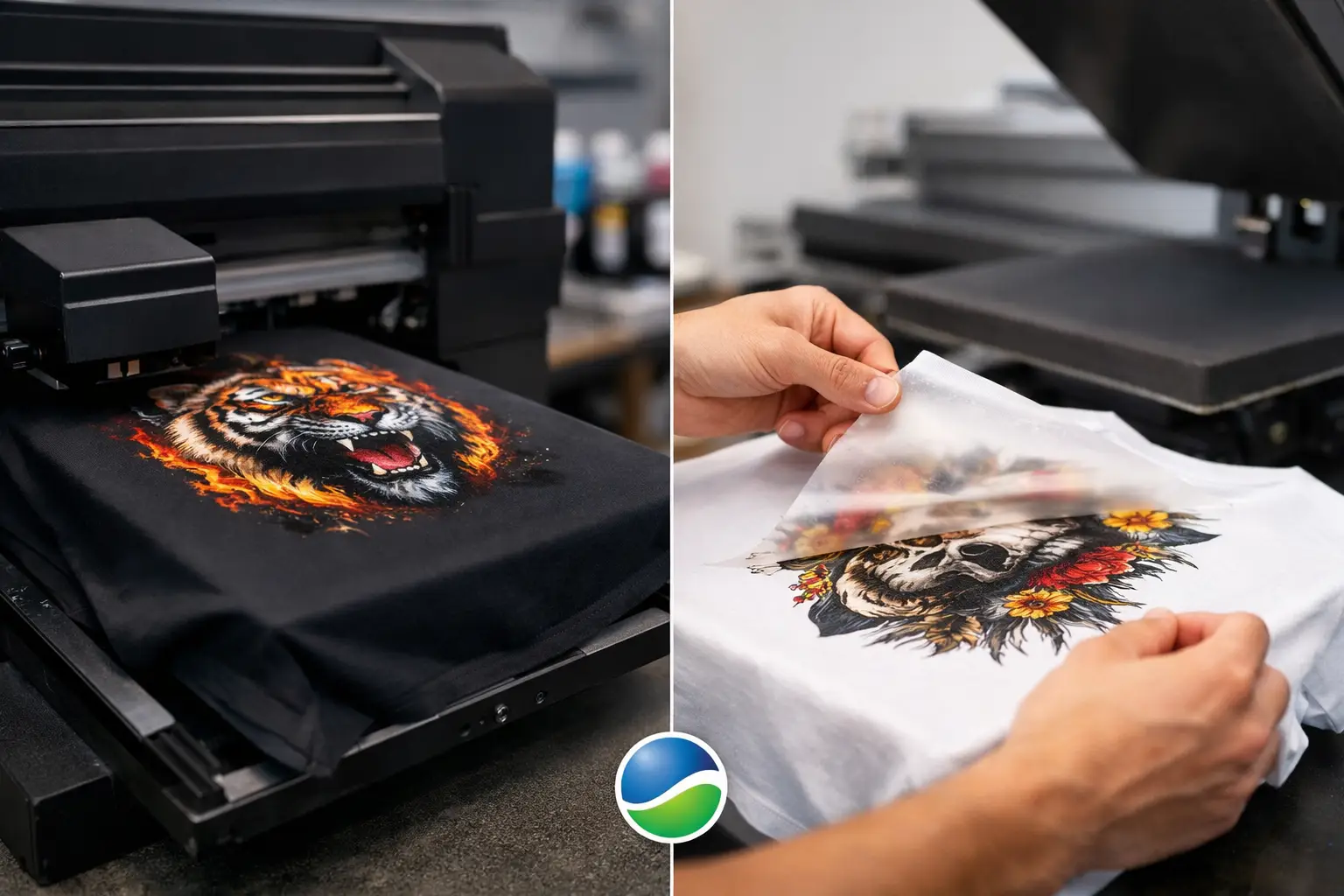
DTG stands for direct-to-garment. The printer applies water-based ink directly onto the shirt, much like printing on paper, but with equipment built for fabric. This method works especially well on cotton and cotton-heavy garments and is known for a softer feel when the print is done well.
DTF stands for direct-to-film. The design is first printed onto a special film, then transferred onto the garment using adhesive powder and heat. Because the design is transferred rather than printed straight onto the shirt, DTF works on a wider range of fabrics, including cotton, polyester, blends, and performance materials.
That basic production difference drives almost every buying decision. DTG is often a strong fit when print feel and cotton compatibility matter most. DTF is often the more flexible option when you need fabric versatility, stronger color pop on different garments, or a practical answer for mixed apparel orders.
When DTG makes more sense
DTG is usually the better choice when your design includes detailed artwork, gradients, or photographic elements and you are printing on quality cotton shirts. Because the ink goes directly into the garment fibers, the print can feel smoother and less layered than a transfer.
For retail-style graphics, staff shirts with a softer hand, or branded apparel where comfort matters, DTG has a real advantage. If your organization wants shirts people will wear beyond a single event, that softer finish can make a difference.
DTG also tends to work best when the garment itself is part of the presentation. A premium cotton tee with a clean, detailed print can feel more like finished apparel and less like a giveaway item. That matters for company merch, campus organizations, and nonprofit fundraising programs where perceived value affects how often the item gets worn.
The trade-off is fabric limitation. DTG performs best on cotton or high-cotton garments, and results can vary more on blends or synthetic materials. Dark garments can also require pretreatment, which is part of the normal process but can affect production flow depending on the order.
When DTF is the better fit
DTF is often the stronger choice when your order includes multiple garment types or fabrics. If you need logos on cotton tees, polyester polos, hoodies, tote bags, or performance wear, DTF gives you more flexibility across the board.
That makes it useful for business apparel programs, school spirit wear, event staffing, and practical branded merchandise where consistency across products matters more than achieving the softest possible print feel. DTF also handles bold color well, which is helpful for logos, sponsor graphics, and designs that need to stand out at a glance.
In many cases, DTF is the method that solves real-world ordering problems. Maybe your team wants moisture-wicking shirts for an outdoor event. Maybe your staff uniforms include both tees and quarter-zips. Maybe your nonprofit needs several garment styles for volunteers and supporters. DTF can simplify those mixed orders because it is not as restricted by fabric type.
The trade-off is feel. Since DTF adds a transfer layer to the garment, the print can feel more noticeable than DTG, especially on larger designs. That does not make it bad. It just means the result is different. For many branded apparel orders, durability and versatility matter more than a softer hand.
Print quality, feel, and appearance
This is where buyers often need the clearest answer. Neither method is automatically better. It depends on what kind of result you want.
DTG usually has the edge for softness and natural fabric integration on cotton garments. Designs can look clean and detailed without adding as much surface texture. If the shirt is meant to feel like premium casual apparel, DTG is often attractive.
DTF usually has the edge for versatility and color consistency across more fabric types. It can produce bright, sharp graphics that work well for logos, event designs, and branded art that needs strong visibility. On polyester and blends, that flexibility is a major advantage.
For left-chest logos, staff branding, or compact front prints, both can work well. For oversized designs, the difference in hand feel becomes more noticeable. If wearer comfort is the priority, DTG may be preferable on cotton. If impact and fabric compatibility matter more, DTF may be the smarter choice.
Durability and wash performance
Buyers often ask which one lasts longer. The honest answer is that both can perform well when produced correctly and applied to the right garment. Durability depends on print quality, garment quality, and how the item is washed and worn.
DTG prints, because they are ink-based and absorbed into the garment, can hold up well on cotton apparel when cared for properly. Over time, they may fade in a way that feels closer to the shirt itself aging.
DTF prints are generally valued for strong adhesion and dependable performance across many fabrics. They can be a practical option for workwear, team apparel, and frequently used branded garments. Because the design sits more on top of the fabric, wear characteristics may look different than DTG, but that does not mean worse.
For organizations ordering apparel that will see repeated use, the better question is not just which lasts longer. It is which method fits the garment and use case better. A strong print on the wrong fabric choice is still the wrong order.
Cost depends on the job, not just the method
There is no universal rule that DTG is always cheaper or DTF is always cheaper. Cost depends on garment type, artwork, quantity, setup needs, and whether you are trying to decorate one product style or several.
DTG can be a smart option for cotton shirts with detailed artwork, especially when the print quality and softness justify the choice. DTF can create efficiencies when you need the same graphic across different fabrics or garment categories. If your order includes a mix of tees, hoodies, and performance items, DTF may reduce complications that would otherwise increase production friction.
For budget-conscious buyers, the best approach is to look at the total order outcome. A method that saves a little on the print but limits your garment choices may not be the most cost-effective decision. The method that aligns with the order usually creates better value.
How to choose the right method for your apparel order
Start with the garment fabric. If you are printing primarily on cotton and want a softer retail-style finish, DTG is often a strong candidate. If you are printing on polyester, blends, or multiple garment types, DTF deserves serious consideration.
Next, look at the artwork. Full-color graphics, gradients, and detailed designs can work with both methods, but the desired finish matters. If you want the print to feel more integrated into the shirt, DTG may be the better route. If you want bold graphics across a wider range of products, DTF may make more sense.
Then consider the purpose of the apparel. Promotional giveaway shirts, staff uniforms, school apparel, fundraising merch, and event wear all have different priorities. Some buyers care most about comfort and print feel. Others need flexibility, durability, and consistent branding on several garment categories.
This is where working with a provider that understands multiple decoration methods helps. Affordable-Printing works with businesses and organizations that need the method to fit the project, not the other way around. That matters when your order includes real constraints around budget, garment selection, and brand visibility.
Which is better: DTG or DTF?
The better option is the one that matches your job.
Choose DTG when you want a soft-feel print on cotton apparel and the shirt itself is part of the value. Choose DTF when you need broader fabric compatibility, stronger flexibility across product types, and a practical solution for mixed branded apparel orders.
If you are ordering for a business, school, nonprofit, or event, the best result usually comes from asking a few simple questions first: What fabric are we printing on? How important is print feel? Are we decorating one garment type or several? What does this apparel need to do once people start wearing it?
Answer those well, and the print method gets a lot easier to choose. The goal is not picking the trendier option. The goal is putting your logo, message, or event branding on the right product in the right way so it gets worn, seen, and remembered.
Ready to start your order?
GET A FREE QUOTE