_1782777776334-CjnZ693B.png)
July 18, 2026
DTG Printing Salt Lake City for Branded Teams
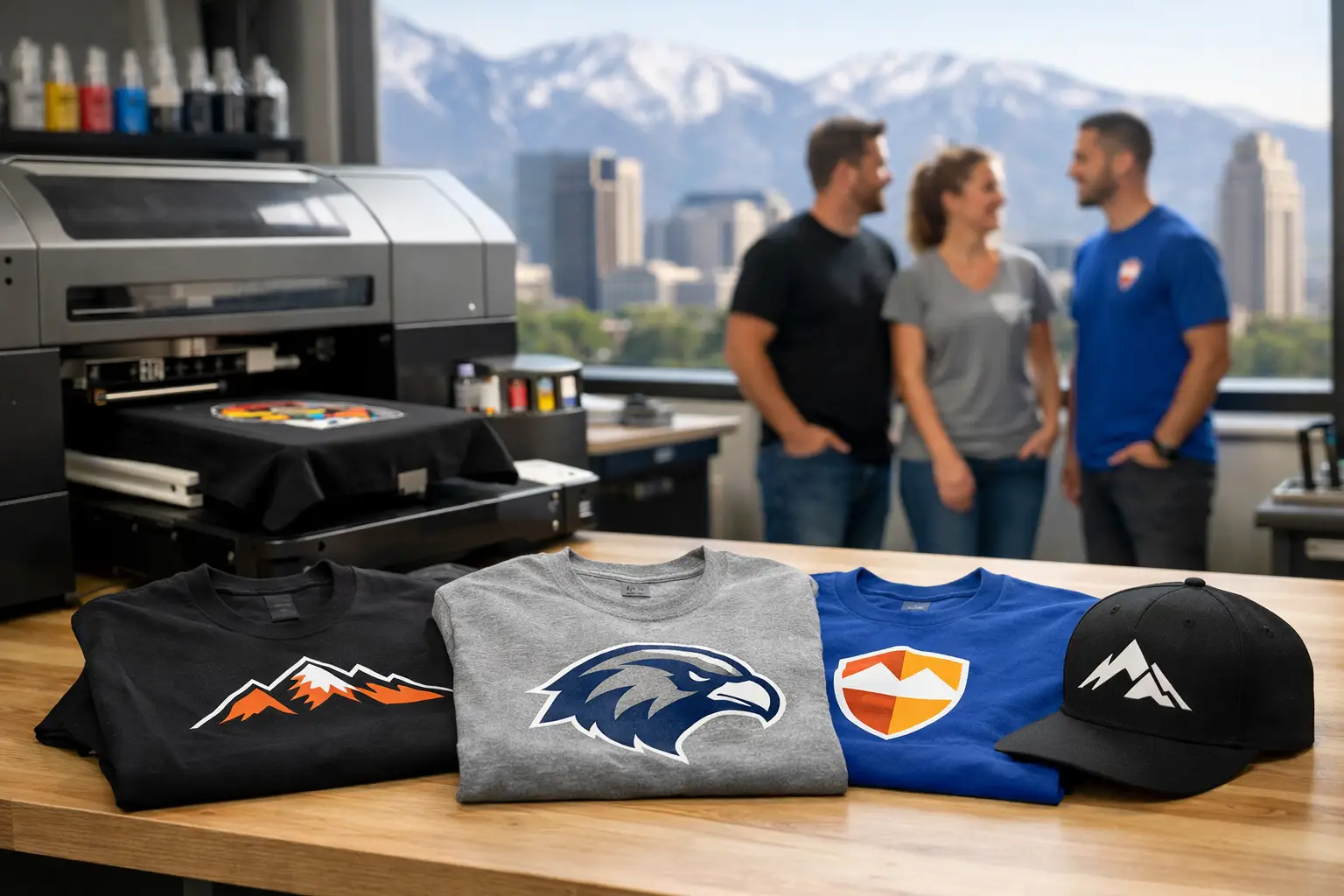
A photo-realistic event graphic, a shirt with individual names, or a design packed with color can look great on apparel without requiring a complicated setup. That is where DTG printing Salt Lake City businesses and organizations often need can be a practical fit. Direct-to-garment printing puts water-based ink directly into the fabric, making it especially useful for detailed artwork and smaller group orders.
For a company in Salt Lake City, a school in Sandy, or an event organizer serving the Wasatch Front, the right decoration method depends on the garment, artwork, quantity, and intended use. DTG is not automatically the best choice for every shirt. It is a strong option when the design calls for the specific strengths it offers.
What DTG Printing Does Well
DTG, short for direct-to-garment, works much like an inkjet printer designed for apparel. The garment is loaded onto the machine and the design is printed directly onto the fabric. On dark garments, a white ink base is printed first so colors appear bright and accurate.
The main advantage is detail. DTG can reproduce gradients, photographs, fine lines, small text, and full-color artwork without building separate screens for each ink color. A marketing team planning a staff shirt with a colorful illustration, for example, does not have to simplify the design into a few flat spot colors just to make it printable.
The print also has a softer feel than a thick transfer because the ink is absorbed into the garment fibers. The exact feel depends on the shirt material, the artwork, and whether a white underbase is needed, but DTG is often a good choice when comfort matters for employees, volunteers, or event participants wearing shirts for a full day.
DTG works best on quality cotton or cotton-rich garments. Our team helps customers select blanks that will print cleanly and hold up well, rather than asking your company to guess which shirt will work with the design.
When DTG Printing in Salt Lake City Makes Sense
DTG is especially useful for orders with lots of color but a modest quantity. A business does not need to pay for separate screen setup for every color in the design, which can make DTG a sensible choice for a 12-piece staff order, a nonprofit volunteer group, or a limited-run corporate event.
It is also a solid fit when your artwork includes photographic elements or complicated shading. Think of a charity 5K shirt featuring a scenic Utah image, a company anniversary design with illustrated landmarks, or a recruiting campaign that uses full-color branded artwork. Those designs can be difficult or expensive to reproduce with traditional screen printing when the order is small.
DTG can also help with variable information. If each garment needs a different name, number, department label, or attendee detail, printing individual pieces is more manageable than rebuilding screen-printing setups. This is useful for employee recognition programs, team apparel, and smaller event groups.
That said, DTG is not necessarily the right answer for every order. If your company needs 200 shirts with a simple one- or two-color logo, screen printing will often provide better value per piece. If the garments are polyester performance shirts, hoodies with unusual fabrics, jackets, or hats, DTF or embroidery may be the better route.
DTG vs. Screen Printing, DTF, and Embroidery
Choosing decoration should start with the job, not a preferred method. At Affordable-Printing, we look at the artwork and the garments before recommending a production approach. That prevents a common mistake: choosing a method because it sounds familiar, then getting a result that does not suit the project.
Screen Printing for Larger, Simpler Orders
Screen printing is a dependable choice for larger orders and artwork with fewer colors. It produces durable, bold graphics and allows for Pantone color matching when brand color consistency is important. For uniforms, company shirts, school spirit wear, and event merchandise with a straightforward logo, it is often the most cost-effective option as quantities increase.
The trade-off is setup. Each color needs its own screen, so a full-color design with ten shades is more involved than a two-color logo. Screen printing can still handle detailed art, but DTG may be the more efficient choice for small runs of complex artwork.
DTF for Flexibility Across Fabrics
DTF, or direct-to-film, creates a printed transfer that is heat applied to the garment. It handles detailed, full-color designs and works on a broader range of materials than DTG, including many polyester garments and blends. It is a practical option for sports apparel, performance wear, and projects that mix garment types.
DTF prints are durable and vivid, though they generally have more of a transfer feel than DTG ink printed into cotton fabric. For a business choosing between the two, the garment fabric usually answers much of the question.
Embroidery for Polished, Long-Term Apparel
Embroidery gives polos, hats, jackets, quarter-zips, and workwear a professional, dimensional finish. It is well suited to company uniforms, client-facing staff apparel, and employee gifts. Thread matching helps keep a logo close to your company colors.
Embroidery does have limits. Very small lettering, gradients, and detailed photographic art do not translate well into stitches. A simple logo on a polo is often ideal. A colorful campaign illustration is not.
Artwork Preparation Makes a Difference
A good DTG print begins with usable artwork. A blurry image pulled from a website or a screenshot from a phone may look acceptable on a monitor but can print soft on a shirt. For the cleanest results, send the highest-resolution version of your design available. Original design files are helpful, but a large, clear PNG can also work for many DTG jobs.
Transparent backgrounds are especially useful when the graphic needs to sit cleanly on a dark shirt. If the design has a white rectangle behind it, that rectangle may be part of the image and could print unless it is removed first.
Our team can review what you have, help with artwork adjustments, and explain any limitations before production. This is often where local guidance saves time. A design may need a slightly thicker line, a larger wordmark, or a different shirt color to produce the result your company expects.
Plan the Order Around Your Deadline
Custom apparel projects move faster when the key details are settled early: garment style, sizes, print locations, artwork, and quantity. If your organization is ordering shirts for a conference, employee onboarding, a school fundraiser, or a community tournament, allow time for artwork approval before the event date.
Our standard turnaround is 12 business days from artwork approval, and we often finish sooner. Rush orders are available when schedules are tight, but it is best to contact us early so we can confirm what is realistic for your timeline and garment selection.
For most group orders, collecting sizes before requesting a quote also helps. You do not need every detail finalized to start the conversation, but an estimated quantity, garment type, print locations, and event date give our team what they need to recommend DTG, screen printing, DTF, or embroidery accurately.
A Better Fit Than Guessing Online
Business buyers have enough to manage without sorting through shirt weights, print methods, artwork files, and delivery dates alone. A local print partner should help make those choices clear. Whether your company needs colorful DTG shirts for a Salt Lake City event or a broader mix of branded apparel and promotional products, the goal is simple: get apparel that fits the use, the budget, and the deadline.
For a free quote on DTG printing or another decoration method for your team, visit affordable-printing.com/request-a-quote/ or call Affordable-Printing at (801) 260-0606. We will help you choose the right approach before production begins.
Ready to start your order?
GET A FREE QUOTE