_1782777776334-CjnZ693B.png)
June 5, 2026
What Shirts Work for DTG Best?
If your company is ordering printed tees and asking what shirts work for DTG, the short answer is this: 100% cotton usually gives you the best print quality. But that does not mean every cotton shirt is a good DTG shirt, and it definitely does not mean blends never work. The right choice depends on your artwork, budget, and how your team will actually wear the shirts.
For business buyers in Salt Lake City and across the Wasatch Front, this matters more than people think. A shirt that looks fine blank can print dull, fuzzy, or inconsistent if the fabric is not a good match for direct-to-garment printing. If you are ordering for employees, an event crew, a nonprofit fundraiser, or a company store, getting the shirt right up front saves money and avoids rework.
What shirts work for DTG most consistently
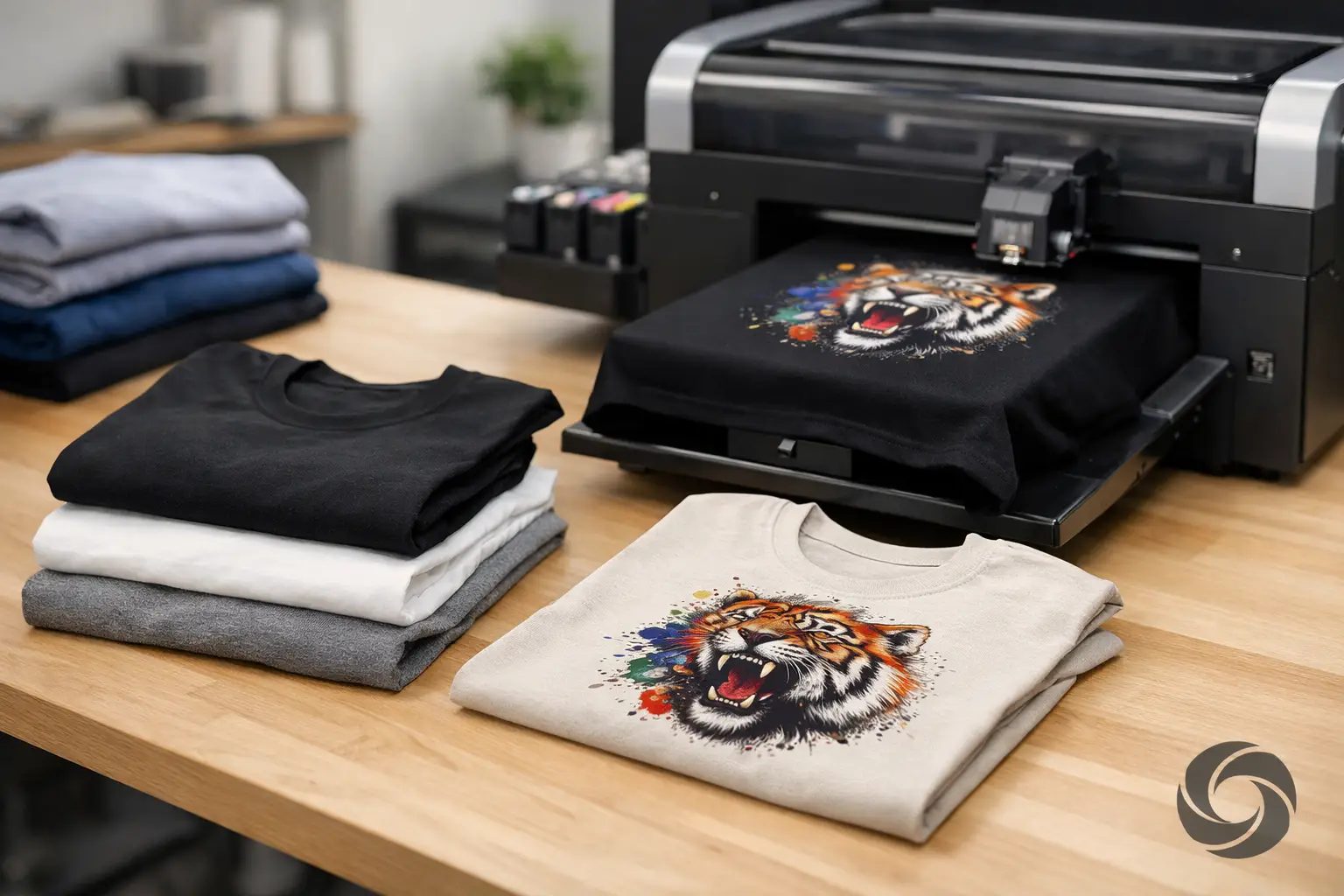
DTG prints directly into the garment, so the fabric has a big effect on how the design looks. The smoothest, most reliable option is ringspun 100% cotton. It gives the ink a stable surface, helps fine detail show up better, and usually produces the softest finished print.
Combed ringspun cotton is often even better than basic cotton because the surface is cleaner and smoother. That matters when your design includes small text, gradients, or detailed artwork. If your company logo has thin lines or a lot of color variation, better fabric usually means a better result.
Heavy cotton versus lightweight cotton is more of a case-by-case decision. Midweight shirts are often a safe choice for DTG because they feel substantial without being too stiff. Very lightweight shirts can print well, but they may show more garment texture through the print. Heavier shirts can look great too, especially for premium branded apparel, but comfort and budget still matter.
What shirts do not work as well for DTG
Polyester-heavy shirts are usually where DTG gets less predictable. The issue is not that they are impossible. The issue is that they generally do not absorb DTG ink the same way cotton does. Prints can look less vibrant, and some garments present added challenges depending on color and finish.
Tri-blends and cotton-poly blends can still be good options when the goal is softness and a worn-in look. A lot of teams like that feel. The trade-off is that the print may appear more muted than it would on 100% cotton. For some brands, that is perfectly fine. For others, especially if exact color impact matters, it is not the best fit.
Performance fabrics are another category to handle carefully. If your employees need moisture-wicking polos or athletic tops, DTG is usually not the first decoration method we would recommend. In those cases, DTF or embroidery often makes more sense depending on the garment and logo.
Fabric content matters more than the label
When people ask what shirts work for DTG best, they are often really asking which fabric blend gives the least trouble. Here is the practical answer: the more cotton, the more DTG-friendly the shirt usually is.
A 100% cotton shirt is generally the easiest path to a bright, clean print. A 90/10 blend may still perform well. A 52/48 blend can work, especially if your company wants a softer retail-style shirt, but you should expect a slightly more vintage result. Once you move into high-polyester territory, DTG becomes less ideal for most business apparel orders.
That is why garment selection should happen before artwork approval, not after. The same design printed on two different shirts can look like two different jobs.
Shirt surface and construction also affect print quality
Fabric content gets most of the attention, but shirt construction matters too. A smooth face is better for DTG than a rough, open texture. Ringspun cotton tends to outperform basic open-end cotton for that reason.
Seams, pockets, collars, and specialty cuts can also limit print placement. DTG works best on a flat printing area. If your shirt has uneven surfaces or design elements near the print zone, that can affect the final result.
Garment color matters as well. White shirts and light colors are the most straightforward because they usually need less setup for the print to show clearly. Dark garments can still look great with DTG, but they typically require a white underbase. That extra step is normal, but it changes how the print is built and can affect feel and cost.
The best DTG shirts for business orders
For most company orders, we usually guide buyers toward a few practical categories rather than chasing one perfect shirt. If your priority is the best print quality, choose a 100% ringspun cotton tee in a good midweight fabric. If your priority is comfort and a softer retail look for your team, a cotton-heavy blend may be a strong option. If your priority is athletic wear or uniform durability, another decoration method may be better than DTG.
This is where business use really matters. Staff shirts for a restaurant opening, nonprofit event shirts, conference giveaways, and internal company merch do not all need the same garment. The best shirt is the one that matches the job.
For example, if your South Jordan office is ordering 24 shirts for a one-day event and wants full-color artwork, DTG on a cotton tee may be the cleanest answer. If your company needs 100 branded shirts with a simple logo for ongoing employee use, screen printing might be more cost-effective. If the logo is going on polos or performance wear, embroidery or DTF may be the better route.
What shirts work for DTG when you want soft prints
A lot of buyers care about hand feel, especially for employee apparel. One reason DTG is popular is that on the right garment, the print can feel very soft. That is especially true on light-colored 100% cotton shirts where the ink can absorb into the fabric more naturally.
If you put the same design on a darker shirt, the print may still look excellent, but it can feel a little different because of the underbase. That is not a defect. It is just part of how dark-garment DTG works.
If your team wants a premium soft shirt and a soft print, that usually points back to combed ringspun cotton or a cotton-rich premium tee. The trade-off is price. Better blanks usually cost more, but they often wear better and make your brand look better too.
Budget, minimums, and when DTG makes sense
DTG is a strong option for detailed, full-color artwork, especially when screen printing setup is not the best fit for the design. But shirt choice still drives a lot of the outcome. Going with the cheapest blank available can undermine the whole project.
For business buyers, this is less about chasing the lowest unit cost and more about making sure the shirts actually get worn. If the fabric feels rough or the print looks weak, the shirts end up in a drawer. That is not a good use of your apparel budget.
Our team works with companies across the Wasatch Front on orders starting at 12 pieces, and this is one of the most useful conversations to have early. If you tell us who the shirts are for, how they will be used, and what matters most - softness, price, color accuracy, or durability - we can recommend whether DTG is the right decoration method and which garments are worth considering.
A practical way to choose the right shirt
If your artwork is full color and detailed, start with 100% ringspun cotton. If your company wants a fashion-forward shirt with a slightly more relaxed print look, consider a cotton-heavy blend. If your team needs uniforms, workwear, or performance apparel, do not force DTG onto a garment that would be better with screen printing, embroidery, or DTF.
That is usually the smartest way to approach custom apparel. Start with the use case, then match the shirt and decoration method to it. Not every shirt should be printed the same way, and not every good shirt is a good DTG shirt.
We handle DTG, screen printing, embroidery, and DTF, so we can recommend the method that fits the garment instead of trying to make one process fit everything. We also provide the garments for most orders, which helps keep quality and consistency on track, though we are happy to work with garments you supply if preferred. Standard turnaround is 12 business days from artwork approval, and we can discuss rush timelines if your company is on a deadline.
If you are planning apparel for your team, event staff, or company promotion and want help choosing the right garment, request a free quote at affordable-printing.com/request-a-quote/ or call (801) 260-0606. We will help you sort out the shirt, the print method, and the timeline before anything goes into production.
Ready to start your order?
GET A FREE QUOTE