_1782777776334-CjnZ693B.png)
May 14, 2026
How to Choose Printing Method for Apparel
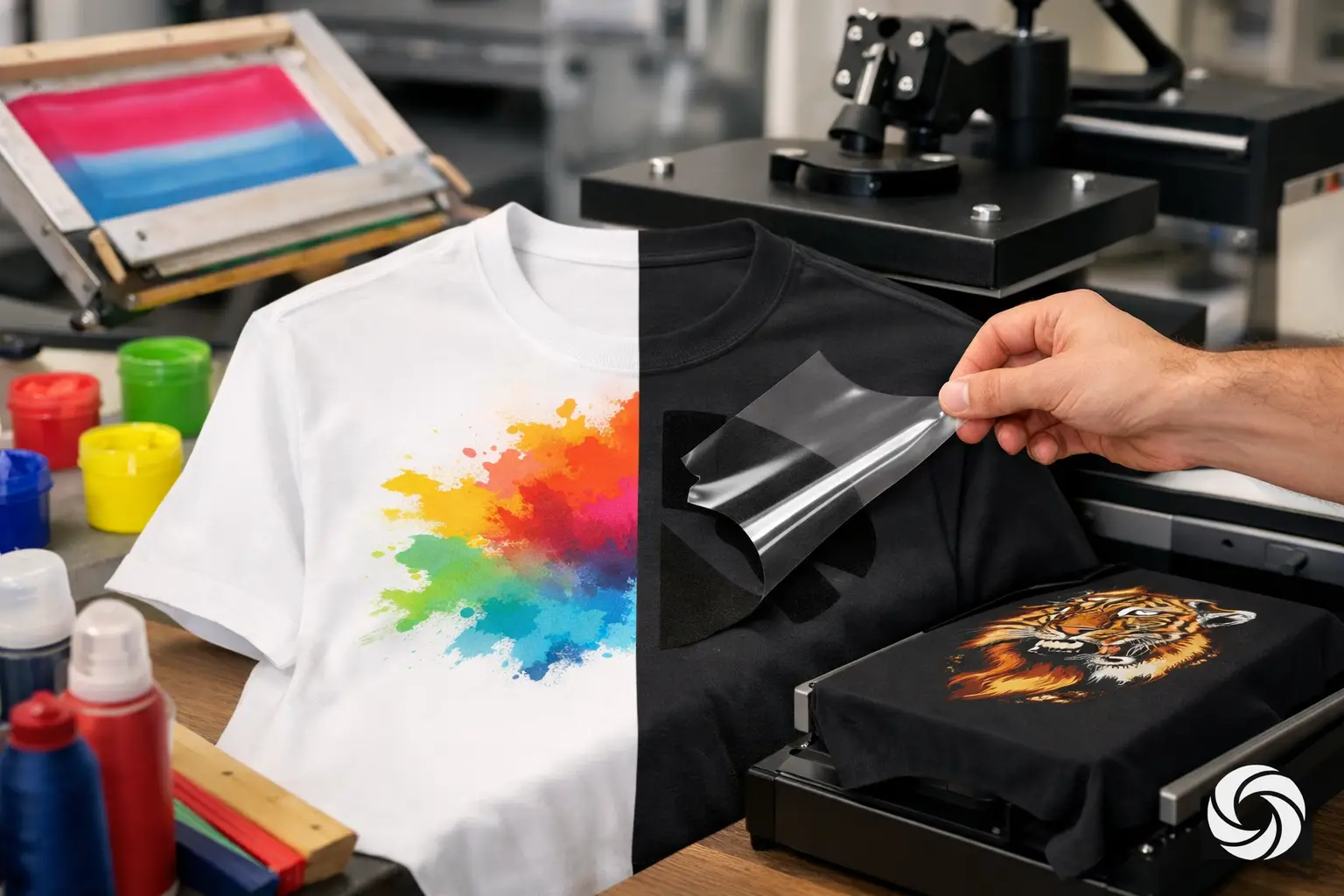
A left-chest logo on polos, a full-color fundraiser tee, and branded hoodies for staff should not all be produced the same way. If you are figuring out how to choose printing method for a project, the right answer usually comes down to four things - quantity, artwork, garment type, and purpose.
That matters because the printing method affects more than appearance. It changes your cost per piece, how the item holds up over time, what fabrics will work, and how quickly you can move from approval to production. For businesses, schools, nonprofits, and event organizers, choosing well means fewer surprises and better use of budget.
How to choose printing method starts with the job
Before comparing screen printing, embroidery, DTG, or DTF, get clear on what the item needs to do. A staff uniform has different requirements than giveaway shirts for a 5K. One needs a clean, durable branded look that wears well repeatedly. The other may need to hit a target budget while still making the logo visible from a distance.
Start by asking a few practical questions. How many pieces are you ordering? Is the design simple or detailed? Are there gradients, small text, or multiple colors? What garments are you decorating? Will the item be worn weekly, handed out at an event, or sold as merchandise? These answers narrow the field fast.
In most cases, there is no single best method for every order. There is only the best fit for the specific combination of design, fabric, quantity, and budget.
Screen printing works best when volume matters
Screen printing is often the strongest option for larger apparel orders, especially when the design is bold and the garment style is consistent. It produces a clean, durable print that works well for company shirts, school spirit wear, event tees, and team apparel.
The main advantage is value at quantity. Once the setup is complete, screen printing becomes more cost-effective as order size increases. That makes it a smart choice for bulk runs where consistency matters.
It is also a strong option for designs with solid colors and clear shapes. Logos, slogans, and straightforward graphics usually translate well. The print has a dependable, professional look and holds up well with regular wear.
The trade-off is that screen printing is less flexible for highly detailed artwork or designs with a lot of color variation. If your file includes photo effects, gradients, or frequent art changes across garments, another method may make more sense. Setup also plays a bigger role, so very small runs are not usually where screen printing shines.
Choose screen printing when:
You need a larger quantity, want strong value per piece, and your design is relatively simple and consistent across the order.
Embroidery is best for a polished, long-term look
If the goal is a more elevated branded appearance, embroidery is often the right answer. It is especially common on polos, jackets, hats, quarter-zips, and workwear where a stitched logo adds structure and a more professional finish.
Embroidery stands out because it is not ink sitting on the fabric. It is thread sewn directly into the item, which gives the logo dimension and texture. For employee uniforms, client-facing apparel, school staff gear, and corporate outerwear, that can be the difference between a casual promo item and a piece that feels part of the brand.
It is also durable. Repeated washing and regular use are generally not an issue when the logo is digitized correctly and placed on the right garment.
The limitation is artwork style. Small details, tiny text, and complex shading do not always convert well into thread. Embroidery also works better for smaller placement areas like left chest, sleeve, or hat front than for large full-front graphics.
Choose embroidery when:
You want a professional look, the logo can be simplified for stitching, and the garment is something like a polo, cap, jacket, or work shirt.
DTG is a strong option for detailed, full-color artwork
Direct-to-garment, or DTG, is useful when the design contains more detail than screen printing typically handles well. If your artwork includes gradients, subtle shading, fine lines, or a lot of color variation, DTG can reproduce that look more naturally on apparel.
This method prints directly onto the garment, which makes it well suited for graphic-heavy designs and artwork that feels more image-based than logo-based. It is often a practical option for smaller runs where visual complexity matters more than scaling up to bulk economics.
DTG can be a good fit for fundraiser shirts, branded merchandise with artistic graphics, or campaign apparel where the design is central to the appeal. The print tends to feel softer than some transfer-based methods, especially on compatible cotton garments.
The biggest variable is fabric. DTG generally performs best on cotton or cotton-heavy apparel, so if your garment mix leans heavily into performance blends or specialty materials, that may shift the decision.
Choose DTG when:
You need high-detail, full-color printing on cotton-based apparel and the artwork would lose too much if simplified for screen printing or embroidery.
DTF offers flexibility across designs and garment types
Direct-to-film, or DTF, is often the most flexible option when an order includes detailed artwork, multiple garment types, or mixed fabric content. It allows full-color designs to be transferred onto apparel with strong versatility, which is why it has become useful for many business and event orders.
If your logo includes color blends, small elements, or layered graphics, DTF can handle that complexity better than traditional methods that rely on simplified separations or stitched interpretation. It also works across a broader range of fabrics than DTG, which makes it practical for mixed orders that include tees, hoodies, and other apparel styles.
That flexibility is the main benefit. If you are balancing design detail with garment variety, DTF can solve problems that would otherwise force compromises.
The trade-off is that the finish and hand feel are different from screen printing or embroidery. Depending on the artwork and garment, that may not matter at all. On some projects, it is the most efficient and effective choice. On others, especially where a classic ink print or stitched logo is the goal, another method may still be better.
Choose DTF when:
You need full-color flexibility, your garments vary, and your artwork is too detailed for embroidery or not ideal for screen printing.
Fabric and end use should guide the decision
One of the most common mistakes in how to choose printing method is focusing only on the artwork. The garment matters just as much.
A cotton tee for a community event opens different options than a polyester quarter-zip for staff uniforms. Hats, fleece, moisture-wicking shirts, and heavyweight outerwear all interact with decoration differently. Even when two methods can technically work, one may produce a cleaner result or better durability for the intended use.
Think about where the apparel will be worn and how often. For daily staff wear, a durable, professional finish matters more. For event giveaways, visibility and budget may matter more. For retail-style merchandise, the print feel and overall look may carry more weight.
That is why the right choice is rarely about chasing the newest method. It is about matching the decoration to the function of the item.
Budget matters, but value matters more
Most buyers begin with budget, and that is reasonable. But the lowest unit cost is not always the best value.
If a stitched logo helps a staff polo last longer and present better, embroidery may save you from replacing garments sooner. If screen printing reduces cost on a large event order without sacrificing visibility, it may be the strongest business decision. If DTF or DTG preserves the impact of a detailed design that drives merchandise sales or campaign engagement, paying for the right method can improve results.
A better way to think about cost is to ask what the apparel is supposed to accomplish. Is it building team identity, promoting an event, supporting outreach, or putting your logo in front of customers? Once the job is clear, the method should support that goal.
A practical way to make the call
If you need a fast framework, use this. For large runs with simple artwork, lean toward screen printing. For polished uniforms, hats, and outerwear, embroidery is usually the strongest fit. For highly detailed full-color art on cotton apparel, DTG makes sense. For flexible full-color decoration across varied garments and fabrics, DTF is often the right answer.
That said, there are overlap cases. A hoodie order for a school club might work with screen printing or DTF depending on artwork and quantity. A company logo on polos might be embroidered for office staff but screen printed for a casual event tee. The best projects often mix methods instead of forcing one solution across every item.
Affordable-Printing helps organizations across the Salt Lake City area sort through those choices based on the job, not just the artwork file. That usually leads to better-looking apparel and fewer budget surprises.
When you are deciding how to choose printing method, do not ask which option is best in general. Ask which one gives your design, garment, and budget the best chance to do the job well.
Ready to start your order?
GET A FREE QUOTE