_1782777776334-CjnZ693B.png)
July 15, 2026
Uniform Embroidery vs Printing: What Works Best?
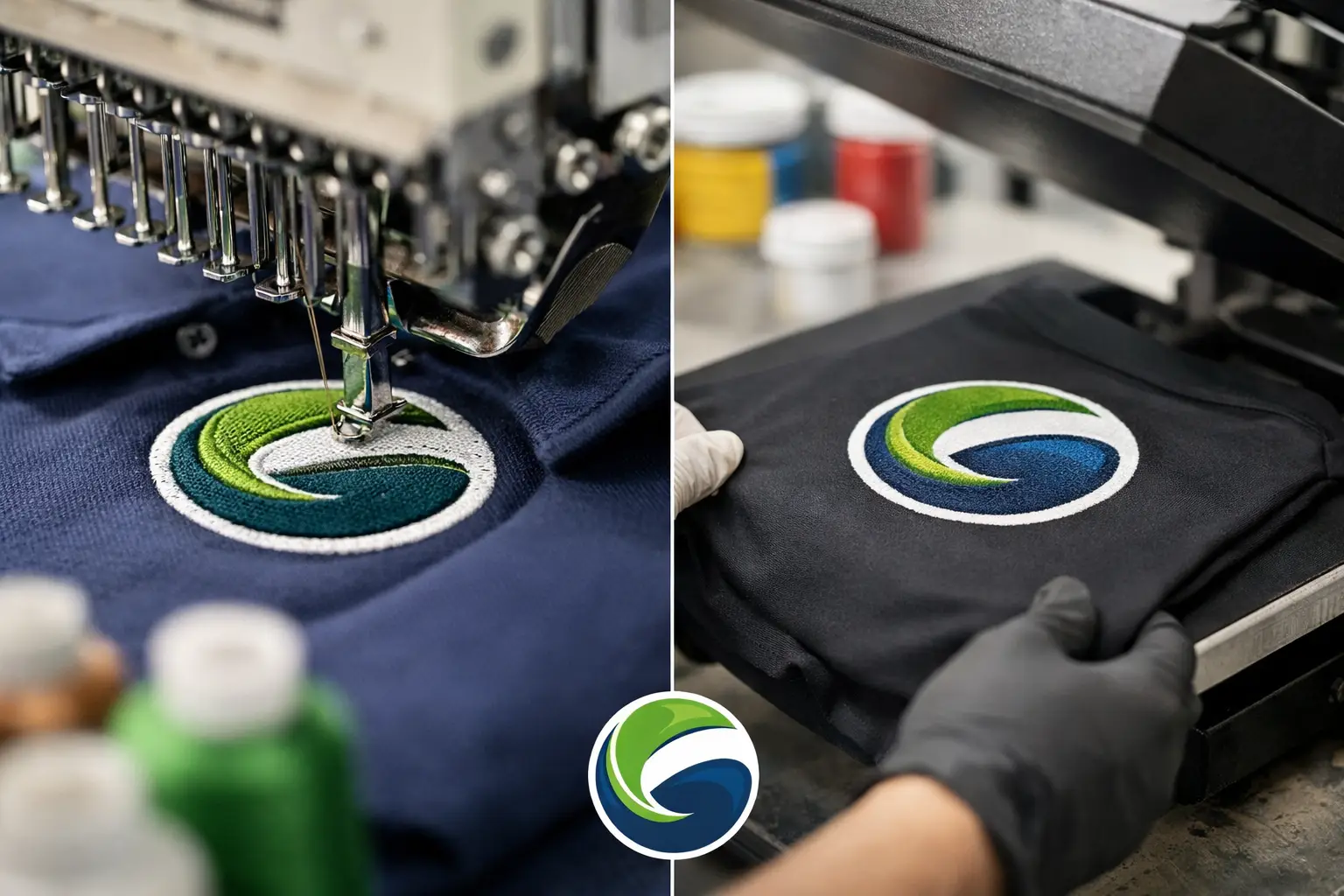
A polo that looks sharp in the office may need a different decoration method than a hoodie worn on a jobsite. That is the practical question behind uniform embroidery vs printing. Both methods can make your company logo look professional, but they perform differently on fabric, cost differently at various quantities, and suit different kinds of uniforms.
For businesses across Salt Lake City and the Wasatch Front, the best choice usually comes down to three things: the garment, the logo, and how the uniform will be used. Our team helps companies make that call every day, whether they are ordering employee polos, safety shirts, restaurant aprons, staff jackets, or event apparel.
Uniform Embroidery vs Printing: The Main Difference
Embroidery creates a logo with thread stitched directly into the garment. It has texture, dimension, and a durable, established look. It is a common choice for polos, button-down shirts, jackets, hats, fleece, vests, and workwear.
Printing applies ink or a printed transfer to the garment surface. Screen printing, DTF printing, and DTG printing each work a little differently, but all create a flatter design than embroidery. Printing is often the better choice for T-shirts, lightweight performance shirts, hoodies, large graphics, detailed artwork, and designs with multiple colors.
Neither option is automatically better. A property management company may choose embroidered polos for office and field staff, then screen print T-shirts for a company volunteer day. The logo can stay consistent while the decoration method changes to fit the garment and purpose.
When Embroidery Is the Right Choice
Embroidery works best when your company wants a polished, long-term uniform look. A left-chest embroidered logo on a polo or jacket is familiar, readable, and appropriate for many customer-facing roles. It is especially popular with contractors, financial offices, medical practices, hospitality teams, municipal departments, and sales staff.
Thread holds up well through regular washing and wears nicely over time. On heavier garments, embroidery often feels like it belongs there. A quarter-zip, fleece vest, work jacket, or structured cap usually benefits from the texture and durability of stitched decoration.
Best garments for embroidery
Embroidery is usually a strong fit for pique polos, button-downs, outerwear, fleece, aprons, bags, caps, and beanies. It also works well on work shirts and uniforms that need to look professional over a long service life.
It is less ideal on very thin, lightweight fabric. On a thin performance polo or soft tri-blend shirt, a dense embroidered logo can pull on the fabric or feel heavier than expected. The right backing and digitizing help, but printing may still give a cleaner result.
Logo limitations with embroidery
The biggest trade-off is detail. Thread has physical thickness, so tiny text, fine lines, gradients, and small color changes may not reproduce clearly. A logo that looks great on a website can need simplification before it becomes an embroidered chest logo.
That is not a flaw in embroidery. It is simply a production reality. Our team can recommend thread colors that closely match your brand and help adjust artwork so the finished logo reads clearly from a normal distance. For companies with exact brand standards, thread matching matters as much as choosing the right garment.
Embroidery cost considerations
Embroidery pricing is generally driven by stitch count, not just the number of colors. A small, simple one-color logo may be economical, while a large detailed design with heavy fill stitching requires more production time.
For this reason, embroidery is often best for smaller left-chest logos and smaller placements. A large stitched logo across the back of a shirt can become heavy, expensive, and less comfortable. Printing is usually the better route for large artwork.
When Printing Is the Better Fit
Printing gives your company more freedom with color, size, and artwork detail. It is the practical choice when your logo includes a gradient, photograph, fine lettering, multiple colors, or a large graphic. It also keeps lightweight garments soft and comfortable.
For a field crew wearing moisture-wicking shirts in a Utah summer, a printed logo may feel much better than a thick embroidered design. For a corporate event, charity run, school program, or team tournament, printing makes it easier to include sponsors, names, dates, and large back graphics without making the apparel feel bulky.
Screen printing for repeatable, bold designs
Screen printing is a dependable option for team uniforms, event shirts, staff tees, and work apparel with clean, solid-color artwork. It produces bright, durable prints and is especially cost-effective for larger quantities. We can Pantone match ink colors when brand consistency is important.
Screen printing is often the best value when your company has a simple logo and needs a consistent design across a larger order. It works well for front-and-back prints, sleeve logos, and designs that need to be seen from across a parking lot or event venue.
The trade-off is setup. Screen printing is most efficient when the artwork and garment choices are consistent across the order. If every employee needs a different name, number, or highly customized design, another method may be more suitable.
DTF for detailed logos and flexible placement
DTF, or direct-to-film printing, is useful for detailed, full-color logos and designs that need to work across a range of garment types. The design is printed onto a film, then heat-applied to the apparel. It handles small details and color transitions well, making it a good option for logos that are too intricate for embroidery or too complex for a simple screen print.
DTF can also be a smart solution when a company needs several garment styles in one order, such as T-shirts, hoodies, quarter-zips, and tote bags. The finished print has a slightly different feel than screen printing, so garment type and artwork size still matter.
DTG for soft, detailed artwork on cotton
DTG, or direct-to-garment printing, prints artwork directly onto the shirt. It is a strong option for detailed full-color artwork on cotton or cotton-rich garments, particularly when the design has many colors or photo-like elements.
For uniforms, DTG is usually selected when a softer print feel and artwork detail are the main priorities. It is not the default answer for every order, but it can be the right one for certain staff shirts, event apparel, and branded merchandise.
Choose Based on the Job, Not Just the Logo
The same company logo may need different treatment depending on where employees work. An embroidered logo can be the right choice for office staff, client meetings, and outerwear. Printed shirts can be more practical for warehouse teams, landscaping crews, fitness instructors, volunteer groups, and outdoor events.
Consider how often uniforms will be washed, whether employees work indoors or outdoors, and whether the garment needs to stay cool and flexible. Also consider visibility. A subtle embroidered chest logo communicates professionalism up close. A screen-printed back logo gives your company more visibility from a distance.
This is why it helps to look at the full uniform program rather than one shirt at a time. A company can use embroidered polos for supervisors, printed tees for crew members, and embroidered jackets for cold-weather use. The result feels coordinated without forcing one method onto every garment.
Common Mistakes to Avoid
The most common mistake is choosing embroidery for a logo that is too detailed. If text is smaller than it needs to be or the artwork has very fine elements, simplify it before stitching. A cleaner embroidered logo will look better and hold up better.
Another mistake is printing a large design on a garment that will be worn in high heat or for active work without considering the print area. A large print can add warmth and reduce breathability. In some cases, a smaller chest print, sleeve print, or lighter-weight decoration is a better choice.
It is also worth thinking ahead. If your company expects to add employees throughout the year, choose a garment and decoration method that can be reordered consistently. Keeping approved artwork, thread colors, ink colors, and placement details on file makes future orders easier to manage.
A Practical Way to Decide
Start with the uniform's daily use. For a professional, durable logo on polos, jackets, hats, and workwear, embroidery is often the right answer. For lightweight shirts, large graphics, detailed art, and full-color designs, printing is usually more practical.
Then look closely at your logo. Simple, bold logos can work beautifully with either method. Detailed logos often favor DTF, DTG, or screen printing. Finally, consider order size, budget, and how many garment styles your company needs. We offer screen printing, embroidery, DTF, and DTG, so the recommendation can be based on what actually fits the project rather than forcing every order into one process.
Affordable-Printing supplies the garments and can also work with garments your organization provides. Our standard turnaround is 12 business days after artwork approval, and we typically finish sooner when production scheduling allows. Most team and company orders easily meet our 12-piece minimum.
The right uniform decoration should make your employees look consistent, keep them comfortable at work, and represent your company well long after the first wear. For a free quote and help choosing the right method for your team, call (801) 260-0606 or visit affordable-printing.com/request-a-quote/.
Ready to start your order?
GET A FREE QUOTE