_1782777776334-CjnZ693B.png)
June 21, 2026
What Is DTF Shirt Printing?
If you are ordering branded apparel for your team and trying to sort through decoration options, one question comes up fast: what is DTF shirt printing, and is it actually the right fit for your order? That is a fair question, especially if you are comparing it with screen printing, embroidery, or DTG for a company in Salt Lake City or anywhere along the Wasatch Front.
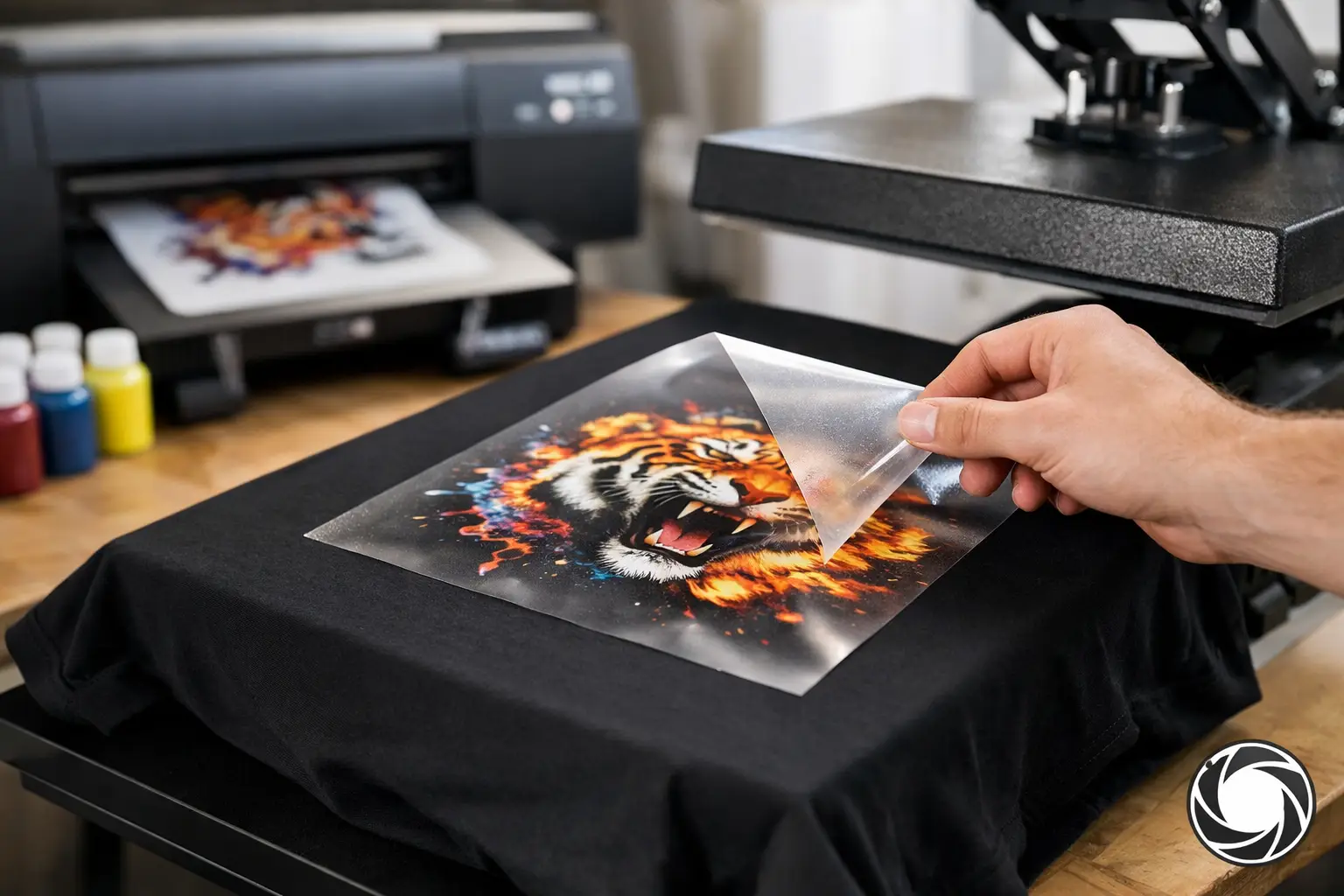
DTF stands for direct-to-film. Instead of printing ink straight onto the shirt, the design is first printed onto a special film, coated with adhesive powder, and then heat pressed onto the garment. The end result is a full-color print that holds detail well and works on a wide range of apparel.
For business buyers, that matters because DTF solves a few common problems. It handles logos with a lot of colors, works on different garment types, and makes sense for smaller runs where screen printing may not be the best tool.
What is DTF shirt printing and how does it work?
The process is more straightforward than it sounds. Your artwork is printed in reverse onto transfer film using specialized inks. A powdered adhesive is applied to the printed design, then cured. After that, the transfer is positioned on the shirt and heat pressed onto the fabric.
Once pressed, the film is peeled away and the printed design remains on the garment. What you are left with is a smooth, flexible graphic that sits on top of the fabric rather than soaking into it the way some other methods do.
That difference affects both appearance and feel. DTF prints usually have strong color, solid coverage, and sharp edges. They can reproduce small text and detailed logos better than some decoration methods, especially when the artwork has gradients, multiple colors, or fine lines.
Why businesses choose DTF for team apparel
For a lot of company orders, DTF is attractive because it is practical. If your employees need branded shirts, hoodies, quarter-zips, or event apparel and your logo includes several colors, DTF can often produce that artwork cleanly without the setup complexity of screen printing.
It is also useful when your order includes multiple garment styles or fabric blends. Screen printing tends to shine on larger runs of similar items. DTF gives more flexibility when your order is mixed, such as combining tees, hoodies, and performance shirts for the same department or event staff.
Another plus is consistency with complex artwork. If your logo has shading, thin outlines, or color transitions, DTF can usually keep those details intact. That is helpful for marketing coordinators and office managers who need the company brand to look right without reworking the art.
For schools, nonprofits, and event organizers, DTF can also be a strong option when the quantity is modest. At our shop, we work with a 12-piece minimum for decorated apparel, and DTF often fits well in that range depending on the garments and design.
Where DTF performs well
DTF is not just for T-shirts. It works on a wide variety of apparel, including cotton, polyester, blends, and many performance fabrics. That makes it useful for companies ordering uniforms, employee appreciation shirts, event apparel, or branded pieces for internal programs.
It is especially strong when you need full-color artwork on dark garments. Because the transfer includes a white base where needed, the print can stay bright and readable even on black, navy, or other darker apparel.
This is one reason many business buyers in South Jordan and nearby areas like DTF for promotional apparel. You can keep your branding visible across different garment colors without having to simplify the design too much.
The trade-offs of DTF printing
DTF is a good tool, but it is not the answer for every order. The smartest way to choose decoration is to match the method to the job.
First, DTF prints sit on top of the garment. That is normal for the process, but it means the print has a different hand feel than screen printing on some designs or DTG on some fabrics. If you want the softest possible feel on a lightweight cotton tee, another method may be a better fit depending on the artwork.
Second, large solid prints can feel heavier. A left chest logo or standard front graphic usually works well, but if your design is a very large block of ink, that extra coverage can be more noticeable.
Third, while DTF is durable, care still matters. Like any decorated apparel, it will last longer when washed and dried properly. For workwear or employee shirts that get frequent use, that is worth discussing up front so the garment and decoration method match the real-life use.
DTF vs. screen printing
This is the comparison most business buyers care about.
Screen printing is often the best value for larger orders with simpler artwork. If your company needs a higher quantity of shirts with a one-color or two-color logo, screen printing is hard to beat. It is durable, efficient at scale, and gives a classic decorated look. We also offer Pantone color matching for screen printing, which matters when brand color consistency is a priority.
DTF tends to make more sense when the artwork is complex, the order is smaller, or the garments are mixed. It avoids the setup process screen printing requires for each ink color, so full-color logos can be easier to produce without turning the design into a pricing problem.
So which is better? It depends on quantity, art style, garment type, and budget. For a 200-piece employee shirt order with a simple logo, screen printing may be the better call. For a 24-piece order with full-color branding across different garments, DTF may be the cleaner solution.
DTF vs. DTG
DTG, or direct-to-garment, prints directly onto the fabric instead of onto transfer film. It can produce excellent detail and a softer feel on the right garments, especially cotton shirts.
DTF usually wins on versatility. It can be applied to more fabric types and often handles mixed apparel orders more easily. DTG can be a great option too, but it tends to be more fabric-specific and design-dependent.
If your team order includes mostly cotton tees and the artwork suits DTG, that may be worth considering. If you need broader garment flexibility, DTF often has the advantage.
Is DTF good for company logos?
Yes, especially when your logo has multiple colors, gradients, or small details. DTF can reproduce those elements clearly without simplifying the art the way some other methods might require.
That said, not every logo should automatically be printed with DTF. A simple one-color chest logo on polos might be better as embroidery. A bold two-color design on a large shirt order might be better as screen printing. The right choice comes from looking at the logo, garment, quantity, and budget together.
That is usually where experienced project management helps. Most business buyers are not trying to become apparel experts. They just need the order to come out right, stay on schedule, and make sense financially.
When DTF is a smart choice for your order
DTF is often worth considering if your company needs full-color artwork, moderate quantities, or multiple garment types in the same order. It is also a strong choice when speed and flexibility matter, as long as the design fits the process.
For example, if you are outfitting a staff team for a conference, nonprofit fundraiser, school program, or corporate event in the Salt Lake City area, DTF may let you keep branding consistent across different apparel without forcing the art into a simpler format.
At the same time, if your order is large and straightforward, screen printing may save money. If your priority is a stitched, professional look on polos, jackets, or hats, embroidery may be the better route. A good apparel partner should tell you that honestly instead of pushing one method for every project.
Our team handles screen printing, embroidery, DTF, and DTG, so we can recommend the method that fits the order rather than trying to force every job into the same lane. We also handle the garments themselves in most cases, which is usually more cost effective for business buyers than sourcing blanks separately, though we are happy to work with customer-supplied garments if needed.
Standard turnaround is 12 business days from artwork approval, and we often finish sooner. If your timeline is tighter, rush orders may be possible depending on the job.
If you are planning branded apparel for your company, school, or event and want help choosing the right decoration method, we are happy to walk through it with you. To get a free quote, call (801) 260-0606 or visit affordable-printing.com/request-a-quote/.
Ready to start your order?
GET A FREE QUOTE