
September 13, 2026
Screen Printing Versus Heat Transfer for Teams
A company polo with a simple two-color logo and a tournament shirt covered in full-color sponsor logos should not be decorated the same way. That is the real question behind screen printing versus heat transfer: which method makes sense for your artwork, garments, quantity, budget, and how the apparel will be used?
For businesses, schools, teams, and event organizers around Salt Lake City and the Wasatch Front, the best choice is rarely about one method being universally better. Screen printing is usually the workhorse for larger runs and bold, durable designs. Heat transfer methods are often the smarter call for detailed artwork, variable names and numbers, or smaller group orders. Here is how to make a practical decision before your team approves a proof.
Screen Printing Versus Heat Transfer: The Main Difference
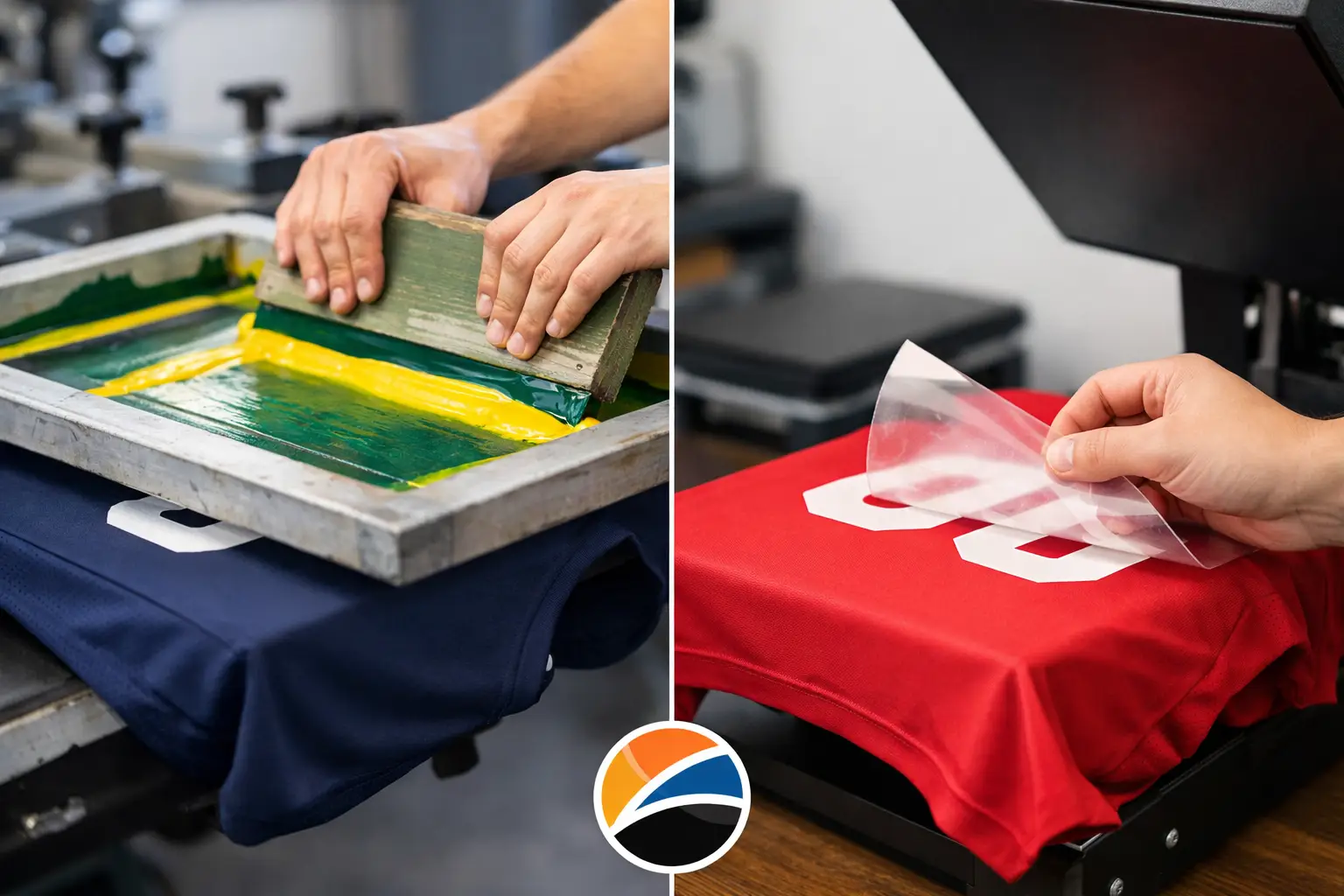
Screen printing applies ink directly to the garment through a mesh screen. Each ink color in the design gets its own screen, and the ink is cured into the fabric. The result is a durable print that holds up well to regular wear and washing.
Heat transfer uses heat and pressure to apply a printed design or cut material onto the garment. The term covers several methods, including vinyl transfers and modern direct-to-film, or DTF, transfers. With DTF, your artwork is printed onto film, coated with adhesive powder, and heat pressed onto the apparel.
From across a room, a well-produced screen print and a quality DTF transfer can both look sharp. The differences show up in the artwork, the feel of the decoration, the quantity ordered, and the way the garment performs over time.
When Screen Printing Is the Better Choice
Screen printing is a strong fit when your company needs the same design on a larger number of shirts, hoodies, sweatshirts, or workwear. Once screens are set up, the cost per piece becomes more efficient as the quantity goes up. That makes it a practical option for employee uniforms, company events, school spirit apparel, charity walks, and promotional giveaways.
It also performs especially well with simple artwork. A one-color logo on the left chest, a two-color event graphic, or a bold team design with solid areas of color is right in screen printing's wheelhouse. The printed ink has a clean, professional look and is typically less noticeable on the garment than a large transfer.
For organizations that need exact brand colors, screen printing gives you another advantage. Our team can Pantone match ink colors so your logo stays consistent across shirts, sweatshirts, bags, and other printed items. That matters when branded apparel is part of your company’s public image rather than a one-time casual giveaway.
Screen printing is not limited to light shirts. It can work on many garment types and colors, including cotton, cotton blends, and performance fabrics when the appropriate inks and process are selected. The garment matters, though. A lightweight tri-blend tee, a moisture-wicking polo, and a heavy work hoodie do not all take ink the same way. We help customers choose apparel and decoration methods that work together.
The trade-off is setup. Every print color requires preparation, so a small order with a six-color design may not be the most economical screen printing job. If the artwork changes from shirt to shirt, such as individual player names or employee numbers, screen printing becomes less practical for those variable details.
When Heat Transfer Makes More Sense
Heat transfer shines when the artwork is detailed, full color, or different on every garment. A DTF transfer can reproduce fine lines, gradients, photographic elements, and multicolor logos without building a separate screen for each color. For a corporate event shirt with a full-color sponsor graphic, that can simplify production and keep the artwork looking accurate.
It is also a useful option for teams that need personalized apparel. Names, job titles, jersey numbers, and department labels can be changed one piece at a time without creating new screens. A youth league, a warehouse team, or an employee recognition program may use screen printing for the common logo and transfers for the individual information.
Heat transfer is often a good fit for garments that are difficult to screen print, too. Certain performance fabrics, stretchy athletic apparel, and items with limited printable areas may be better suited to DTF or another transfer process. Placement still matters. A large design across a zipper, pocket, seam, or heavily textured surface may need adjustment regardless of the decoration method.
The biggest consideration is feel. A transfer sits on top of the fabric, while screen printing ink is worked into or bonded directly to it. Small DTF logos are generally comfortable and flexible. A large, solid transfer across the full front of a shirt can feel warmer or heavier than a comparable screen print. For staff who wear uniforms through long shifts, that is worth considering.
Quality also matters with transfers. Properly produced and pressed DTF transfers can be durable, but they need the right temperature, pressure, and garment preparation. Cheap transfers can crack, peel, or feel stiff. This is not an area where the lowest quote tells the full story.
Cost Depends on Quantity and Artwork
Buyers often ask which option costs less. The honest answer is that it depends on the order.
For a larger order with one to three spot colors, screen printing is commonly the better value per shirt. The setup cost is spread over more pieces, and production moves quickly once the screens are ready. Think 50 company tees for a Salt Lake City event, 100 volunteer shirts, or a broad employee uniform rollout.
For a smaller group order, a full-color design, or artwork with lots of colors, DTF heat transfers can be more cost-effective because there are no separate screens for each ink color. That does not mean every 12-piece order should automatically be a transfer job. A straightforward one-color logo can still be an excellent screen printing project. Our 12-piece minimum gives most businesses and groups enough flexibility to choose based on the actual job rather than forcing a one-size-fits-all method.
The decoration method is only part of the total cost. Garment selection has a major effect. A basic cotton tee, a premium retail-style shirt, a moisture-wicking polo, and a heavyweight hoodie all have different price points and decoration needs. We provide the garments and blanks as part of the process, which helps avoid a common problem: a customer supplies apparel that looks fine but is not suitable for the intended print method.
Match the Method to How the Apparel Will Be Used
Start with the job, not the decoration label. If your employees need durable branded tees for routine work, screen printing is often the logical first option. If your company is organizing a conference and wants a colorful, detailed event design, DTF may give you more freedom with the artwork.
For sports teams and school groups, consider whether the design needs individual names and numbers. Screen printed team shirts with transferred numbers are often a practical combination. For a nonprofit fundraiser, a bold screen printed graphic may make the most sense when you are ordering enough pieces to distribute widely. For a small staff group with a detailed logo, heat transfer can deliver strong results without paying for multiple color screens.
Do not overlook embroidery, either. For polos, caps, jackets, and professional uniform pieces, embroidery can be a better match than either screen printing or heat transfer. DTG, or direct-to-garment printing, is another option for certain full-color designs on cotton-rich garments. The best answer comes from looking at the complete project: art, garment, quantity, deadline, and end use.
Artwork and Approval Can Prevent Expensive Surprises
The fastest way to a good result is to share the best version of your logo or design early. Vector artwork is ideal for screen printing, but our team can review what you have and help identify whether cleanup or recreation is needed. For full-color transfer work, high-resolution files are especially important. A blurry image does not become sharp just because it is printed on a shirt.
Before production, confirm the garment color, decoration size, placement, and number of print colors. A logo that looks balanced on a computer screen can feel too large on a small polo or disappear against a dark garment. We manage artwork, quoting, production, and delivery so your company does not have to coordinate several vendors or guess at those production details.
Plan ahead when possible. Our standard turnaround is 12 business days from artwork approval, and we often finish sooner. Rush orders are available when timing is tight, but a clear approved design and garment decision give your project the best chance of staying on schedule.
If you are deciding between screen printing, DTF heat transfers, embroidery, or DTG for your team, bring us the artwork and the basic details. Our South Jordan team will help you choose a method that fits the order instead of pushing a process that does not. Call Affordable-Printing at (801) 260-0606 for a free quote.
Ready to start your order?
GET A FREE QUOTE