
October 15, 2026
How to Select Work Uniforms for Your Team
A uniform that looks good in the office but fails on a jobsite is a wasted purchase. The same is true for a shirt that holds up well but makes employees feel overheated, restricted, or uncomfortable. Knowing how to select work uniforms starts with the work itself, then balances comfort, durability, brand visibility, and cost for your team.
For companies across Salt Lake City and the Wasatch Front, the right choice often comes down to asking better questions before ordering. A restaurant crew, HVAC company, medical office, warehouse team, and front-desk staff may all need branded apparel, but they do not need the same garments or decoration method.
How to Select Work Uniforms by Job Requirements
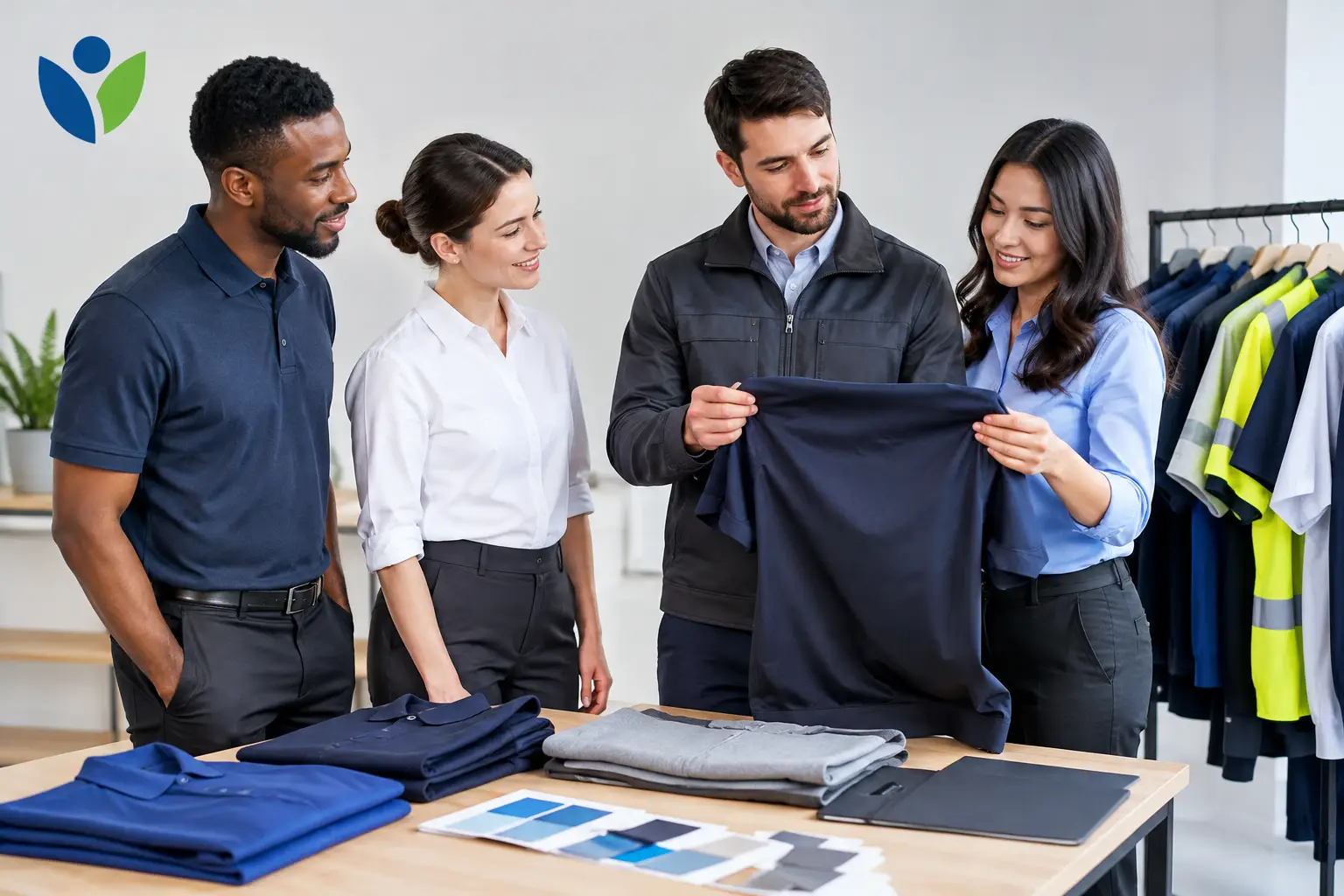
Start with where and how your employees work. This is more useful than beginning with a catalog photo or a shirt color. Consider the physical demands of the job, temperature changes, whether employees work indoors or outdoors, and how often each item will be washed.
For active crews, moisture-wicking performance shirts can be a practical choice, particularly during Utah summers or for employees moving between vehicles, warehouses, and outdoor jobs. Cotton tees are comfortable and familiar, but they can retain moisture and may shrink if the garment is not pre-shrunk. Cotton-poly blends often offer a middle ground: a softer feel than many performance fabrics with better shape retention than basic cotton.
For office, hospitality, and customer-facing teams, polos, woven shirts, quarter-zips, and jackets can present a more polished look. A polo may be the right daily uniform for a sales counter or service department, while a button-down shirt may make more sense for a financial office or event staff. The best option depends on the level of formality your customers expect.
Durability matters most when apparel faces abrasion, frequent washing, grease, dust, or outdoor conditions. Heavier-weight shirts, workwear-style button-downs, hoodies, and jackets can cost more upfront, but replacing flimsy garments several times a year usually costs more in the long run. Ask employees who do the work what wears out first. Their answer is often more valuable than a generic product description.
Choose Fabrics That Employees Will Actually Wear
A work uniform only does its job when employees are willing to put it on. If your company requires a certain garment, comfort becomes a retention issue as well as a branding issue.
Cotton is breathable, easy to decorate, and usually budget-friendly. It works well for casual uniforms, events, and teams that do not need technical performance. A cotton-poly blend offers added durability and reduced shrinkage, making it a reliable everyday choice for many service businesses. Polyester performance fabric dries quickly and can be lighter for active work, though some employees prefer the feel of a blend or natural fiber.
Do not assume one fabric will suit every role. A landscaping crew may need lightweight performance shirts for summer and hoodies or jackets for colder months. An office may provide embroidered polos for client meetings and branded tees for setup days, volunteer work, or company events. Offering a small, coordinated range can give your company consistency without forcing every employee into the same garment.
Color deserves the same practical attention. Light colors can be cooler outdoors but show dirt more quickly. Black and dark navy hide stains and create a clean, consistent appearance, but they can feel hotter in direct sun. If safety is part of the job, high-visibility colors and reflective elements may be necessary. Your brand colors should guide the decision, but job conditions should have the final say.
Match the Decoration Method to the Garment
The way your logo is applied affects appearance, durability, and price. A good uniform program chooses decoration based on the garment and use case, not just the logo file.
Screen printing is a strong option for larger quantities, bold artwork, and logos with solid colors. It works especially well on T-shirts, hoodies, and many casual work garments. Screen printing is durable and can use Pantone color matching when precise brand color matters.
Embroidery gives polos, woven shirts, hats, fleece, and jackets a professional, textured finish. It is a common choice for corporate uniforms and customer-facing teams. Small left-chest logos are often ideal for embroidery, while fine details or very small text may need adjustment so the design stitches clearly.
DTF, or direct-to-film, is useful for full-color artwork, smaller runs, and designs with detail that would be difficult or costly to screen print. It can be applied to many garment types and is a practical option when employees need names, varied graphics, or smaller color runs. DTG, or direct-to-garment printing, works best on compatible cotton-rich garments and can reproduce detailed, full-color designs.
There is no single best method. A construction company may choose screen printed tees for field staff and embroidered jackets for supervisors. A medical practice may use embroidery on polos but DTF for a colorful event shirt. At Affordable-Printing, our team helps companies compare these options before production so the decoration fits the garment, logo, and budget.
Build a Uniform Program Around Real Ordering Needs
Uniform orders can become complicated when each department wants a different style, color, or logo placement. Keeping a few standards in place makes reorders easier and helps your company maintain a consistent look.
Choose a core garment for each role, define approved colors, and decide where the logo will appear. For example, a service company may standardize navy polos with an embroidered left-chest logo, then add charcoal jackets for winter and branded tees for installation crews. Employees still have useful options, while the company avoids a mismatched appearance.
Sizing is another area where planning saves money. Request a size range that reflects your actual team rather than guessing based on an old order. If possible, use samples or fit checks before placing a large first order. Different brands and cuts can fit very differently, especially between unisex, women’s, and performance styles.
It also helps to order for reasonable growth and replacement needs. A small number of extra garments can be useful for new hires, but buying too many extras in a dated style or with a former employee’s name is not efficient. If names, departments, or job titles are needed, keep those items separate from the standard logoed garments when possible.
Set a Budget Without Buying the Cheapest Shirt
The lowest garment price is not always the lowest uniform cost. A very thin shirt may save a few dollars per piece but create more replacements, more employee complaints, and a less professional impression. On the other hand, not every team needs premium outerwear or heavyweight workwear.
Set a target cost per employee, then separate must-haves from nice-to-haves. Must-haves may include durable fabric, a readable logo, appropriate colors, and enough size options. Nice-to-haves might include individual names, multiple logo locations, premium brands, or seasonal layers. This keeps the conversation focused when costs need to be adjusted.
Quantity affects pricing and decoration choices, especially with screen printing. Our standard minimum is 12 pieces, which works well for many departments, staff groups, schools, and local organizations. For recurring orders, keeping the same artwork and garment standards can also make future planning simpler.
Plan Your Timeline Before the Uniforms Are Urgent
Uniforms are often ordered because a grand opening, busy season, trade show, staff photo, or corporate event is already close. That is when garment availability and artwork approval become more important than anyone expects.
Allow time for selecting garments, confirming sizes, approving artwork, and production. Our standard turnaround is 12 business days from artwork approval, and we often finish sooner. If your Salt Lake County or Utah County team has a tighter deadline, ask about rush options early so we can discuss what is realistic for the garments and decoration involved.
A practical uniform should make employees feel prepared for work and make customers recognize your company at a glance. If your team needs help selecting garments, matching logo colors, or choosing between screen printing, embroidery, DTF, and DTG, call Affordable-Printing at (801) 260-0606 for a free quote.
Ready to start your order?
GET A FREE QUOTE