
September 22, 2026
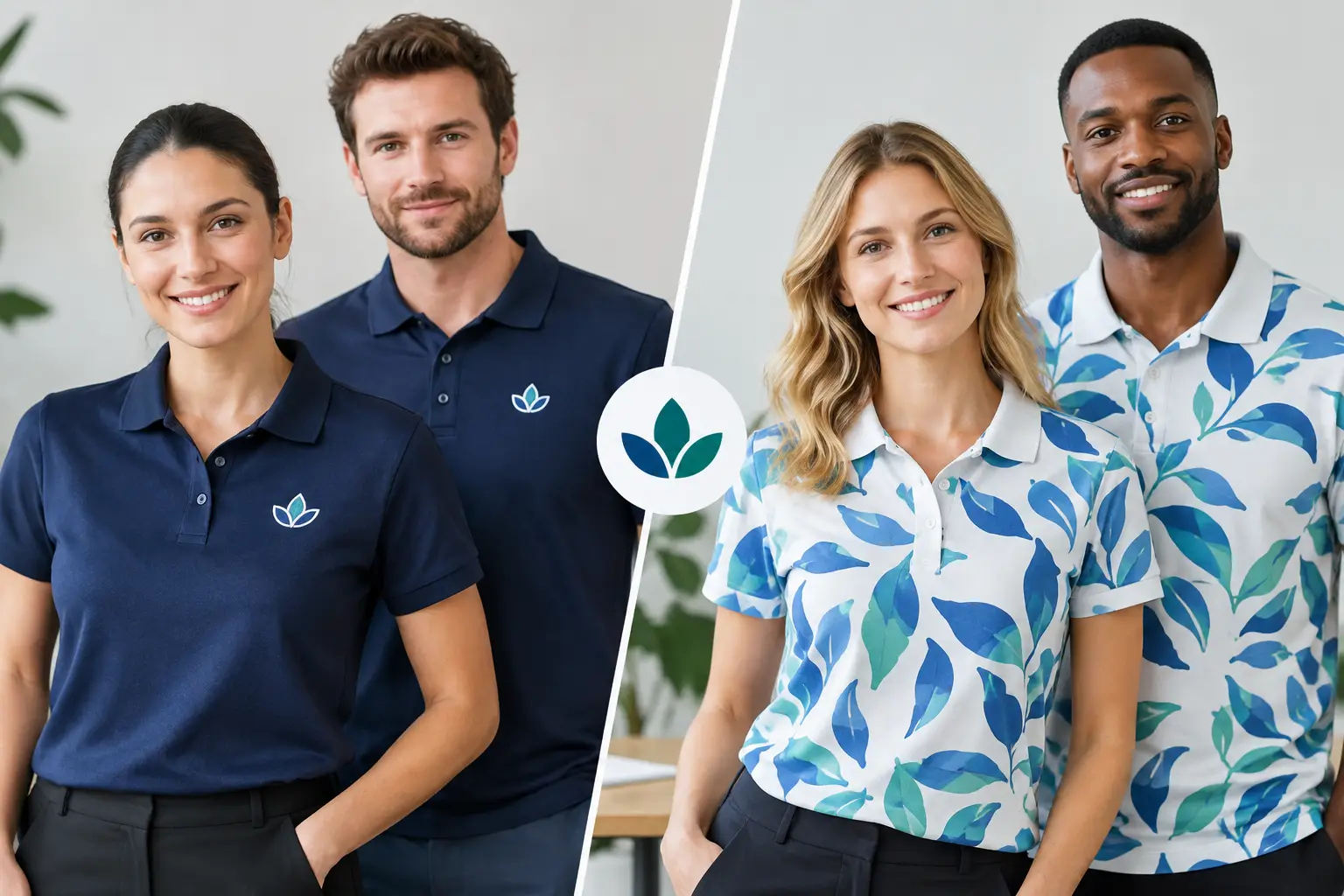
Embroidered Polos or Printed Polos for Teams?
A polo shirt can make a field crew, office staff, sales team, or event committee look organized without putting everyone in a stiff uniform. When choosing embroidered polos or printed polos, the right answer comes down to how your team uses the shirts, what your artwork looks like, and how polished you need the finished apparel to feel.
For companies in Salt Lake City and across the Wasatch Front, we usually start with one practical question: will these polos be worn as a long-term uniform or for a specific event? That answer often points the decision in the right direction before anyone has to sort through thread colors or print methods.
Embroidered Polos or Printed Polos: The Main Difference
Embroidery builds your logo with colored thread stitched directly into the fabric. It has texture, dimension, and a traditional uniform appearance. Printed polos place ink or a transfer on the garment surface. Depending on the design and fabric, printing may be done through screen printing, DTF, or DTG.
Neither option is automatically better. Embroidery is usually the stronger fit for left-chest company logos, names, and simple marks on polos that employees will wear repeatedly. Printing is often the better choice for larger artwork, colorful graphics, fine details, or shirts needed for a company outing, fundraiser, tournament, or promotional event.
The garment itself matters, too. A smooth performance polo behaves differently from a heavier cotton-blend polo. Our team can help your company choose a garment and decoration method that work together instead of forcing a design onto a shirt that is not a good fit.
When Embroidery Makes the Most Sense
Embroidery is a reliable choice when your company needs polos that look established and professional. It is common for front-office teams, property management staff, hospitality employees, sales representatives, contractors, and leadership groups. A clean embroidered logo at the left chest is easy to recognize without overpowering the shirt.
A polished look for everyday uniforms
Thread holds up well to frequent wear and laundering. While the shirt itself will eventually show wear, a properly digitized embroidered logo is not likely to crack or peel. That makes it a practical investment for employee uniforms that need to stay in rotation for months or years.
Embroidery also works especially well with logos that have bold shapes, readable lettering, and a limited number of colors. We can match thread colors closely to your brand standards, although thread has physical limits that ink does not. A tiny color gradient or a very thin line may need to be simplified so it stitches clearly.
What to watch for with embroidery
The raised texture is part of embroidery's appeal, but it is not ideal for every design. Small text can become difficult to read, and highly detailed artwork may lose clarity when translated into stitches. Large embroidered designs can also make a polo feel heavier or pull slightly on lightweight performance fabric.
Cost depends on stitch count, not just the number of colors. A small, simple logo may be very economical, while a large, dense design with extensive fill stitching takes more production time and thread. For most business polos, keeping the embroidery to a well-sized left-chest logo delivers the best balance of appearance and budget.
When Printed Polos Are the Better Choice
Printed polos give your company more freedom with artwork. If your design includes a photograph, a multicolor illustration, gradients, small details, or a large back graphic, printing will usually reproduce it more accurately than embroidery.
A printed polo can still look professional. The key is choosing the right placement, print size, and method. A simple left-chest print can work well for casual staff apparel, while a larger back print is useful for event volunteers, tournament crews, and teams that need visibility from a distance.
Screen printing for larger quantities
Screen printing is a strong option for designs with solid colors and larger order quantities. It produces durable, vivid prints and allows Pantone color matching when brand consistency matters. It is often a practical choice for company golf events, school staff shirts, nonprofit volunteers, and promotional polos where the logo needs to be seen across a room or parking lot.
Because each print color requires setup, screen printing is usually best when the design is relatively simple and the order has enough pieces to support that process. It may not be the best value for a small run with a full-color image.
DTF and DTG for detailed artwork
DTF, or direct-to-film, is useful for detailed, full-color graphics and smaller runs. The design is printed onto a film and heat applied to the garment. It can capture fine lines and multiple colors without the setup involved in traditional screen printing.
DTG, or direct-to-garment, prints ink directly onto compatible fabric and is another option for complex artwork. It is particularly useful when the artwork has shading or a wide range of colors. Your polo fabric and color will help determine whether DTF, DTG, or screen printing is the best route.
Printed decoration sits flatter than embroidery, which some employees prefer on lightweight or moisture-wicking polos. The trade-off is that a print can eventually show wear after repeated washing, especially if it is exposed to high heat. Following the care instructions helps preserve both printed and embroidered apparel.
Consider How Your Team Will Wear the Polos
A polo used five days a week has different needs than a polo handed out at a single corporate event. For daily uniforms, embroidery is often worth the added upfront cost because of its lasting, consistent appearance. For a one-day volunteer crew or annual company tournament, a printed design may make more sense, especially if the artwork is large or colorful.
Think about the environment as well. Employees working outdoors in Utah's summer heat may prefer lightweight performance polos. On that type of fabric, a small embroidered logo usually works well, but a large, dense embroidery area can feel stiff. A printed logo may be more comfortable when the design needs to cover a larger section of the shirt.
Brand visibility matters, but bigger is not always better. A sales team meeting clients may need a subtle left-chest logo. A group staffing the Ogden Marathon, a community event, or a school fundraiser may need a high-visibility back print so attendees can quickly identify who can help.
Artwork Can Decide the Method
Many buyers begin by asking which method costs less. That is reasonable, but artwork should come first. A logo designed for a website or brochure may not be ready for apparel as-is.
If your company mark includes very small wording, narrow gaps, or lots of fine detail, we will review it before production and recommend adjustments if needed. This is especially important for embroidery. Simplifying an element slightly can make the logo far more readable from a normal viewing distance.
For printed polos, color accuracy and fabric color are the main considerations. Bright ink on a dark shirt may require an underbase. A dark logo on a dark polo may disappear no matter how good the print process is. Our team can help review logo placement and contrast before your order moves forward.
Budget, Quantity, and Timing
There is no fixed rule that embroidery always costs more than printing. A small embroidered logo can be a good value, while a detailed, high-stitch design can cost more than a simple print. Likewise, screen printing becomes more efficient with larger quantities, while DTF or DTG may be better suited to detailed art or smaller group orders.
Affordable-Printing handles orders starting at 12 pieces, which works well for department uniforms, small companies, school staff, and event teams. We provide the garments and blanks as part of the service, though we are also happy to work with garments your organization supplies.
Our standard turnaround is 12 business days after artwork approval, and we often finish sooner. If your company has a firm event date, bring it up when requesting a quote. Rush options may be available depending on the garment, decoration method, artwork, and production schedule.
A Practical Way to Choose
Choose embroidery when your priority is a classic uniform look, a simple left-chest logo, and long-term employee wear. Choose printing when your artwork is detailed, colorful, oversized, or intended to make an impact at an event. If your company needs both, there is no reason to force one method across every item. An embroidered polo for customer-facing staff and printed tees for event volunteers is often the most sensible combination.
The best polo order is the one your employees will actually wear comfortably and your company will be proud to put in front of customers. For help comparing garment options, embroidery, screen printing, DTF, and DTG for your team, call Affordable-Printing at (801) 260-0606 for a free quote.
Ready to start your order?
GET A FREE QUOTE