_1782777776334-CjnZ693B.png)
July 2, 2026
DTF vs Embroidery: Which Fits Your Order?
If you're ordering branded apparel for your company, the choice between dtf vs embroidery usually comes down to one practical question: what needs to look right, wear well, and stay on budget for your team? We help businesses across South Jordan, Salt Lake City, and the Wasatch Front sort through this all the time, especially when a logo looks great on screen but behaves very differently once it lands on a polo, hoodie, jacket, or tee.
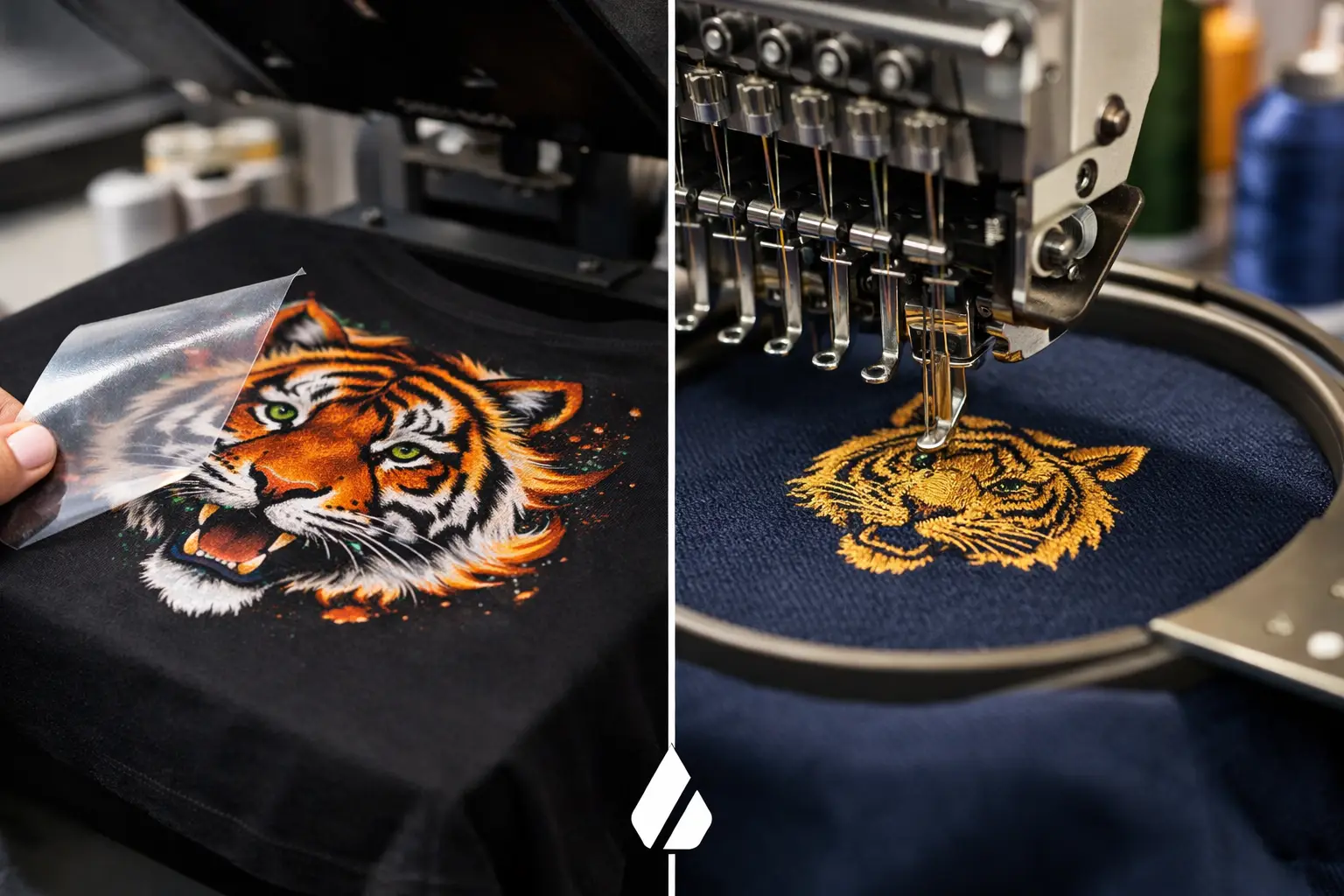
The short version is simple. Embroidery gives you a textured, stitched, professional look that works especially well on polos, hats, quarter-zips, and uniforms. DTF, or direct-to-film, gives you more design flexibility, sharper small detail, and full-color output on a wide range of garments. Neither method is better in every case. The right choice depends on the garment, the artwork, the quantity, and how your employees will actually use the apparel.
DTF vs embroidery: the core difference
Embroidery decorates a garment with thread. Your logo is stitched directly into the fabric, which creates dimension and a more traditional branded look. It tends to signal durability and professionalism, which is why so many companies choose it for office polos, work shirts, outerwear, and headwear.
DTF uses a printed transfer that is applied to the garment with heat. That lets you reproduce detailed artwork, gradients, fine lines, and multiple colors with much less limitation than thread. If your logo has small text, color fades, thin outlines, or a complex mark, DTF can usually hold that detail better.
For a business buyer, this is where the decision starts. If your brand needs a polished uniform look, embroidery often makes sense. If your brand needs graphic accuracy and flexibility across different garments, DTF is often the better fit.
When embroidery is the better choice
Embroidery works best when the garment and brand image call for structure. Think employee polos for a front desk team, quarter-zips for managers, hats for field staff, or jackets for an outdoor crew. In those settings, the stitched logo feels intentional and substantial.
It also holds up well for apparel that gets repeated wear. A well-digitized embroidered logo can last a long time, and thread colors can be matched closely to your branding. For companies that want a clean, consistent look across staff uniforms, embroidery is often the safer call.
There are trade-offs. Embroidery has limits with very small details and complicated artwork. If your logo includes tiny lettering, thin lines, or color transitions, some elements may need to be simplified so the design sews cleanly. That's not a flaw in the process. It's just the reality of stitching with thread instead of printing with ink.
Embroidery can also add weight to the garment. On a sturdy polo or jacket, that's usually a plus. On a lightweight performance shirt or very thin tee, it may feel heavier than you want. Left chest logos are a natural fit for embroidery, but large full-front embroidered designs are usually not the most cost-effective or comfortable option for your employees.
When DTF is the better choice
DTF shines when your artwork is detailed or your garment selection is broad. If your company logo has multiple colors, small print, gradients, or intricate design elements, DTF can reproduce that look much more accurately than embroidery.
This makes DTF a strong option for event shirts, staff tees, promotional apparel, and branded pieces where color and design precision matter. It's also useful when your order includes different garment types and colors. DTF can be applied to cotton, polyester, and blends, which gives your team more flexibility when selecting apparel.
For businesses ordering shirts for trade shows, company outings, nonprofit events, school programs, or large community events in Salt Lake County, DTF often checks a lot of boxes. It gives you a clean graphic result without forcing a complex logo into a stitched format that may not suit the artwork.
The trade-off is visual style. DTF does not have the same textured, premium stitched appearance as embroidery. It looks printed because it is printed. That's not a problem when the garment calls for a graphic print, but it matters if your company wants a more formal uniform look.
Cost, minimums, and where budget really goes
Most business buyers want a clear answer on price, but dtf vs embroidery pricing depends on more than the decoration method alone. The garment type, logo size, stitch count, artwork complexity, placement, and quantity all affect the final number.
In general, embroidery can cost more on a per-piece basis, especially for larger logos or designs with high stitch counts. A simple left chest logo on polos is usually manageable, but costs rise when the design is large or intricate. Embroidery also involves setup through digitizing, which converts your art into a stitch file.
DTF is often more cost-effective for full-color designs and detailed artwork, particularly on t-shirts and lighter garments. It can be a practical choice when your team needs strong visual impact without moving into the setup costs and limitations that come with thread-heavy embroidery.
For many Utah businesses, the real budget decision is not just decoration cost. It's choosing the method that prevents a do-over. Saving a little upfront doesn't help if the logo comes out too small to read, too heavy for the garment, or too casual for your workplace. We would rather help you choose the right method at quote stage than have your company end up with apparel that doesn't match the job.
Garment type matters more than people expect
This is where a lot of orders are won or lost. The same logo can work beautifully in embroidery on a polo and look awkward on a lightweight tee. It can also look sharp as DTF on a staff shirt and feel out of place on an executive quarter-zip.
Embroidery is a natural fit for polos, woven shirts, fleece, jackets, hats, and bags. The structure of those items supports the stitching. DTF is a strong fit for t-shirts, hoodies, performance wear, and other garments where printed artwork lays flatter and feels more natural.
If you're outfitting multiple departments, the best answer may not be one method for everything. Your sales team may need embroidered polos, while your event staff needs DTF tees with a larger graphic. Mixing methods across the order can make more sense than forcing one decoration style onto every garment.
Brand image and use case should lead the decision
A law office, contractor, school district, brewery, church, and event organizer may all need branded apparel, but they don't need it to say the same thing.
Embroidery tends to communicate permanence, professionalism, and a uniformed appearance. That's why it works well for employee apparel that needs to feel established and polished. DTF tends to communicate energy, color, and design flexibility. That's why it works well for campaign-style shirts, event gear, internal team apparel, and promotional use.
This is not just about looks. It's about context. If your employees are meeting clients, managing facilities, or representing your company in a more formal setting, embroidery often supports that role better. If your apparel is for a seasonal promotion, volunteer event, product launch, or community run, DTF may be the smarter option.
How we usually guide business buyers
When a customer asks us to compare dtf vs embroidery, we usually start with four things: the garment, the logo, the budget, and the purpose of the order. A left chest logo on polos for a management team is a different project than 150 event shirts for a nonprofit fundraiser in Ogden or a school program in Sandy.
If your artwork is simple and the apparel needs a polished look, embroidery is often the first recommendation. If your design is complex or your order includes graphic tees and casual branded wear, DTF usually gives you better visual accuracy.
We also look at timeline and order scope. Our standard turnaround is 12 business days from artwork approval, and we can often finish sooner. Rush orders are available when timing is tight. If your team needs help beyond just picking a decoration method, we can also advise on garment selection, artwork setup, and whether screen printing or DTG may make more sense for part of the order.
The best choice is the one that fits the job
For business apparel, dtf vs embroidery is rarely about which method is more popular. It's about which one fits your logo, your garments, and the way your team will actually wear the pieces. A stitched logo can elevate the right uniform. A printed transfer can preserve the detail and color your brand needs. Both have a place when the order is planned well.
If you're sorting out apparel for your company, school, nonprofit, or event across the Wasatch Front, our team can help you compare options, match colors, and build an order that makes sense for your timeline and budget. To get a free quote, call (801) 260-0606 or visit affordable-printing.com/request-a-quote/.
Ready to start your order?
GET A FREE QUOTE