_1782777776334-CjnZ693B.png)
June 2, 2026
Screen Printing vs DTG for Business Apparel
A lot of bad apparel decisions start with one simple mistake - picking a print method before thinking about the job. If you're comparing screen printing vs DTG for your company, school, or event in Salt Lake City or across the Wasatch Front, the right answer usually comes down to quantity, artwork, garment type, and budget. Both methods can produce good results. They just solve different problems.
For business buyers, this matters because decoration method affects more than the look of the shirt. It changes your price per piece, how colors reproduce, how the print feels, and which garments make sense for your team. If you're ordering staff shirts, event tees, nonprofit merch, or branded uniforms, it helps to know where each method works best before you approve artwork.
Screen printing vs DTG: what's the real difference?
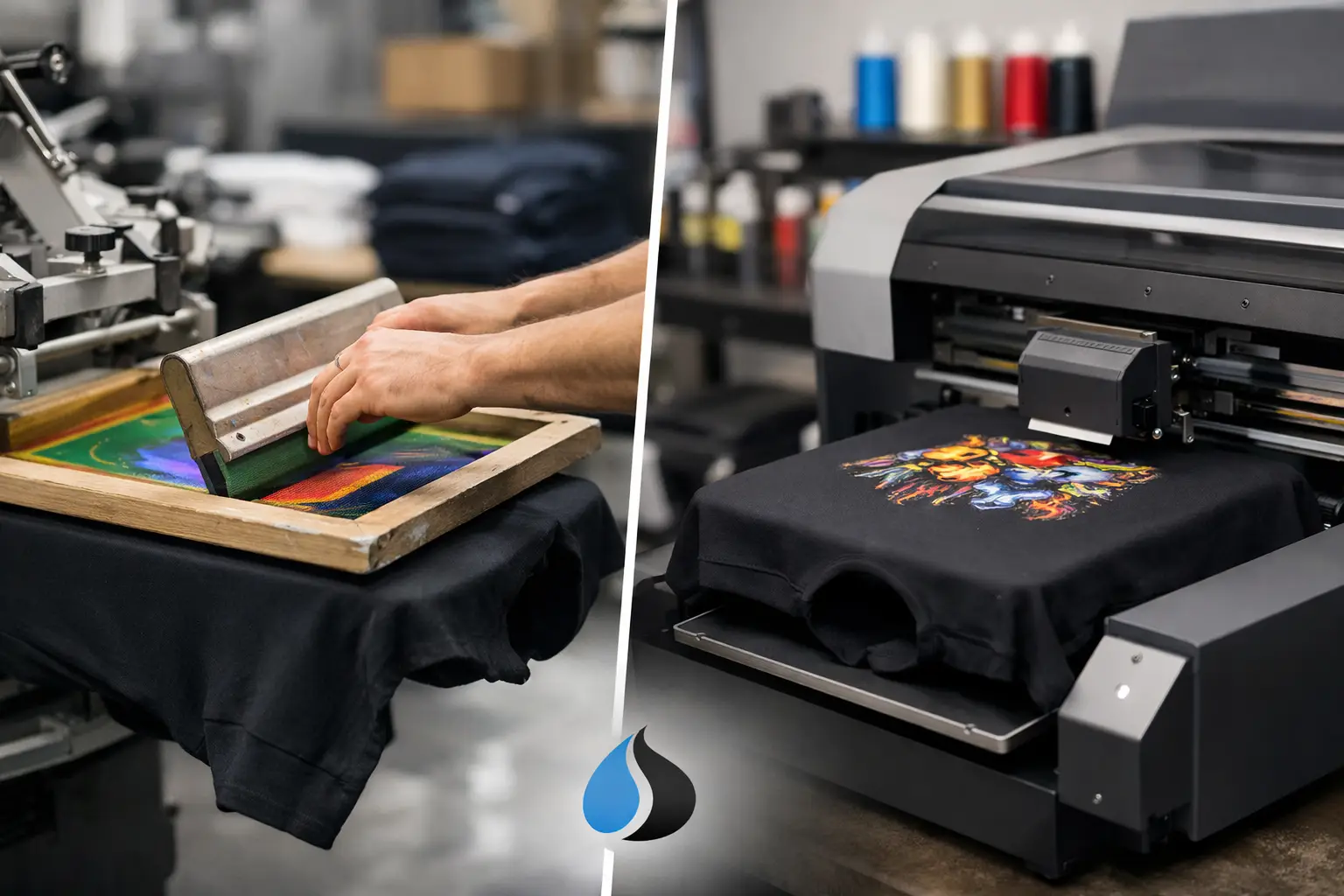
Screen printing pushes ink through a mesh screen, one color at a time, onto the garment. It has been a standard for branded apparel for a reason. It is reliable, scalable, and especially strong for larger runs where you want solid color, consistency, and good long-term value.
DTG, short for direct-to-garment, works more like printing directly onto the shirt with a specialized printer. It is best known for handling detailed, full-color artwork without requiring separate screens for each color. That makes it useful for designs with gradients, photographic elements, and smaller quantities.
The practical difference is this: screen printing has more setup, but it usually rewards larger orders. DTG has less setup for complex artwork, but the price per shirt does not drop the same way on bigger runs.
When screen printing makes more sense
If your company needs a larger batch of shirts with a clean logo and a limited number of ink colors, screen printing is usually the better choice. This is especially true for employee uniforms, event shirts, school spirit wear, and nonprofit volunteer apparel where consistency matters and the design is straightforward.
Screen printing shines when you need 24, 48, 100, or more pieces. Since the setup is done up front, the cost tends to spread out better across the full order. For many business buyers, that means a lower cost per shirt on larger runs compared with DTG.
It also gives you strong, bold color. If your logo needs a specific brand color, screen printing offers better control, and Pantone color matching is a major advantage. For companies with brand standards, that matters. A marketing coordinator ordering for a trade show or company event does not want to explain why the logo came out close but not quite right.
Durability is another reason buyers choose screen printing. A properly printed screen print holds up well through repeated washing and regular work use. For staff apparel that gets worn often, that can be a big factor.
That said, screen printing is not always the best fit. If your art has many colors, soft gradients, or a photo-style image, setup gets more complicated. And if you only need a small quantity, the setup can make the order less economical.
When DTG is the better option
DTG works well when the artwork is detailed and the order size is lower. If your design includes multiple colors, subtle shading, or a full-color illustration, DTG can often reproduce that better without breaking the art into separate screens.
This can be useful for campaign shirts, limited event apparel, or internal team shirts where the design is more creative than a simple chest logo. It also helps when a business wants a more graphic retail-style print for a company store, employee appreciation event, or special promotion.
DTG also tends to be a strong option when you are near the lower end of an order range. At our shop, the minimum for decorated apparel is 12 pieces, and DTG can make sense for those smaller business orders when the artwork would be expensive to set up for screen printing.
There are trade-offs. DTG does best on certain garment types, especially cotton or high-cotton blends. It is not the universal answer for every fabric. The print feel can also vary based on the garment color and the amount of white underbase needed. On some shirts, especially darker ones, that can affect softness.
Cost: where buyers usually make the call
For most business buyers, cost is where screen printing vs DTG becomes a real decision instead of a technical one.
Screen printing usually wins on value for medium to large runs. If your company is ordering enough pieces, the setup cost becomes less important and the per-piece price often comes down. That is why screen printing is common for staff uniforms, corporate events, school orders, and team apparel.
DTG usually makes more sense when the artwork is full color and the quantity is smaller. You avoid the multiple screen setup that would come with a complex screen printed design. If you only need 12 to 24 shirts and the art has a lot going on, DTG may be the more practical route.
What buyers should avoid is assuming the cheapest method on one order will be the cheapest method on the next. A two-color logo on 100 shirts and a full-color graphic on 12 shirts are very different jobs. The decoration method should follow the project, not the other way around.
Color, detail, and brand consistency
This is where the conversation gets more specific.
If your logo uses spot colors and your brand team cares about consistency across polos, tees, and event apparel, screen printing is usually the safer choice. Pantone color matching gives you control, and that matters for companies trying to keep branding uniform across multiple departments or events.
If your design relies on fine details, gradients, shadowing, or photo-style art, DTG is often the better visual match. Trying to force that kind of design into screen printing can either drive up costs or change the look of the final art.
Neither method is better in every case. Screen printing is better for certain types of branding. DTG is better for certain types of artwork.
Garment choice matters more than people think
A print method is only as good as the garment it goes on. This gets overlooked all the time.
Screen printing works across a wide range of apparel, and it is often a strong fit for standard company tees, event shirts, and workwear. DTG tends to perform best on garments that are well suited for direct-to-garment printing, especially cotton-based products.
That is one reason many business buyers prefer to have the printer supply the garments instead of sourcing blanks separately. We provide the garments for most orders because it usually saves time, avoids compatibility problems, and is often more cost effective. If a client supplies garments, we can work with that too, but it helps to confirm the fabric and construction before choosing the decoration method.
What about durability and wash life?
Business buyers are usually not looking for a shirt that looks good for one meeting. They want apparel that still looks respectable after repeated use.
Screen printing generally has the edge for long-term durability, especially for simple logos on frequently worn shirts. It lays down ink in a way that holds up well in normal wash cycles and everyday wear.
DTG can also produce a good, lasting print, but results depend more heavily on the garment, the artwork, and proper care. It is not low quality. It is just a different process with different strengths.
If your team shirts are going to be worn every week on job sites, at community events, or in active use, screen printing is often the more practical choice. If the shirts are for a one-time event, a campaign, or a creative branded design where detail matters more, DTG may be the better fit.
The best choice for your company order
Most business orders are not decided by one factor alone. Quantity matters. Artwork matters. Garment matters. Budget matters. Turnaround matters too.
For a lot of companies in South Jordan, Salt Lake County, and nearby areas, the answer is fairly simple once the project details are clear. If you need a larger run, clean branding, strong durability, and better per-piece pricing, screen printing is usually the right move. If you need a smaller order with detailed full-color art, DTG may be the smarter choice.
And sometimes the right answer is neither. Depending on the garment and the use case, DTF or embroidery may be a better option. That is why a good quote process matters. You should not have to guess your way through decoration methods just to get shirts for your team.
Our team handles screen printing, DTG, DTF, and embroidery, with a 12-piece minimum and a standard turnaround of 12 business days from artwork approval. We can help you sort out the best method for your company, school, nonprofit, or event without overcomplicating it. If you need a free quote, call (801) 260-0606 or visit affordable-printing.com/request-a-quote/ and we will help you price the right option for your order.
Ready to start your order?
GET A FREE QUOTE