
October 7, 2026
DTF Versus Screen Printing: Which Fits Your Order?
A shirt can look great in a proof and still be the wrong production choice for your order. When comparing DTF versus screen printing, the right answer depends on your artwork, garment type, quantity, budget, and how the apparel will be used. A detailed event design for 24 staff shirts calls for a different approach than 300 two-color work shirts for a Salt Lake City construction company.
At Affordable-Printing, we help businesses, schools, teams, and organizations across the Wasatch Front make that call every day. Both methods produce professional branded apparel. The difference is where each one delivers the best value.
DTF Versus Screen Printing at a Glance
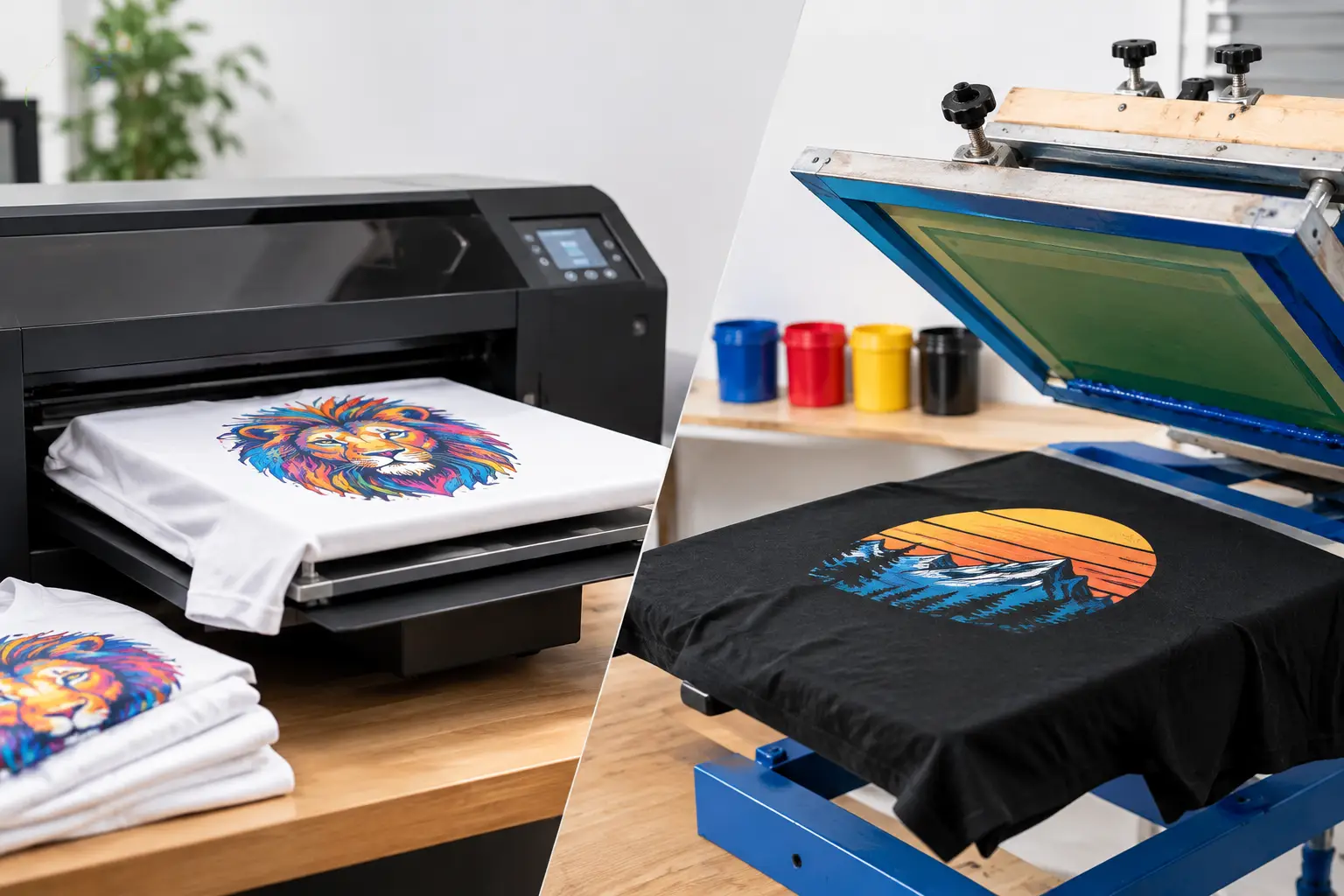
DTF means direct-to-film. Your design is printed onto a specialty film, coated with adhesive powder, cured, and heat pressed onto the garment. The finished print can include full color, gradients, small text, and detailed artwork without requiring a separate screen for every ink color.
Screen printing uses ink pushed through mesh screens directly onto the garment. Each spot color in the design generally requires its own screen and setup. Once those screens are prepared, screen printing is efficient, consistent, and especially cost-effective for larger runs with simpler artwork.
Neither method is automatically better. DTF often makes sense for smaller quantities and complex, full-color graphics. Screen printing is usually the practical choice for larger orders, bold logos, and designs with a limited number of colors. Our team also offers embroidery and DTG, so if neither option fits your project, we can recommend another method instead of forcing the wrong one.
When DTF Is the Better Choice
DTF is particularly useful when your company logo includes details that would be expensive or difficult to reproduce with traditional screen printing. Fine lines, photographic elements, color fades, multi-color illustrations, and small lettering are all good candidates. A corporate event shirt with a detailed sponsor graphic, for example, may be more affordable with DTF than with a long list of screen print colors.
It also works well when an order includes a variety of garment colors or fabrics. DTF transfers can be applied to cotton, polyester, cotton blends, and many performance fabrics. That flexibility helps when your team needs a mix of polos, T-shirts, hoodies, and jackets, or when a sports organization needs names and numbers alongside a full-color logo.
For shorter runs, DTF can reduce setup costs because the number of colors does not drive the price in the same way it does with screen printing. If your South Jordan office is ordering 18 employee welcome kits with detailed branded apparel, DTF may be the more sensible route. Our standard minimum is 12 pieces, making it a practical option for departments, small teams, and event committees.
There are trade-offs. DTF has a smooth but noticeable transfer layer on top of the garment. For a small left-chest logo, that usually is not a concern. For a large front design covering much of a shirt, some people may prefer the softer feel of a well-executed screen print. DTF also works best when artwork is prepared carefully, particularly for tiny text and very fine elements.
When Screen Printing Is the Better Choice
Screen printing earns its reputation on volume, durability, and bold color. If your company is ordering 100, 250, or 1,000 shirts with a simple one- to four-color design, screen printing will often offer the best per-piece value. The setup cost is spread across more garments, which lowers the impact of creating screens.
This method is a strong fit for staff uniforms, school spirit apparel, nonprofit fundraising shirts, community event merchandise, and trade show giveaways. A two-color logo on 200 tees can be fast to reproduce consistently and can hold up extremely well through repeated washing when properly cared for.
Screen printing also provides a different finish. Ink is worked into the fabric, and the result can feel lighter and softer than a transfer, depending on the ink type, garment, and design. Water-based and discharge-style printing can produce especially soft results on compatible garments, while plastisol ink delivers rich, opaque color and excellent durability.
Color control is another advantage. When a brand has strict color standards, we can use Pantone color matching for screen printing. That matters for organizations that need their uniforms, event shirts, and promotional apparel to stay visually consistent from one order to the next.
The limitation is setup. A six-color design requires more preparation than a two-color design, and each additional color can raise the cost. Screen printing can reproduce detailed art, but photographic designs, gradients, and artwork with many separate colors may require special techniques or may simply be better suited for DTF.
Artwork Changes the Decision
Before choosing a decoration method, look closely at the art rather than just the logo file. A clean, bold logo with one or two spot colors is ideal for screen printing. Think of a white company mark on navy shirts or a two-color tournament graphic on cotton tees. These designs stay readable from a distance and make efficient use of screens.
A logo with full-color shading, watercolor effects, a photograph, or many color transitions usually leans toward DTF. The same is true when your design includes multiple small graphics that would require several separate ink colors. DTF can preserve those details without turning the order into an expensive multi-screen project.
Artwork placement matters, too. A left-chest print, sleeve logo, or small back-neck detail can work with either method. For large prints, screen printing often feels more natural on high-volume orders, while DTF can be a good solution for detailed full-color artwork on smaller quantities.
If your art is not production-ready, that is normal. Many business buyers have a logo, a rough event graphic, or an old file but do not know what is needed for printing. Our team can review the artwork, discuss garment choices, and recommend a method before production starts.
Cost Is About More Than the Shirt Price
The lowest quoted price per garment does not always mean the lowest total cost for your company. The most useful comparison considers setup, number of print colors, order quantity, garment type, and how long the apparel needs to last.
Screen printing commonly becomes more economical as the quantity rises, particularly when the design uses few colors. DTF can be more predictable for a small order with a complicated design because there are no separate screen charges for each color. If you are ordering 30 shirts with a full-color design, DTF may avoid costs that do not make sense at that quantity. If you are ordering 300 shirts with a two-color logo, screen printing will likely be the better value.
It is also worth considering reorder plans. If your company expects to add employees, host the same event every year, or replace uniforms regularly, screen printing may be a smart long-term fit for a simple brand mark. For changing artwork, seasonal campaigns, or short-term events, DTF gives more flexibility.
Fabric, Wear, and Care Matter
Both DTF and screen printing can last well when the garment, decoration method, and care instructions are matched correctly. For either option, wash garments inside out in cold water, use mild detergent, and avoid high heat when possible. High dryer heat is tough on nearly every type of decorated apparel.
For athletic and performance garments, fabric composition is especially important. Polyester can create dye migration issues with certain inks, particularly on dark or bright garments. DTF is often a useful option for these materials, though proper testing and garment selection still matter. Screen printing on performance apparel can also work very well with the right low-bleed inks and production process.
For heavy-use uniforms, consider where the logo will sit and what the job requires. A large transfer across the chest may not be ideal for employees working outdoors in summer heat. A durable screen print or embroidered chest logo may make more sense. For a one-time corporate event, the priorities may shift toward detailed artwork and a lower quantity.
Get a Recommendation Based on Your Actual Order
The best way to choose is not to start with a decoration method. Start with the purpose of the apparel. Tell us how many pieces your organization needs, what garments you have in mind, how many colors are in the artwork, when you need the order, and how the shirts will be worn.
We provide garments and blanks as part of our service, though we can also work with garments your organization supplies. Our standard turnaround is 12 business days after artwork approval, and we often finish sooner. If your Utah event or employee rollout has a tighter deadline, rush options may be available depending on the job.
A clear recommendation can save your company from paying for unnecessary colors, choosing a print that feels too heavy, or ordering a garment that does not fit the work environment. Call Affordable-Printing at (801) 260-0606 for a free quote and straightforward advice on the right decoration method for your team.
Ready to start your order?
GET A FREE QUOTE