
October 2, 2026
Custom Embroidery That Works for Your Team
A polo that still looks sharp after months of client meetings. A jacket that makes a field crew easy to identify. A branded quarter-zip employees actually want to wear. That is where custom embroidery earns its place. For companies and organizations, it creates a durable, professional mark that does not rely on a large graphic or a trend that fades by next season.
For teams in Salt Lake City and across the Wasatch Front, embroidery is often the right choice when apparel needs to work hard, represent the organization well, and hold up through regular wear. The best results start before a needle touches fabric: choose the right garment, simplify the artwork where needed, and match the decoration method to the job.
When Custom Embroidery Is the Right Choice
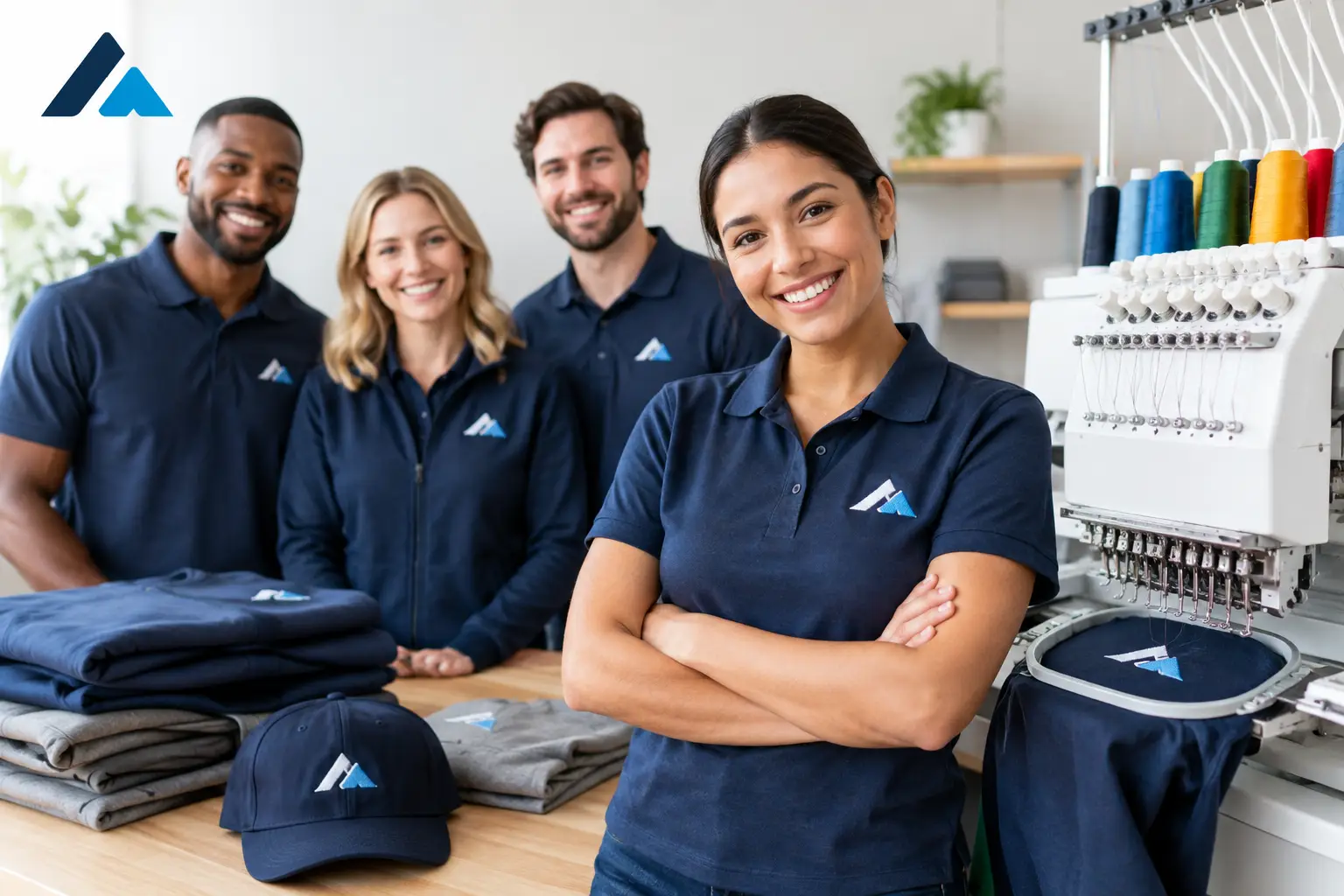
Embroidery uses thread stitched directly into the garment. It has texture, dimension, and a polished appearance that works especially well for business uniforms, employee recognition apparel, golf shirts, outerwear, hats, and bags. A small embroidered logo on the left chest can communicate more than a large printed design when your employees are meeting customers, visiting job sites, or staffing an event.
It is not the best fit for every design. Fine gradients, photographic images, very small text, and artwork with many tiny details usually reproduce better with DTF or DTG. Screen printing is often the more budget-friendly choice for large, bold artwork on T-shirts, particularly when ordering for a company event, school fundraiser, or tournament.
The question is not which method is best in general. It is which method makes sense for the garment, logo, order quantity, use case, and budget. Our team regularly helps Utah companies combine methods in one project, such as embroidered work shirts for staff and screen-printed tees for an employee event.
Start With the Garment, Not Just the Logo
The garment affects how embroidery looks, feels, and lasts. A structured polo or woven button-down gives thread a stable surface and typically produces a crisp result. Fleece jackets, soft-shell outerwear, caps, and durable workwear are also strong candidates.
Very thin performance fabric can be embroidered, but it needs more care. Dense stitching may pull or pucker lightweight material, especially around a detailed logo. In that situation, a lighter stitch count, a different placement, or a DTF transfer may make more sense. There is no benefit in forcing embroidery onto a garment if it will compromise the finished look.
For a company uniform program, think beyond the first order. Will employees need additional pieces throughout the year? Will the same logo be used on polos, jackets, and hats? Selecting dependable garment styles and colors makes reorders easier and keeps your team looking consistent.
We provide garments and blanks as part of our service, so your company can choose apparel that fits the decoration method and the job. If you already have garments, we are also happy to discuss working with what you supply.
Keep the Logo Clear at Embroidery Size
A logo on a website or business card is not automatically ready for stitching. Embroidery has physical limits because each letter and shape is built with thread. The smaller the embroidered area, the more those details matter.
A clean logo with solid shapes and readable type usually translates well. Small taglines, thin lines, and closely packed elements may need to be removed or adjusted for a left-chest logo. That is not changing your brand for the sake of it. It is making sure people can recognize the mark from a normal conversation distance.
This preparation is called digitizing. It is the process of converting artwork into instructions for the embroidery machine, including stitch type, direction, density, and sequence. Good digitizing is a major reason one embroidered logo looks clean and another looks bulky or uneven. It also helps the design behave properly on different garment fabrics.
Send the best artwork your company has available, ideally a vector file such as AI, EPS, or PDF. A high-resolution PNG can also be useful. If all you have is a logo from an old order or a website image, share it anyway. We can review it and explain what will be needed before production starts.
Thread Color Is Part of Brand Consistency
Printed ink and embroidery thread do not reflect light in exactly the same way. A bright screen-printed color may need a slightly different thread choice to look right on a navy polo or black jacket. Thread also has sheen, which can make a color appear lighter or darker depending on the fabric and lighting.
For established brand colors, thread matching helps maintain a consistent appearance across your apparel. If your company uses Pantone colors for printed items, we can use that information as a reference while selecting the closest embroidery thread. The goal is a logo that feels like your brand, not a near-enough version of it.
Choose Placement Based on How the Apparel Will Be Used
The traditional left chest is popular for good reason. It is visible in conversation, professional on polos and jackets, and appropriate for most company logos. It is a reliable choice for office staff, sales teams, hospitality employees, and corporate events.
Other placements can work well when they serve a purpose. A hat front gives a logo high visibility. A sleeve mark can add a sponsor name or department identifier. A full-back design may be better handled with screen printing, DTF, or DTG, since large embroidered areas can become heavy and stiff.
Consider what else the garment needs to communicate. A contractor may want the company logo on the chest and an employee name on the opposite side. A school or nonprofit may need a small embroidered logo on outerwear but a larger printed event graphic on the back. This is where planning the full garment matters more than selecting decoration in isolation.
Plan for Wear, Reorders, and the Event Date
A good embroidery order should look good on delivery day and after repeated washing. Properly embroidered logos hold up well, but garments still need sensible care. Washing in cold water, turning apparel inside out when practical, and avoiding excessive heat will help preserve both the garment and the stitching.
For businesses ordering uniforms, it also pays to document the final choices: garment brand and style, color, logo version, thread colors, placement, and employee naming format. That record makes future orders simpler when a new hire needs two polos or a manager wants matching jackets for a new department.
Timing matters just as much. Our standard turnaround is 12 business days from artwork approval, and we often finish sooner. Artwork approval is the key point in that timeline. If the logo needs adjustment, garment selections are still changing, or names have not been finalized, production cannot begin with confidence.
If your company has a conference, employee appreciation event, grand opening, or tournament on the calendar, start the conversation early. Rush orders may be available, but the more lead time we have, the more options your team will have for garment styles, colors, and decoration choices.
Build an Order That Fits Your Team
Embroidery works especially well when an organization needs a coordinated set of apparel rather than a single novelty item. Our standard order minimum is 12 pieces, which fits most departments, staff groups, school teams, and event committees. A mixed order can often include several garment sizes and styles while carrying the same logo, depending on the project.
Think about who will wear the items and where. A client-facing team may need polished polos and quarter-zips. Operations staff may need durable button-down work shirts, caps, or jackets. A nonprofit committee may choose embroidered fleece for volunteers and printed shirts for a public event. The apparel should support the work, not sit unused in a closet.
The strongest custom embroidery projects are usually simple: a readable logo, a garment built for the role, and a placement that makes sense. If you are planning uniforms, branded outerwear, staff gifts, or apparel for a corporate event in South Jordan, Salt Lake City, or elsewhere along the Wasatch Front, our team can help you sort through the practical choices before production begins.
To get a free quote for your company or organization, visit affordable-printing.com/request-a-quote/ or call Affordable-Printing at (801) 260-0606.
Ready to start your order?
GET A FREE QUOTE