
October 11, 2026
Branded Uniform Case Study for Better Rollouts
A branded uniform case study is most useful when it shows the decisions behind the shirts, not just a finished team photo. For a business, school, or event organizer in Salt Lake City, the real question is whether the uniform program made employees easier to identify, held up to the work, fit the budget, and arrived when it was needed.
The following is a composite example based on the kinds of uniform projects our team handles across the Wasatch Front. It is not a story about a single customer. It is a practical look at how a company can move from a loose idea - “our team needs branded workwear” - to a uniform order that works in the field.
The Uniform Problem: Inconsistent Appearance and Reorders
The company in this example had a 24-person customer-facing team split between office staff, installers, and supervisors. Employees wore their own shirts, jackets, and hats. Some had old logo gear, some had no branded apparel at all, and the logo colors varied from one item to the next.
That inconsistency created a few practical problems. Customers could not always tell who represented the company on a job site. Managers spent time trying to find matching replacement items. New hires received different apparel than existing employees. The company also wanted a cleaner appearance for a regional trade event without buying a separate wardrobe that would sit in a closet afterward.
The goal was not high-fashion apparel. It was a dependable, recognizable uniform system employees would actually wear.
What the Company Needed From Its Branded Uniforms
Before picking garments or decoration methods, the project needed a clear scope. The company identified three roles: field employees who needed durable, practical layers; office and sales employees who met customers; and supervisors who needed a more polished option.
That led to a simple apparel plan. Field employees received performance polos and caps for daily work, plus a heavier layer for cooler weather. Office staff received polos with a more structured fit. Supervisors received embroidered outerwear for customer visits and events.
This is where many uniform orders go off track. A single shirt style for every person may be less expensive on paper, but it may not suit the work. A lightweight cotton tee can be right for a volunteer event, while a service team that meets clients may need polos, work shirts, or quarter-zips. The best choice depends on the job, the season, the dress expectation, and how often each item will be washed.
The company also set a practical reorder plan. Rather than issuing every employee a large assortment, it started with a core set per person and kept approved garment styles, logo files, placement notes, and thread colors on record. That gave the office manager a consistent path when employees joined, changed sizes, or needed replacements.
Choosing the Right Decoration Method
The project used different decoration methods because the garments had different jobs. That is often the right answer. Screen printing, embroidery, DTF, and DTG each have a place, but none is automatically best for every uniform.
Embroidery for Polos, Caps, and Outerwear
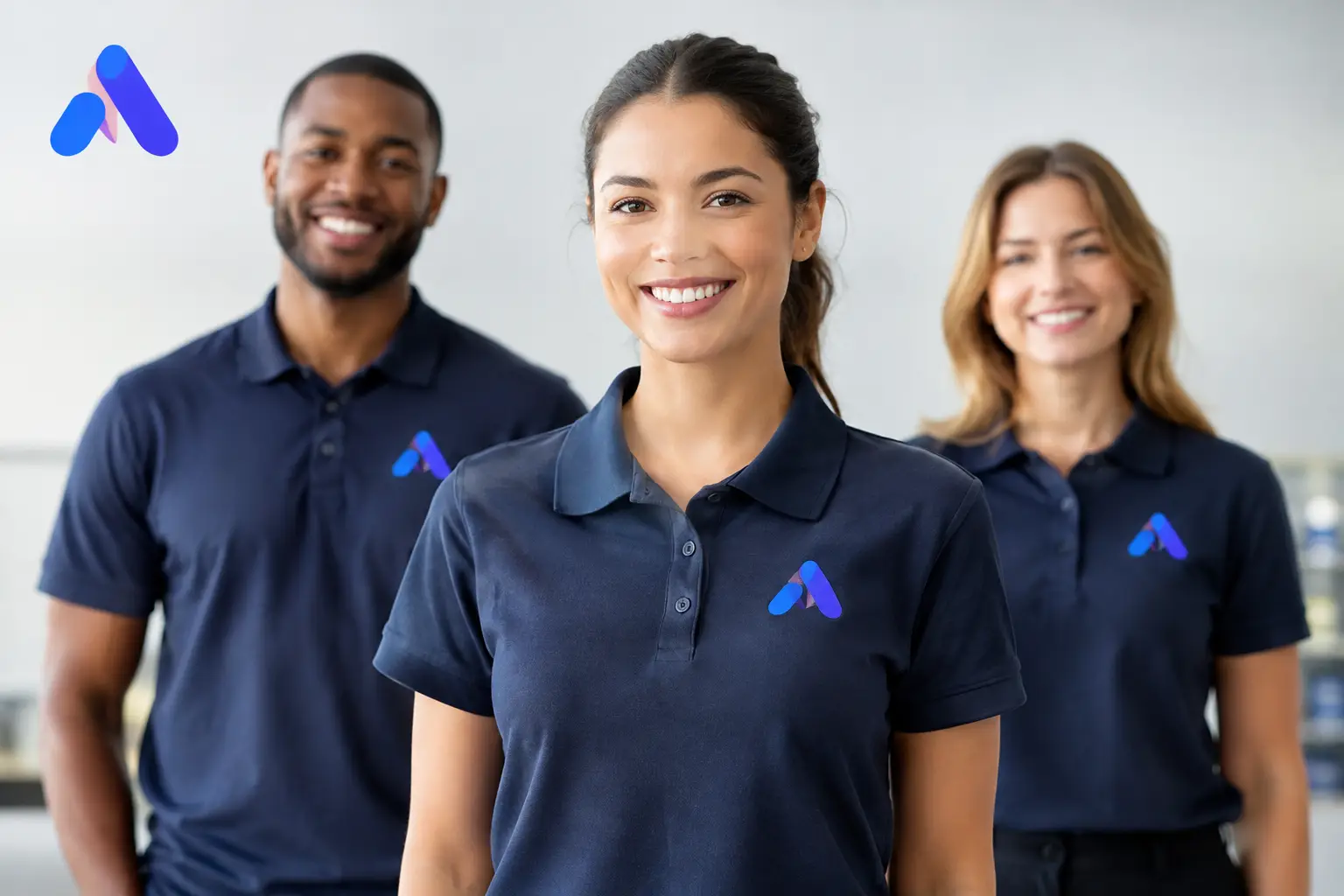
The primary left-chest logo was embroidered on polos and outerwear. Embroidery gives a clean, durable finish that works especially well on collared shirts, hats, fleece, jackets, and other professional uniform pieces. It also makes a smaller logo feel intentional and substantial.
There are trade-offs. Fine detail and tiny type do not always translate well into stitches, so artwork may need minor adjustments. A large embroidered design can also feel heavy on a lightweight shirt. In this case, the company used a simplified left-chest version of its logo rather than forcing a detailed full-color design into a small area.
Our team matched the thread as closely as possible to the company’s brand colors. For a uniform program, that matters. A navy that shifts too purple or a red that turns orange can make otherwise professional apparel look mismatched.
Screen Printing for Larger Team Shirts
For the company’s trade event shirts and a batch of work tees, screen printing made more sense. The design included a larger back print with the company name and service information, along with a smaller front logo. Screen printing is a strong choice for larger quantities, bold graphics, and designs that need consistent color across many garments.
Pantone color matching can help when brand color accuracy is a priority. It is particularly useful for companies with established logo standards, multi-location teams, or event apparel that will be photographed and reused year after year.
Screen printing does require planning. The print setup is built around the approved artwork and colors, so last-minute design changes can affect the schedule and cost. For this order, the company approved a digital proof before production and avoided changes once the garments were ordered.
DTF and DTG for Flexible, Detailed Artwork
The company also wanted a short run of detailed full-color shirts for an internal recognition event. DTF, or direct-to-film, was a practical fit because the artwork included shading and several colors. DTF can work well for detailed logos, names, and smaller runs where traditional screen printing may not be the most efficient option.
DTG, or direct-to-garment printing, is another option for full-color artwork, particularly on suitable cotton garments. The right choice between DTF and DTG depends on the fabric, artwork, quantity, and intended wear. A good decorator should explain the difference instead of pushing one process for every project.
The Approval Process Prevented Expensive Surprises
The most valuable part of this branded uniform case study was not the garment selection. It was the approval process before production began.
The company provided its logo files, a rough employee count, expected sizes, and the dates it needed apparel in hand. From there, the project manager helped organize garment options and decoration recommendations. The final proof showed the logo placement, approximate size, colors, and the garment color for each item.
That proof step answers questions that are hard to catch in an email thread. Is the logo wide enough to read from a few feet away? Does the light thread stand out on the dark polo? Is the back print positioned correctly below the collar? Are the employee names spelled correctly? Are the sizes and quantities complete?
For larger team orders, it also helps to appoint one person to consolidate feedback. When five people send separate change requests, small details can get lost. One designated approver keeps the process cleaner and helps protect the delivery date.
The Rollout Was Built Around Real Workdays
The company needed the uniforms ahead of its event and before a busy installation period. With artwork approved, standard turnaround was 12 business days, although many projects finish sooner. The team did not wait until the week of the event to start planning, which gave room for proofing, garment selection, and any needed adjustments.
The order was packed by department so managers could distribute apparel without sorting through one large mixed box. That may sound minor, but it saves time when a team has multiple locations, shifts, or job roles.
The company also issued a simple wear guideline. Field crews wore branded polos or tees with the approved logo visible. Supervisors wore embroidered outerwear for customer meetings. Event staff wore the screen-printed shirts. The guideline was flexible enough for employees to be comfortable, but clear enough that the company presented a consistent appearance.
Results Worth Measuring
Uniform results are not always measured in a spreadsheet, but a few outcomes were easy to see. Employees were easier for customers to identify. The trade event team looked coordinated without appearing overly formal. New hires could receive the same approved apparel as the rest of the company instead of a random substitute.
The company also reduced future decision-making. It had a documented list of garment styles, decoration methods, logo placements, and colors. That meant reorders could be based on an established system rather than starting from scratch every time.
For your company, the results may look different. A restaurant may care most about role identification and washable fabrics. A construction or service business may prioritize durability and layered apparel. A school, nonprofit, or corporate event may need a shirt that keeps a large group recognizable for one day. The point is to define the job before choosing the product.
What to Bring to Your Uniform Quote
A good uniform quote starts with useful information: your estimated quantity, the types of employees or roles involved, the garments you are considering, your logo file, and the date you need the order. If you are unsure about shirt styles or decoration, that is normal. Those are decisions our team can help narrow down.
Affordable-Printing supplies garments and blanks as part of the process, and we can also work with garments your company provides. For most group orders, our minimum is 12 pieces. Whether your team needs embroidered polos, screen-printed work shirts, detailed DTF graphics, or DTG apparel, the right plan starts with the work your employees actually do.
If your Salt Lake City or Wasatch Front team is planning a uniform rollout, call Affordable-Printing at (801) 260-0606 for a free quote and straightforward guidance on your order.
Ready to start your order?
GET A FREE QUOTE