_1782777776334-CjnZ693B.png)
May 25, 2026
When to Use Embroidery for Branded Apparel
A stitched logo on a polo sends a different message than the same logo printed on a T-shirt. If you are choosing apparel for staff, a school program, a donor event, or a company giveaway, that difference matters. Knowing when to use embroidery helps you match the decoration method to the job, the budget, and the impression you want to make.
When to use embroidery instead of printing
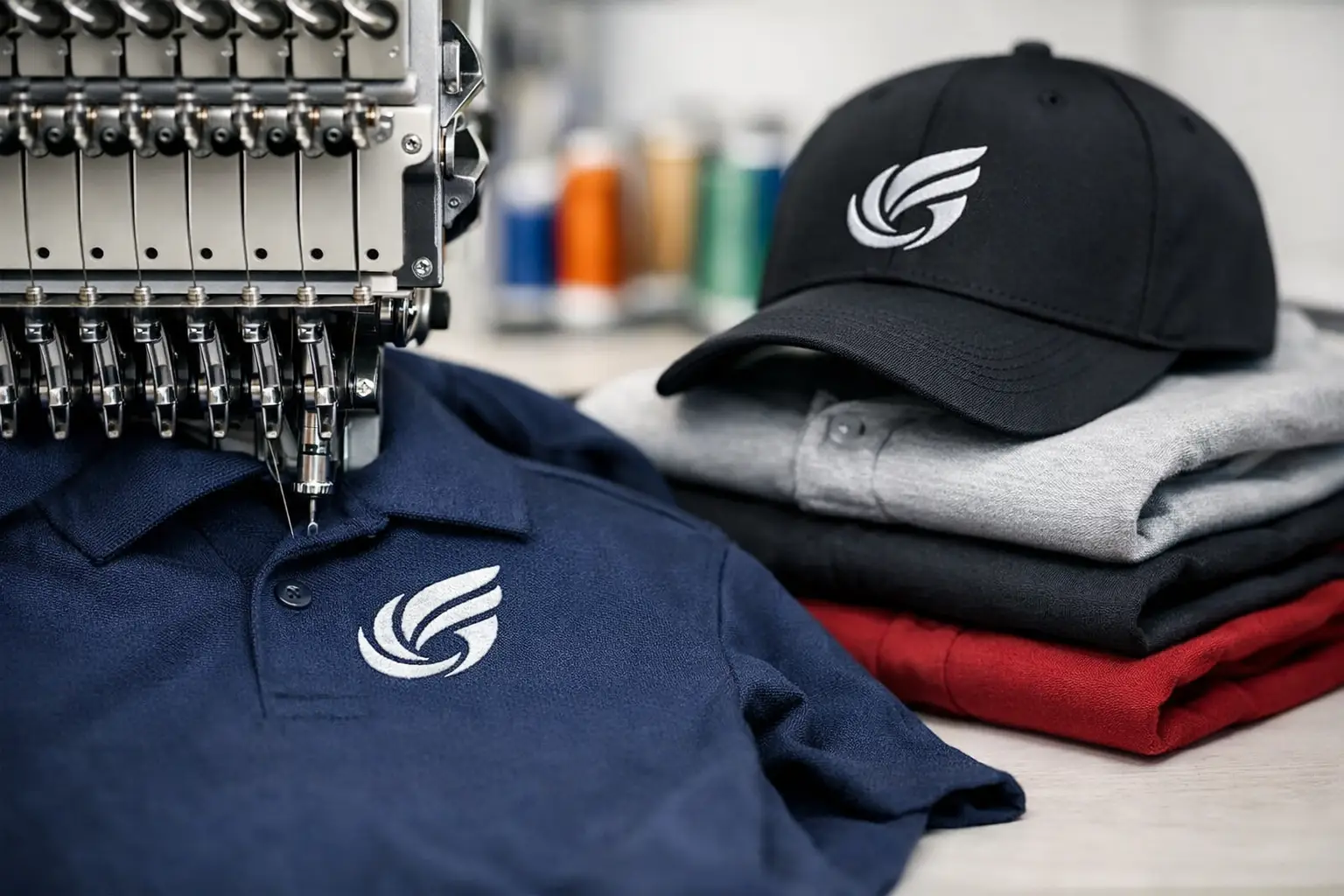
Embroidery is usually the right call when you want your branding to look polished, durable, and more permanent. It works especially well on apparel and accessories that already have some structure, like polos, jackets, fleece, button-downs, hats, and bags. In those cases, stitching tends to look intentional and professional in a way that fits workplace wear and long-term use.
Printing often makes more sense for large graphics, detailed artwork, or lightweight shirts where softness and image clarity matter most. Embroidery, by contrast, adds dimension and texture. That added texture is a benefit on some items and a drawback on others. The key is not whether embroidery is better overall. It is whether embroidery is better for that specific product and use case.
If the goal is employee identification, branded uniforms, executive apparel, or team gear that will be worn repeatedly over time, embroidery is often the stronger option. If the goal is a bold event shirt with a large back design or a promotional tee built around artwork, print methods usually win.
Best uses for embroidered apparel
Embroidery performs best when the item needs to hold up, look professional, and support repeat wear. That is why businesses, schools, nonprofits, and event organizers often choose it for apparel that stays in circulation well beyond a single campaign.
Staff uniforms and company apparel
For front-desk teams, sales staff, hospitality teams, maintenance crews, and office employees, embroidery is a practical fit. A stitched logo on a polo, quarter-zip, or button-down creates a clean branded look without feeling overdesigned. It gives employees identifiable apparel that still looks appropriate in customer-facing settings.
This is one of the clearest examples of when to use embroidery. Uniform programs need decoration that can handle regular washing and still look consistent over time. Embroidery holds its shape well and does not rely on a large printed surface that may feel less formal on business apparel.
Hats, beanies, and outerwear
Headwear is one of the strongest categories for embroidery. Structured caps, trucker hats, beanies, and visors typically pair well with stitched logos because the decoration matches the construction of the item. The same is true for jackets, fleece, and heavier layers.
On these products, printing is often limited by fabric texture or item shape. Embroidery solves that problem while also creating a premium branded look. If you need merchandise that people will keep and wear repeatedly, embroidered headwear and outerwear are often smart investments.
School, team, and organization apparel
Schools, booster clubs, church groups, and community organizations often need apparel that feels established rather than temporary. Embroidered polos, jackets, and hats work well for staff, volunteers, coaches, and leadership groups because they create a more official appearance.
That does not mean every school or team order should be embroidered. Spirit shirts and fundraiser tees are often better printed because they rely on larger graphics and lower per-piece costs. But for coach gear, faculty wear, club officers, or travel apparel, embroidery usually fits the purpose better.
Bags and accessories
Tote bags, backpacks, duffels, and other accessories can be strong embroidery candidates, especially when the logo is simple and the item is meant for regular use. A stitched mark on a bag tends to look durable and practical, which aligns well with corporate gifting, staff gear, and organization-issued merchandise.
The limitation is design size. If your artwork needs to cover a large area or include fine detail, printing may be a better match.
What makes embroidery a strong choice
The main advantage of embroidery is not just durability. It is presentation. Stitching gives a logo dimension, texture, and a more finished look. For businesses trying to project consistency and credibility, that can make a real difference.
Embroidery also works well for logos that are relatively compact, especially left-chest placements and hat fronts. If your brand mark is clean and readable at smaller sizes, it is a strong candidate for stitching. This is common with company logos, school emblems, monograms, and icon-based branding.
Another benefit is perceived value. People often view embroidered apparel as more substantial than printed basics. That matters for onboarding kits, employee apparel programs, appreciation gifts, and donor or sponsor merchandise. You are not just decorating a garment. You are shaping how the item is received.
When embroidery may not be the best fit
There are clear situations where embroidery is the wrong tool for the job. If your design includes gradients, tiny text, distressed effects, or a lot of detail packed into a small area, stitching may simplify the artwork too much. Some logos translate well. Others need a print method to stay readable.
Garment type matters too. Lightweight T-shirts, performance shirts, and very thin fabrics do not always pair well with embroidery. The stitching adds weight and can pull on soft material, especially with larger designs. For those products, screen printing, DTG, or DTF may give you a cleaner result.
Cost can also be a factor. Embroidery is often worthwhile for uniforms, hats, and premium apparel, but it may not be the most efficient choice for high-volume event shirts or giveaway tees. If you need broad coverage, large graphics, or multiple print locations, printing is often more budget-friendly and better suited to the design.
How to decide when to use embroidery
Start with the purpose of the item. If the apparel is meant to identify staff, support a professional environment, or stay in use for a long time, embroidery is worth serious consideration. If the item is tied to a short-term promotion, a large art-driven design, or a lower-cost handout, printing may be the better route.
Then look at the product itself. Structured garments and accessories usually support embroidery well. Soft, thin, or highly stretchy products may not. The design should also guide the choice. Simple logos, initials, and badge-style graphics tend to embroider well. Complex artwork usually does not.
Finally, think about the audience. A corporate team, school administration group, golf event, or nonprofit board may respond better to embroidered apparel because it feels more polished. A festival crowd, youth event, or community fundraiser may care more about bold graphics and cost efficiency, which favors print.
Embroidery works best as part of a bigger merchandise plan
Many organizations do not need to choose just one decoration method. In fact, the strongest apparel programs often mix methods based on use. Embroidered polos for staff and printed T-shirts for events is a common example. So is embroidered hats paired with printed hoodies for a seasonal campaign.
That kind of mix lets you control budget while still putting embroidery where it has the most value. A business might use stitched polos for daily wear, printed tees for outreach events, and branded bags for internal kits. A school might use embroidery for faculty apparel and printing for spirit wear. The right answer usually depends on how each item will actually be used, not on a blanket preference for one method.
For buyers in Salt Lake City and surrounding Utah communities, this is often the most practical approach. Different audiences, budgets, and timelines call for different products, and decoration should support the outcome rather than drive the order.
Choosing embroidery with the end result in mind
If you want apparel that looks established, handles repeat wear, and gives your logo a more professional presence, embroidery is often the right move. It is especially effective on uniforms, polos, hats, jackets, fleece, and bags where texture and durability add value.
If your design is large, highly detailed, or built for lightweight shirts, a print method may serve you better. The smartest buying decisions come from matching the decoration method to the product, the audience, and the purpose.
When the apparel needs to do more than just display a logo, embroidery earns its place.
Ready to start your order?
GET A FREE QUOTE