_1782777776334-CjnZ693B.png)
May 12, 2026
What Promotional Items Work Best?
A box of random swag rarely helps a brand. A useful item that gets worn, carried, or kept does. That is the real answer behind what promotional items work best: the products that match how people actually live, work, and interact with your organization.
For most businesses, schools, nonprofits, and event teams, the best promotional item is not the cheapest option on a product sheet. It is the one that fits the audience, supports the goal, and keeps your name visible after the event or campaign ends. If you are choosing between branded apparel, office giveaways, or event handouts, the smartest approach is to think in terms of function first and product second.
What promotional items work best for real-world marketing?
The short answer is simple: promotional items work best when they are useful, relevant, and easy to brand clearly. That sounds obvious, but it is where many orders go off track. Buyers often focus on unit price alone, then end up with items people toss in a bag and forget.
A better question is what job the item needs to do. Some products are built for broad reach at events. Others are better for employee identity, donor appreciation, school spirit, or customer retention. A branded pen can still make sense in the right context, but in many campaigns, a T-shirt, hoodie, tote bag, or drinkware item will deliver more repeat impressions because it stays in use longer.
That is why apparel and practical everyday products usually perform best. They combine visibility with real utility, which gives your logo more chances to be seen without asking the recipient to do anything extra.
Branded apparel often gives the strongest long-term value
Custom apparel is usually one of the safest answers to what promotional items work best because it turns the recipient into a visible extension of the brand. A shirt worn at work, at a school event, during a fundraiser, or around town can generate repeated exposure in a way that many desk items cannot.
T-shirts work especially well when the design is clean and wearable. If the artwork feels too promotional, people may only wear it once. If it looks good and fits the event or organization, it can stay in rotation for months. That is a major difference in value.
Hoodies and sweatshirts often have even longer life spans, especially for schools, teams, staff groups, and nonprofit volunteers. The cost is higher than a basic tee, but so is the perceived value. If the goal is stronger buy-in, better retention, or a premium giveaway, outerwear can make more sense than spreading the same budget across lower-impact items.
Polos, embroidered jackets, and branded workwear are effective in a different way. They are less about giveaway volume and more about professional identity. For companies with customer-facing teams, these items help create a consistent appearance while also supporting brand recognition.
The decoration method matters here. Screen printing is often the practical choice for larger apparel runs with bold graphics. Embroidery is a strong fit for polos, hats, and outerwear where a more polished look matters. DTG and DTF can help when design detail, color range, or smaller-run flexibility is more important. The best item can lose value fast if the print method does not match the garment and use case.
Everyday-use items usually outperform novelty products
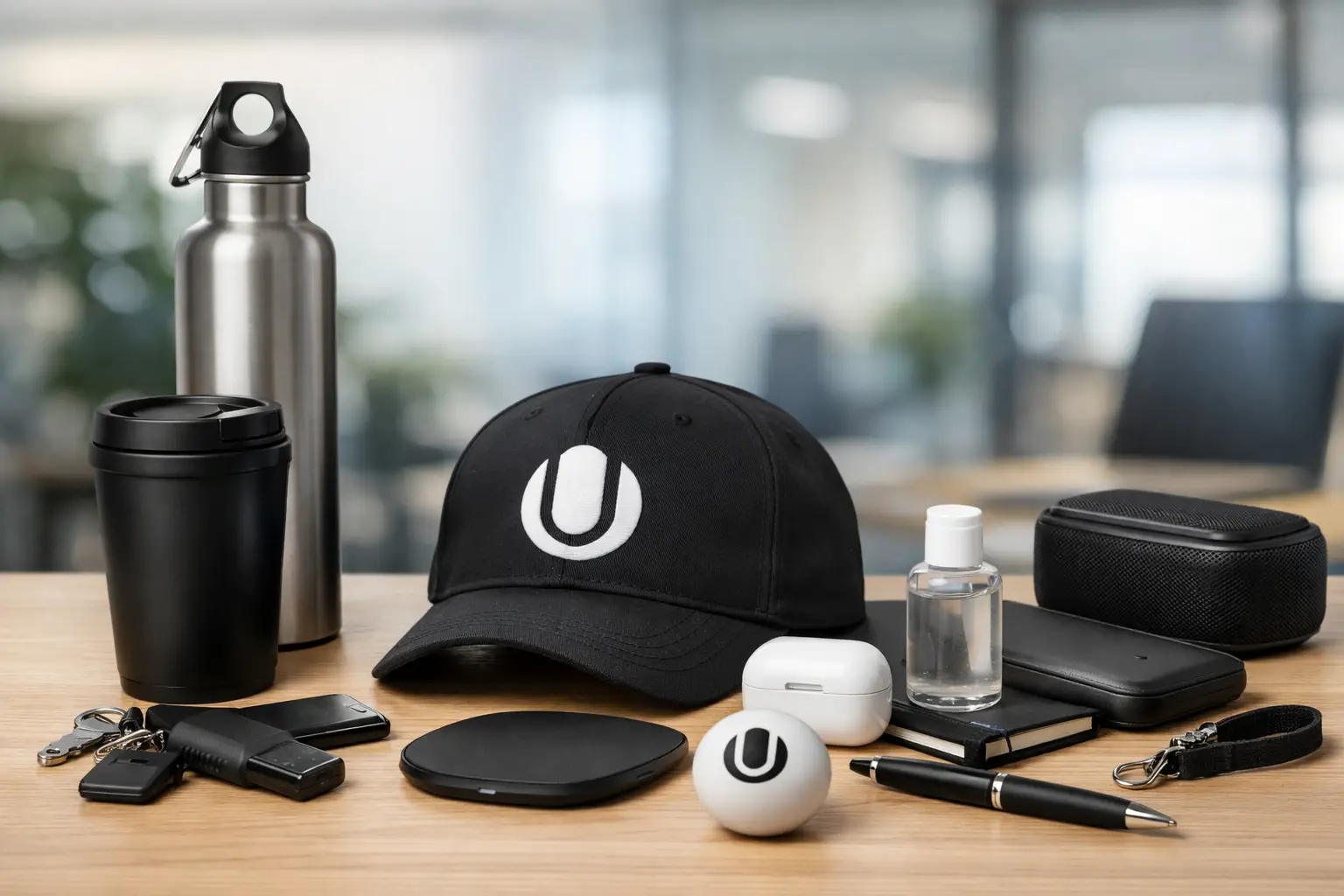
If apparel is not the right fit, the next best category is usually merchandise people use in routine settings. Think tote bags, water bottles, tumblers, notebooks, and other items that naturally stay in homes, offices, schools, vehicles, and event environments.
Drinkware consistently performs well because it is visible and practical. A branded tumbler or water bottle is often used repeatedly at work, in transit, or at the gym. That gives your logo more staying power than an item tied to a one-time event.
Tote bags are another strong option, especially for trade shows, school functions, community events, and nonprofit outreach. They are useful on the spot and afterward. A good tote also has enough surface area for clear branding without forcing the design into a tiny imprint space.
Office and desk items still have a place, but they work best when the audience will actually keep them nearby. Notebooks, sticky notes, and pens can be effective for training programs, conferences, HR onboarding, and education settings. The trade-off is that they usually create lower perceived value than apparel or premium drinkware, so they are better for reach than for impact.
Novelty items can attract attention in the moment, but they tend to have a shorter lifespan. If the product does not solve a real need or feel worth keeping, the branding disappears with it.
The best promotional item depends on your audience
This is where many buying decisions improve quickly. Instead of asking which product is most popular overall, ask which item fits the recipient's habits.
For employees, apparel, hats, bags, and drinkware often work well because they support both internal culture and public visibility. For schools and teams, spirit wear and practical event items tend to outperform generic handouts because they reinforce belonging. For nonprofits, the right product often balances donor value with outreach efficiency. A premium thank-you item for sponsors serves a different purpose than a high-volume giveaway at a community event.
For trade shows and business events, the best product is often something easy to carry, easy to use, and easy to remember. If attendees are walking a floor all day, bulky or fragile items can become a burden. In those cases, compact drinkware, totes, notebooks, or quality pens may work better than larger giveaways.
For customer-facing businesses, branded merchandise can also support repeat business. A restaurant, gym, retailer, or service company may get more value from wearable branded apparel or reusable drinkware than from lower-cost handouts, because those products keep the business visible after the initial transaction.
Budget matters, but cheap is not always cost-effective
A low unit price looks good on paper. It does not always produce the best result. If an item costs less but gets ignored, the real return is low. If another item costs more but gets used weekly, the cost per impression may be far better.
That does not mean every order should aim for premium products. It means the budget should match the purpose. For large-scale outreach, lower-cost items can still make sense if they are practical and well chosen. For staff apparel, donor gifts, sponsor packages, or recruiting events, spending more on quality may be the smarter move.
Buyers also need to consider artwork and branding space. Some inexpensive products offer very limited imprint areas, which can weaken logo visibility. Others may not hold up well under regular use, which affects how your brand is perceived. A practical order balances quantity, quality, and presentation.
How to choose what promotional items work best for your campaign
Start with the outcome you want. If the goal is visibility, choose products people will wear or carry in public. If the goal is team identity, focus on apparel that feels unified and usable. If the goal is event participation, choose items that support the experience and are easy to distribute.
Next, think about how long you want the item to stay relevant. One-day events can justify simpler giveaways. Longer campaigns usually benefit from products with a longer use cycle.
Then consider your audience's setting. Office staff, students, volunteers, donors, and trade show attendees all interact with merchandise differently. The more closely the product fits the environment, the better the result.
Finally, match the product to the right production method. A great logo on the wrong product or imprint style can undermine the whole order. Working with a vendor that handles both custom apparel and promotional sourcing makes this process much easier because you can compare options based on budget, design, and timeline instead of forcing every idea into one format.
The strongest promotional products are the ones people keep
If you strip the question down to basics, what promotional items work best comes back to one principle: keepability. Items that stay in circulation create ongoing brand exposure. Items that feel disposable create a short spike and then disappear.
That is why branded apparel remains one of the strongest choices across so many industries, and why practical merchandise categories continue to outperform novelty items. The best product is usually the one that earns a place in someone's routine.
If you are planning an event, outfitting a team, or building a branded merchandise package, focus less on what is trendy and more on what will still be useful next week, next month, and next season. That is where promotional value starts to compound.
Ready to start your order?
GET A FREE QUOTE