_1782777776334-CjnZ693B.png)
May 9, 2026
Screen Printing vs Embroidery: Which Fits?
A polo for your staff, a stack of event tees, and a hoodie order for volunteers might all carry the same logo, but they should not all be decorated the same way. That is where screen printing vs embroidery becomes a real buying decision, not just a design preference. The right method affects cost, appearance, garment choice, and how your brand comes across when people actually wear the item.
If you are ordering for a business, school, nonprofit, or event, the best choice usually comes down to how the apparel will be used. Some projects need a bold graphic that covers more space at a lower unit cost. Others need a clean, durable logo that looks polished on staff apparel. Both methods work well. They just solve different problems.
Screen printing vs embroidery: the core difference
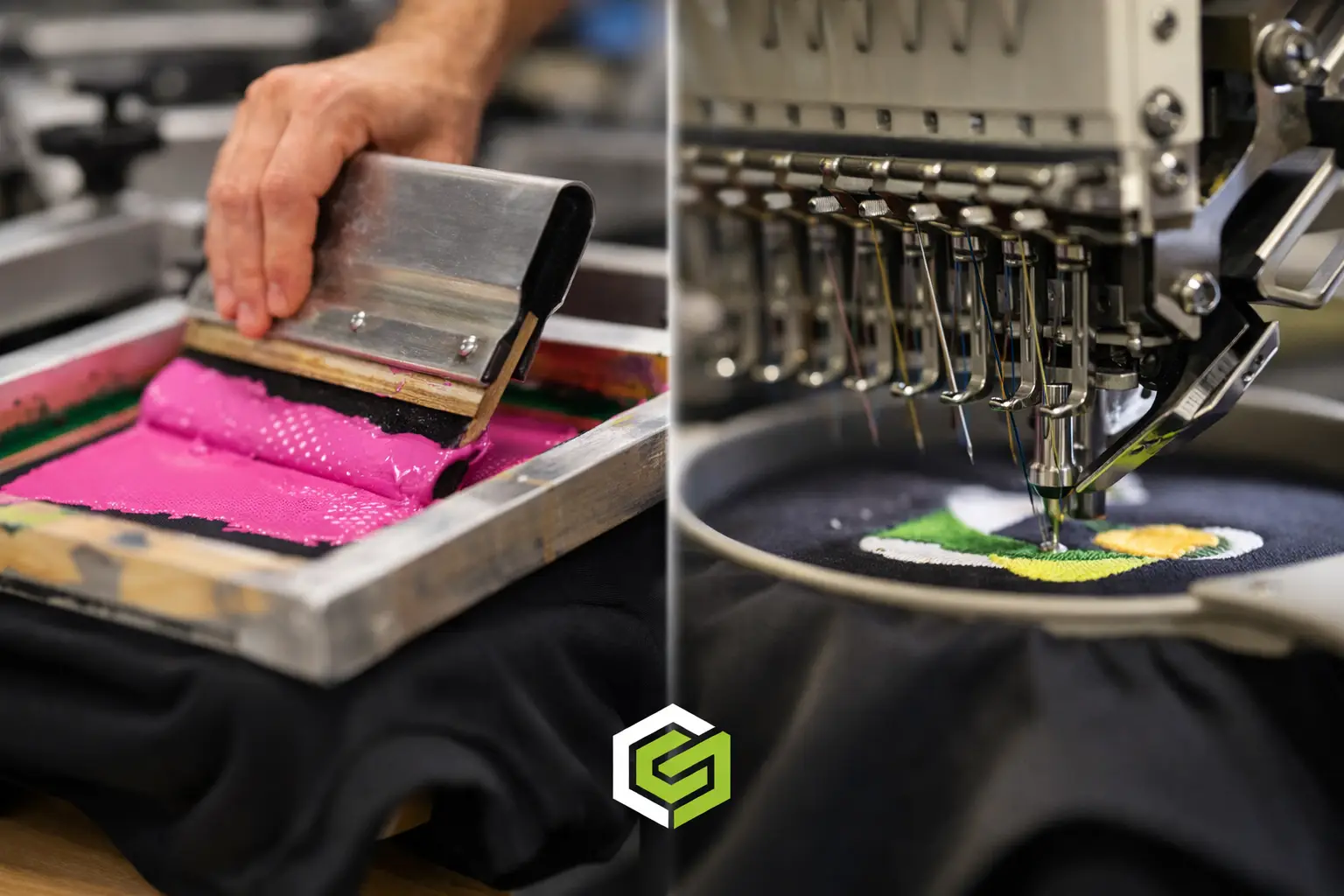
Screen printing applies ink directly onto the garment surface. It is a strong fit for t-shirts, long sleeves, hoodies, and other casual apparel where you want visible graphics, larger logos, or multi-shirt runs for promotions and events. The print sits flatter on the fabric and can reproduce solid shapes, text, and graphic designs with good visual impact.
Embroidery stitches the design into the garment using thread. Instead of a printed image, you get a textured logo with dimension. That makes embroidery a common choice for polos, jackets, hats, quarter-zips, and workwear where a more professional appearance matters.
For most buyers, the practical difference is simple. Screen printing is usually the better option for graphic-heavy apparel and larger-volume shirt orders. Embroidery is usually the better option for branded pieces that need a more finished, uniform-ready look.
When screen printing makes more sense
Screen printing is often the strongest value when you need a lot of apparel with the same design. If you are outfitting a fundraiser, school event, community race, company outing, or marketing campaign, this method gives you strong visual coverage at a cost that generally works better as quantities rise.
It is also the better pick when the artwork itself is doing most of the work. Big front prints, back prints, bold slogans, event graphics, mascot art, and campaign messaging all translate naturally to ink. If your design includes wider shapes, larger placement, or a more casual promotional feel, screen printing usually gives you more flexibility.
Another advantage is color presence. A printed design can look bright, crisp, and easy to read from a distance, which matters for awareness-based use. If your shirts are meant to help staff stand out at an event or get your logo seen across a crowd, printing often delivers more visibility than a smaller embroidered chest logo.
That said, screen printing has trade-offs. Very small details can be harder to reproduce cleanly depending on the artwork. Placement is also different from embroidery. While a large print is a benefit on tees and hoodies, it may not look right on more formal garments. And if the goal is executive apparel or polished team uniforms, a print can feel too casual.
When embroidery is the better choice
Embroidery tends to win when appearance and durability are the priority. A stitched logo on a polo or jacket gives branded apparel a more established, professional look. That is why so many businesses choose it for office wear, front-facing staff uniforms, outerwear, and headwear.
It is especially useful when your logo is being worn in customer-facing settings. Sales teams, property management staff, school administrators, hospitality teams, and event personnel often need apparel that identifies them clearly without looking promotional in the temporary sense. Embroidery handles that well.
Thread also holds up well over time, particularly on garments that are worn repeatedly. For work apparel and branded layers that stay in rotation, embroidery can provide a durable finish with consistent brand presence.
The trade-off is that embroidery is not ideal for every design. Large artwork can become too heavy or too expensive to stitch efficiently. Fine gradients, photographic detail, and oversized graphics usually do not translate well. The decoration area is typically smaller, so if you want a bold, highly visible design across the chest or back, printing is usually the better route.
The budget question buyers usually ask first
Cost matters, especially when you are ordering for a department, school, or event with a set budget. In most cases, screen printing is more cost-effective for larger apparel runs with straightforward artwork. That makes it a practical choice for promotional shirts, campaign apparel, team tees, and event merchandise.
Embroidery often carries a higher per-item cost because stitching takes more production time and depends heavily on stitch count. A simple left-chest logo on polos may still make perfect financial sense if the garments are meant for long-term staff use. But if you are trying to decorate hundreds of shirts for a one-day event, embroidery usually is not the most efficient use of budget.
This is where the order purpose matters more than the price alone. A cheaper decoration method is not better if it puts the wrong finish on the garment. If your staff needs polished branded apparel that supports trust and consistency, embroidery may return more value. If your goal is broad visibility across a large group, screen printing often stretches the budget further.
Garment type matters more than many buyers expect
One of the biggest mistakes in custom apparel is choosing the decoration method first and the garment second. It should usually work the other way around.
T-shirts, lightweight hoodies, and many event-focused garments are natural fits for screen printing. The fabric and use case align with a printed graphic. You can go bigger with placement, make the branding more noticeable, and keep the product aligned with promotional use.
Polos, fleece jackets, woven shirts, quarter-zips, and hats are more natural fits for embroidery. These garments already lean more structured, so stitching supports the look rather than fighting it. A printed logo on a jacket may technically work, but it often does not deliver the appearance buyers want.
If you are building a full branded apparel package, the smart move is often not choosing one method over the other. It is choosing the right method for each piece. For example, you might print event shirts for volunteers and embroider polos for organizers. Same brand, different function.
How your logo affects the decision
Not every logo works equally well with both methods. Simple logos with clean shapes, limited text, and strong lines tend to work well for embroidery. If the logo is compact and meant for left-chest placement or hats, embroidery can look sharp and professional.
If your design includes large artwork, multiple text elements, fine visual detail, or a graphic style meant to fill space, screen printing is often a better match. Ink handles broader layouts more naturally.
This is also where brand consistency matters. A logo may need slight adjustments depending on the decoration method. That does not mean changing your brand. It means preparing the artwork so it performs well on the garment. A practical apparel partner will guide that process and recommend whether the design should be printed, stitched, or adapted for each use.
Screen printing vs embroidery for common use cases
For school spirit wear, fundraiser shirts, festival apparel, and outreach campaigns, screen printing usually makes the most sense. These projects often need larger graphics, broad distribution, and a cost structure that works across volume.
For employee polos, company jackets, staff hats, and team outerwear, embroidery is often the better choice. These garments need to look consistent, durable, and appropriate for repeated professional wear.
For mixed orders, the answer is usually both. A business may use printed tees for trade shows and community events, then embroidered polos for office staff and sales reps. A nonprofit may print volunteer shirts but embroider board or leadership apparel. A school may print club shirts while stitching staff quarter-zips.
That kind of flexibility is often the most effective route because the apparel is tied to the actual job it needs to do.
What to ask before placing your order
Before you choose between printing and embroidery, think about where the apparel will be worn, how often it will be used, what kind of image it needs to support, and how visible the design should be. A promotional shirt and a uniform polo are both branded apparel, but they are solving different problems.
It also helps to ask whether the logo is simple or detailed, whether the decoration will be small or large, and whether the garment is casual or structured. Those details usually point to the right method faster than personal preference does.
For many organizations in Salt Lake City and across northern Utah, the best results come from planning the order around function first. Affordable-Printing works with buyers who need that kind of practical guidance because the goal is not just to decorate apparel. It is to put the right branded product in the right setting.
The best choice is the one that helps your logo look appropriate, your apparel perform its job, and your budget stay tied to results rather than guesswork.
Ready to start your order?
GET A FREE QUOTE