_1782777776334-CjnZ693B.png)
June 15, 2026
How to Pick Logo Merchandise That Works
The fastest way to waste a promo budget is to buy logo merchandise because it seems easy. A box of cheap pens, a few random shirts, and some giveaway items might check the box, but they do not always do much for your company. If you are figuring out how to pick logo merchandise for your team, event, or client outreach, the best place to start is not the product catalog. It is the job that item needs to do.
That matters whether you are ordering for a trade show in Salt Lake City, onboarding new employees in South Jordan, or planning apparel for a field crew across the Wasatch Front. Good merchandise supports a business goal. It helps your brand get seen, keeps your team looking consistent, or gives people something useful they will actually keep.
How to pick logo merchandise by purpose first
Before you think about colors, decoration, or quantities, ask one practical question: what is this item supposed to accomplish for your company?
If the goal is employee apparel, you need something people can wear repeatedly and comfortably. If the goal is trade show traffic, you may need a lower-cost item that can be handed out in volume. If the goal is client appreciation, the standard is higher. A nice piece of drinkware or a well-made bag usually says more about your company than a throwaway item ever will.
This is where a lot of buyers get stuck. They try to choose one product that works for every situation. Usually that leads to a compromise item that is only okay for all of them. In most cases, it makes more sense to separate your order into categories: apparel for your employees, practical handouts for events, and higher-perceived-value items for clients or internal leadership gifts.
Match the product to the audience
The right merchandise for a construction company is not the right merchandise for a law office, school fundraiser, healthcare group, or software team. Even within one company, your audience may be mixed.
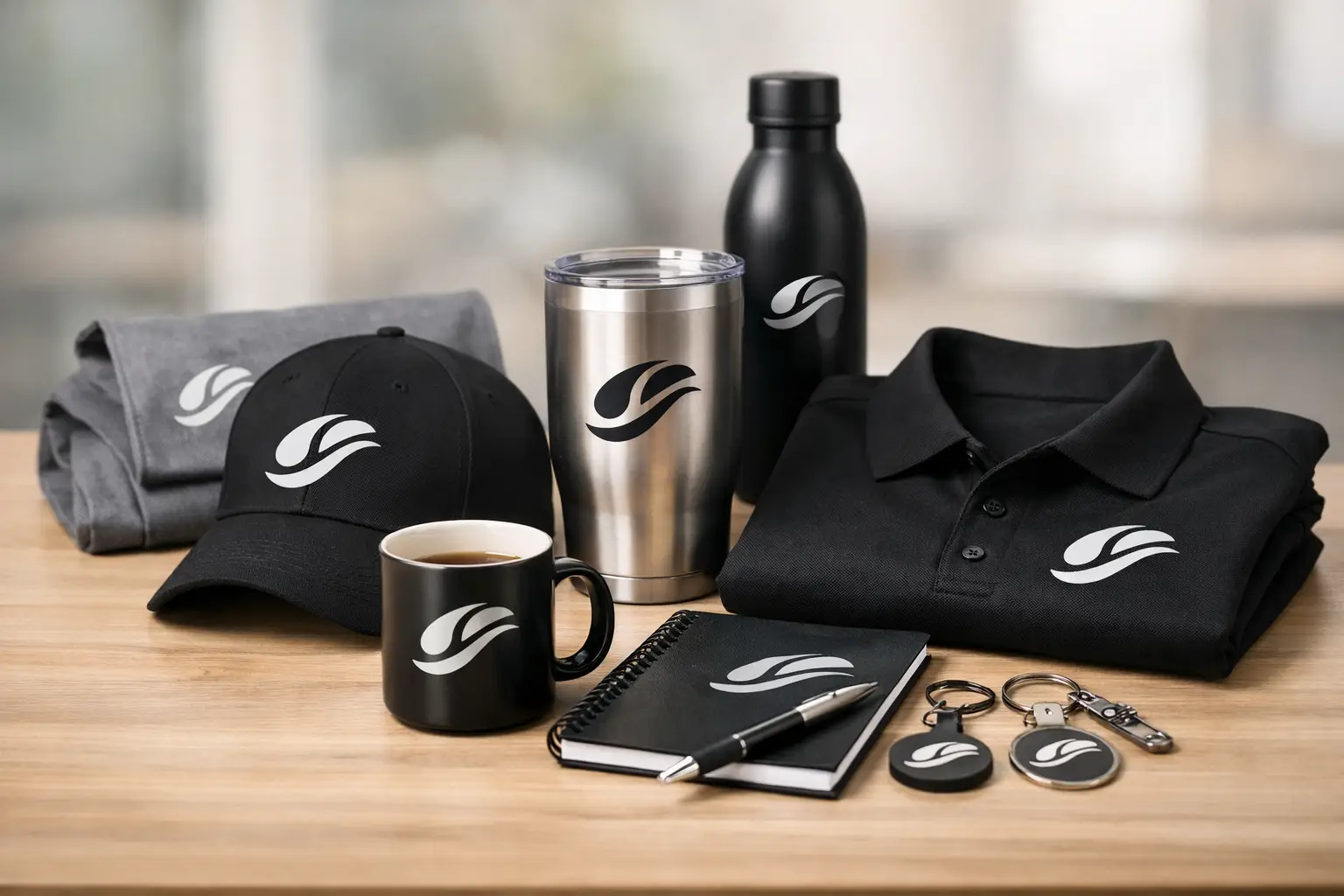
For employees, comfort and usefulness matter more than novelty. Branded polos, outerwear, tees, and hats often make sense because they support daily wear and a consistent look. For corporate events, branded drinkware, tote bags, notebooks, and lanyards can work well because they are functional on the spot. For recruiting or onboarding, company swag kits can be a smart option if the items feel coordinated and intentional.
Think about where the item will be used. A pen may still be useful in an office setting, but if your audience already gets ten pens at every event, it is harder to stand out. A quality water bottle, cooler bag, or well-fitting quarter-zip may last longer and get seen more often. The trade-off is cost, so volume and purpose need to stay part of the discussion.
Budget matters, but cost per impression matters more
A low unit price does not automatically mean a better buy. If an item gets tossed after a day, it may be more expensive in practice than a product that costs more upfront but stays in use for months.
For business buyers, we usually suggest thinking in terms of value over time. A branded shirt your employees wear every week can put your company in front of hundreds of people. A sturdy tumbler that stays on a client desk can do the same. Those items often outperform cheaper products that never leave a drawer.
That said, there are times when budget-friendly options are exactly right. If you need a large run for an event, awareness campaign, school function, or nonprofit outreach, simpler items can make sense. The key is choosing something affordable that still feels intentional. Cheap-looking merchandise reflects on your company, whether you want it to or not.
Apparel versus promotional products
A lot of companies searching for how to pick logo merchandise are really deciding between branded apparel and hard goods. Both have a place, but they solve different problems.
Apparel is usually the better choice when you want visibility through repeated wear, a more unified team appearance, or a stronger internal brand. Polos, tees, hoodies, jackets, and hats are practical choices for staff, volunteers, and event crews. Apparel does require more planning because you need size breakdowns, garment selection, and the right decoration method.
Promotional products are easier to distribute and often easier to budget in bulk. Drinkware, bags, lanyards, notebooks, and pens can be ideal for conferences, welcome kits, and handouts. They also work well when sizing would slow down the order.
For many businesses, the best answer is a mix. Your employees may need decorated polos or outerwear, while your booth visitors get a branded giveaway item. The order should reflect the job each item is doing.
Choose the right decoration method
The same logo will not perform the same way on every product. This is one of the biggest reasons merchandise orders go sideways.
Screen printing is a strong choice for many apparel orders, especially when you need clean logo placement and consistent color across larger quantities. It works well for company tees, event shirts, and many uniform programs. If exact brand color matters, Pantone color matching can help keep things on target.
Embroidery is often the better fit for polos, hats, jackets, and other apparel where you want a more finished, professional look. It holds up well and gives your logo texture and presence. For offices, service teams, management apparel, and client-facing staff, embroidery is often the safest choice. Thread matching helps keep the branding close to your standards.
DTF and DTG are useful when the garment, artwork, or order needs more flexibility. Detailed graphics, smaller runs, and full-color designs can make these methods a better fit in certain situations. The right method depends on the fabric, logo complexity, placement, and quantity.
This is why it helps to talk through the end use before approving art. A logo that looks fine on a screen may need to be simplified for embroidery or resized for a small promotional item.
Keep the logo usable, not just visible
A bigger logo is not always a better logo. If the imprint area is too crowded or the art does not fit the product, the final result can look forced.
For employee apparel, subtle branding often works better than oversized decoration. A left-chest embroidered logo on a polo or jacket is a standard for a reason. It looks clean, professional, and wearable. For event tees, a larger front or back print may make more sense because visibility is the point.
On promotional items, simplicity usually wins. A clean one-color mark on a pen or a compact logo on a tumbler often looks better than trying to squeeze in a tagline, website, phone number, and full-color art all at once. If the item is small, edit hard.
Order quantities and timelines should shape the plan
A good merchandise plan has to work in the real world. That means your quantities, deadlines, and internal approval process matter.
If your company needs decorated apparel, remember that sizing and garment selection take time. If you are ordering for a team, event staff, or company program, it is smart to finalize counts early. For apparel orders, our minimum is 12 pieces. Standard turnaround is 12 business days from artwork approval, though we often finish sooner. If your event date is close, rush orders may be possible, but it is always better to start before the deadline gets tight.
Promotional products have their own production schedules, and some items move faster than others. If your order includes several product types, plan for artwork approval and coordination upfront. That is especially true if you want multiple items to match visually across an event or campaign.
A small merchandise line usually works better than a big random one
Companies sometimes think more options will make everyone happy. In reality, too many unrelated items can water down the brand and complicate ordering.
A tighter set of merchandise often performs better. For example, a business may choose embroidered polos for staff, printed tees for company events, and a matching drinkware item for client gifts or onboarding kits. That feels intentional. It also makes reordering easier and keeps your brand presentation more consistent over time.
When your merchandise line is built around actual use, not impulse buying, you get better results and fewer leftovers.
What to ask before you approve an order
Before you move ahead, make sure you can answer a few basic questions. Who is this for? Where will it be used? How long do you want it to last? Does the logo fit the product and decoration method? Is this item worth putting your company name on?
If any of those answers are fuzzy, pause and sort them out. Most bad merchandise orders are not caused by the wrong item alone. They happen because no one defined the purpose clearly enough at the start.
The best logo merchandise is not the flashiest thing in the catalog. It is the item that fits your company, your audience, and your budget without creating extra work for your team.
If you need help choosing apparel or promotional products for your company, our team can walk you through garments, decoration methods, timelines, and quantities. We handle screen printing, embroidery, DTF, DTG, and branded promo items, and we can help you build something practical for your team or event. To get a free quote, call (801) 260-0606 or visit affordable-printing.com/request-a-quote/.
Ready to start your order?
GET A FREE QUOTE