_1782777776334-CjnZ693B.png)
June 14, 2026
How to Brand Team Uniforms That Work
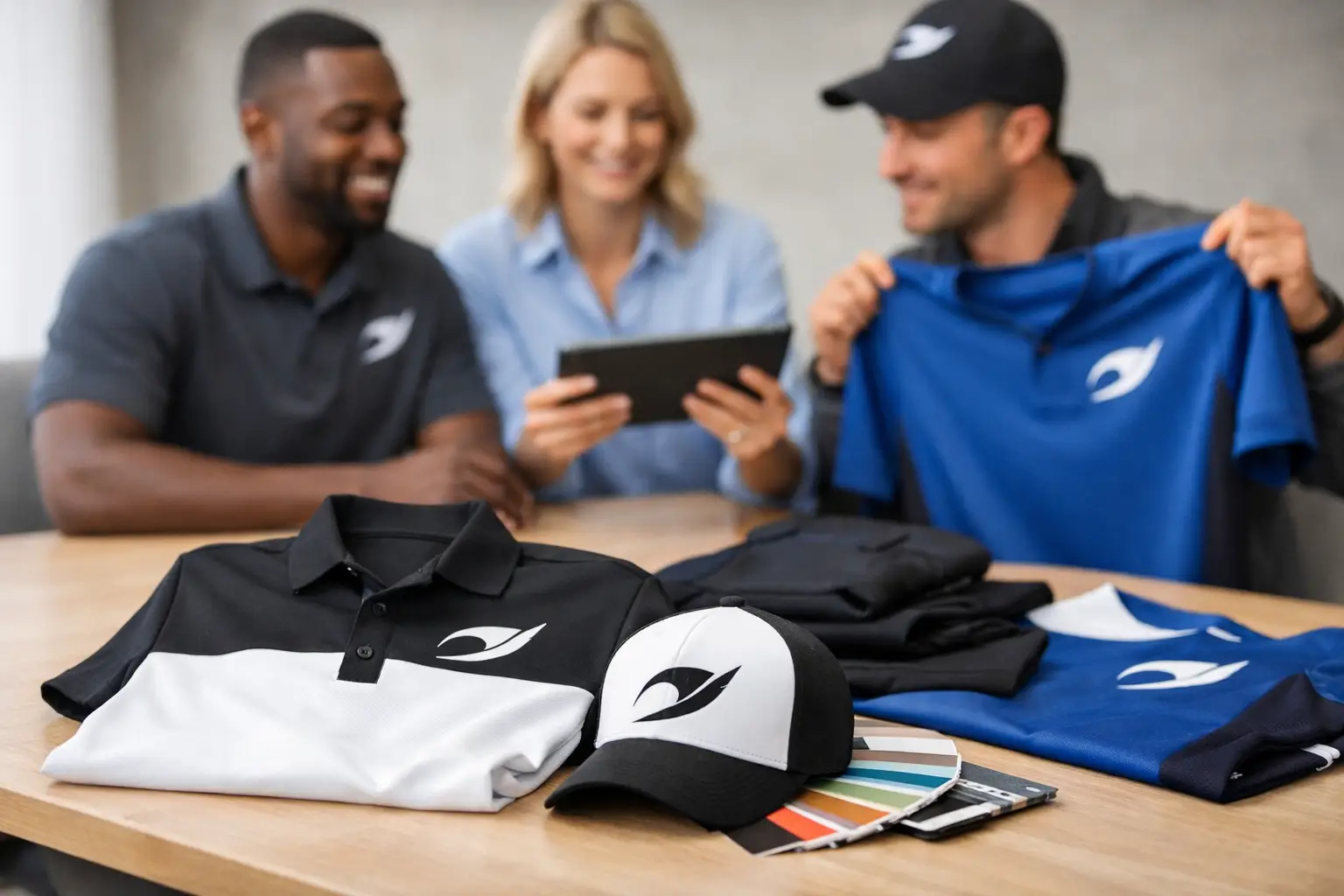
A lot of team uniforms fail for a simple reason - they were picked like swag, not planned like a business tool. The shirt might look good on a mockup, but once your staff wears it on a jobsite, at a trade show, or around Salt Lake City, the problems show up fast. The logo is too small, the fabric wrinkles, the colors miss the mark, or the decoration method does not hold up. If you are figuring out how to brand team uniforms for your company, the goal is not just to put a logo on a shirt. The goal is to make your team look consistent, professional, and easy to recognize.
What good uniform branding actually does
Branded uniforms do more than identify your employees. They shape how customers read your business before anyone says a word. A clean embroidered polo suggests stability and professionalism. A durable printed tee can make sense for warehouse crews, event staff, or field teams. A branded quarter-zip may work better for managers or client-facing staff in cooler months.
That is why uniform branding should start with use, not style. Think about where your team works, what they do all day, and how polished the finished look needs to be. A front office in South Jordan has different needs than a construction crew in Draper or a volunteer team supporting an event in Ogden. The best uniform program fits the job first and carries the brand second.
How to brand team uniforms without wasting budget
Most business buyers are balancing three things at once: appearance, durability, and price. If one of those gets ignored, the order usually disappoints someone. The cheapest shirt may not hold shape after repeated washing. The most premium option may not make sense for a short-term event. And the most decorated version is not always the clearest.
Start by deciding what the uniforms need to accomplish. Are they for daily employee wear, a customer-facing sales team, a company event, or a seasonal program? Once that is clear, you can choose garments and decoration methods that fit the purpose.
For many companies, it also helps to think in tiers. Your office staff may need embroidered polos or button-downs, while your install crew needs printed tees, hoodies, or high-visibility apparel. That still creates a unified brand, but it respects the realities of each role.
Pick garments based on the job
This is where many orders go sideways. Buyers often start with color or price, but fabric, fit, and wear environment matter just as much. If your employees are active, a cotton-heavy shirt may feel too warm or wear out faster. If your team is in front of clients, a basic promo tee may not support the image you want.
Polos are a common choice for business uniforms because they strike a useful middle ground. They are more polished than a T-shirt and more practical than dress wear. T-shirts work well for production teams, event crews, moving companies, schools, and nonprofits. Outerwear makes sense when your team spends time outside or moves between locations. Hats can round out the look, especially when employees are customer-facing and need visibility from a distance.
It also helps to keep reordering in mind. A uniform program works better when the garments are consistent and available, not when every new hire ends up in a slightly different shirt.
Choose logo placement carefully
A bigger logo is not always better. In fact, oversized branding often makes uniforms look less professional, not more. For most business uniforms, a left chest logo is the standard because it is clean, readable, and easy to wear across different garment types. If you need more visibility, a full back print or upper back logo can help, especially for crews working in the field or at events.
Sleeve prints, name personalization, and secondary marks can add value, but only if they serve a purpose. If the design starts feeling crowded, it loses clarity. For business uniforms, simple usually wins.
That is also where color matters. If your brand color is subtle or light, it may need adjustment depending on the garment color and decoration method. A logo that looks sharp on a white digital file may disappear on a gray polo if contrast is too low.
Match the decoration method to the uniform
If you want branded uniforms to hold up, the decoration method matters as much as the garment itself. Different methods solve different problems.
Screen printing is a strong fit for T-shirts, sweatshirts, and larger runs where you want a clean, consistent imprint. It is often the most cost-effective option for team apparel with bold logo placement. We can Pantone match screen printed colors, which is especially useful when your company has established brand standards.
Embroidery is usually the right call for polos, jackets, hats, and higher-end uniform pieces. It gives a more finished, professional look and holds up well over time. Thread matching helps keep the logo close to your brand colors, though embroidery does have limits on tiny detail and very small text.
DTF works well when you need flexibility across different garment types or designs with multiple colors and finer detail. DTG can be a good option for full-color artwork on certain garments, especially when the design is more graphic. The right choice depends on fabric, quantity, artwork, and how the uniform will be used.
The trade-offs are real
No decoration method is best in every situation. Embroidery looks polished, but it may not be ideal for oversized back logos. Screen printing is excellent for many uniform programs, but it is not the right answer for every fabric or every art style. DTF can handle detail well, but some companies still prefer the hand feel and look of traditional screen printing for core staff apparel.
That is why artwork review matters before production starts. A logo may need slight adjustments for stitch count, line weight, or print readability. Good uniform branding is not about forcing the logo onto a garment. It is about adapting it so it works in the real world.
Keep your brand consistent across departments
One of the easiest ways to make uniforms feel disorganized is to let every department choose something completely different. You can still give teams options, but the branding needs a few consistent rules. That might mean using the same logo version, the same shirt colors, or the same decoration placement across all employee apparel.
Consistency does not mean every garment must match exactly. It means the uniforms should clearly belong to the same company. Your warehouse crew might wear printed tees, your sales staff embroidered polos, and your management team branded outerwear. If the colors, logo treatment, and overall standards stay aligned, the result still looks intentional.
This is especially important for companies with multiple locations across the Wasatch Front or teams attending public events. When employees show up in mixed colors, inconsistent logos, or unrelated garment styles, the brand feels less established.
Plan for onboarding, reorders, and real timelines
Branding team uniforms is not a one-time design task. For most companies, it becomes an ongoing process. New hires need apparel. Team sizes change. Seasons change. Event schedules move fast.
That is why it helps to set a uniform standard from the start. Decide which garments are core items, what artwork goes on each piece, and who approves future orders. That saves time and cuts down on mistakes later.
Turnaround matters too. Standard production is typically 12 business days from artwork approval, and many projects are finished sooner, but that timeline still needs to be part of your planning. If your company has a trade show, onboarding date, school program, or corporate event coming up, do not wait until the last minute to figure out sizing, garment selection, and artwork approvals. Rush orders may be possible, but it is always easier and more cost-effective when there is a little room to do the job right.
A smart uniform program feels easy to manage
The best branded uniform programs are not just good-looking. They are practical to reorder, easy for employees to wear, and clear for customers to recognize. That usually comes from asking the right questions early: what the team does, how often the uniforms will be worn, what image the company wants to project, and which decoration method makes sense for the budget.
We have seen this work well for businesses, schools, nonprofits, and event organizers across Salt Lake City and the surrounding area. The strongest results usually come from simple decisions made well - the right garment, the right logo size, the right decoration method, and a clear plan for future orders. If your team needs branded uniforms and you want help sorting through options, call (801) 260-0606 or request a free quote at affordable-printing.com/request-a-quote/.
Ready to start your order?
GET A FREE QUOTE