_1782777776334-CjnZ693B.png)
May 15, 2026
How Long Does Screen Printing Take?
If you are ordering shirts for a fundraiser, company event, school program, or staff rollout, timing matters almost as much as price. One of the first questions buyers ask is how long does screen printing take, and the honest answer is that it depends on the order details, the artwork, and the production schedule.
For most standard orders, screen printing is not a months-long process, but it is also not instant. There is setup work before the first shirt is printed, and that setup is what separates screen printing from faster one-off decoration methods. If you are planning apparel for a deadline, it helps to understand where the time goes and what can speed things up or slow them down.
How long does screen printing take for most orders?
A typical screen printing order usually moves through a few stages: quote and order approval, artwork preparation, screen setup, printing, curing, and final packing. Once everything is approved and the garments are in hand, production itself may be relatively quick for a straightforward job. The larger question is how long the full process takes from request to delivery.
For a standard business or event order, a realistic expectation is often several business days to around two weeks, depending on complexity and shop workload. A simple one-color print on basic tees can move much faster than a multi-location design on several garment styles. If the apparel has to be ordered first, that adds time too.
This is why turnaround is less about the printing press alone and more about the whole production path. Buyers sometimes picture ink going on shirts and assume that is the entire job. In reality, printing is just one part of a larger workflow.
What actually affects screen printing turnaround time?
The biggest factor is order complexity. A simple left-chest logo on one garment style is easier to prepare and run than a six-color design printed on the front and back of multiple apparel types. Every added variable creates more setup, more approvals, and more production handling.
Artwork quality also matters. If your file is print-ready, colors are clearly defined, and sizing is approved quickly, the job can move forward with fewer stops. If the art needs cleanup, color separation, sizing adjustments, or design changes after proofing, the timeline stretches.
Garment availability is another common issue. If your chosen shirt, hoodie, or tote is in stock and ready to source, the order can proceed faster. If inventory is limited, if substitutions are needed, or if multiple sizes and colors are split across suppliers, your production window can shift before printing even begins.
Then there is shop scheduling. Production shops plan runs around current capacity, equipment availability, and other approved jobs already in line. Even a simple order may not start the same day it is approved if the production calendar is full.
Why setup time matters in screen printing
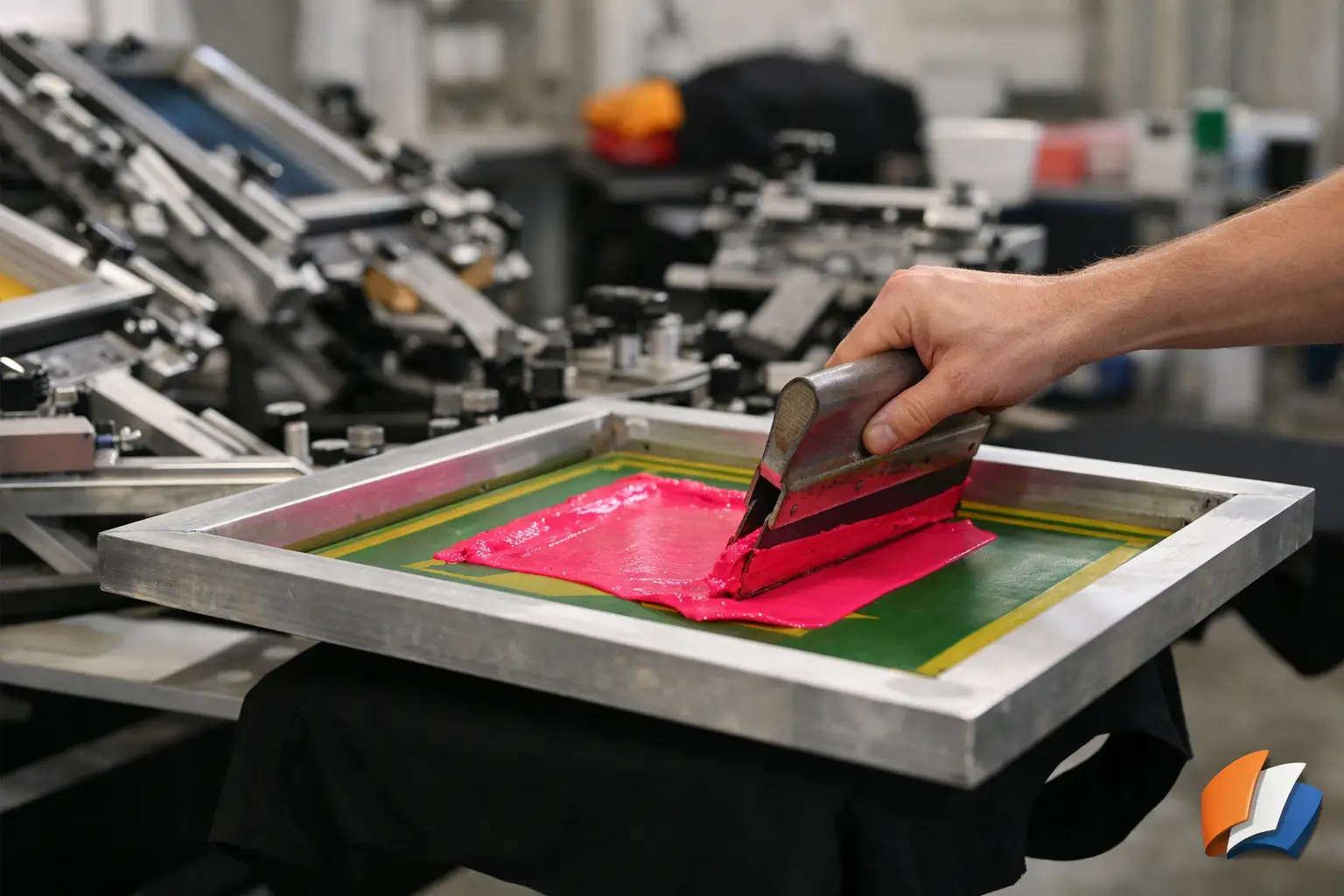
Screen printing works best when the design and quantity justify the setup. Before printing starts, each ink color in the design usually requires its own screen. Those screens have to be prepared, aligned, and tested so the print lands correctly on the garment.
That means a one-color design is usually quicker to set up than a four-color design. A front-only print is simpler than front and back placement. Specialty inks or oversized prints may require even more production attention.
This setup stage is one reason screen printing is often a strong choice for larger runs. Once the job is dialed in, production becomes efficient and consistent. But the initial setup is real labor, and it affects turnaround.
How long does screen printing take after artwork is approved?
After approval, the timeline becomes easier to predict because one major source of delay is removed. If garments are already available and the order is fully approved, a standard job may move through production in a matter of business days rather than dragging out over weeks.
Still, approved art does not mean instant printing. The shop may still need to prepare screens, schedule the run, print samples if needed, complete quality checks, cure the ink properly, and pack the order. For larger runs, production can take longer simply because there are more pieces to print and inspect.
If your deadline is tied to an event date, staff onboarding, or campaign launch, the safest move is to approve proofs quickly and avoid late-stage changes. Small revisions after approval can create bigger delays than many buyers expect.
Simple jobs vs. complex jobs
A straightforward screen print order usually includes one garment type, one or two print locations, limited ink colors, and clean artwork. These jobs are easier to price, prep, and run. They also tend to move faster through production because there are fewer decisions and fewer chances for error.
Complex jobs take longer for good reason. A larger order with multiple shirt colors, specialty placements, custom ink matching, or several departments ordering under one project often needs more coordination. The print shop may need to organize garments by style and size, change platens, adjust placement, and manage multiple production steps.
Neither type of order is wrong. The key is setting the right timeline based on the real scope of the project.
What can slow a screen printing order down?
The most common delay is not printing. It is waiting. Waiting on artwork, waiting on proof approval, waiting on garment confirmation, or waiting on final order details. If the customer is still deciding between shirt options, changing quantities, or updating the design, the production clock has not really started.
Another issue is unclear project information. If a buyer asks for a turnaround estimate without confirming garment style, quantity, print size, or number of colors, any timeline given is only a rough guess. The more complete the information, the more accurate the schedule.
Seasonality matters too. Schools, nonprofits, summer events, company initiatives, and holiday promotions create demand spikes. During busy periods, print schedules fill up faster. Planning ahead makes a real difference.
How to get your order done faster
If timing is tight, the best thing you can do is simplify. Choose one garment style, keep the design clean, limit print locations, and have your quantities ready. That gives the printer fewer variables to manage.
It also helps to submit usable artwork from the start. Vector files or high-quality print files reduce back-and-forth. Fast proof approval matters just as much. A job can move quickly only when decisions are final.
If you are ordering for an event, build in buffer time. Apparel projects often connect to larger moving parts like staffing, registration, shipping coordination, or event setup. Giving yourself extra room protects the whole project, not just the shirts.
When screen printing is the right choice for your timeline
Screen printing is often the right fit when you need consistent branding across a solid quantity of apparel and want a cost-effective method for larger runs. It is especially practical for company shirts, school spirit wear, fundraiser apparel, volunteer tees, and event merchandise.
If your order is highly detailed, photographic, or very small in quantity, another decoration method may be worth considering depending on the project. The right choice is not only about speed. It is about balancing timeline, budget, design needs, and order size.
That is why many organizations prefer working with a supplier that offers more than one decoration method. If screen printing is the best fit, great. If another process better matches the deadline or artwork, you have options without starting over with a different vendor.
Planning around a real deadline
If your event is on a Friday, do not plan backward as if printing happens in a single step. Plan for approvals, sourcing, production, and pickup or delivery. A good deadline is not the day you need the shirts in hand. It is the day the order needs to be finalized so production can happen without pressure.
For buyers in Salt Lake City and surrounding areas, that often matters for school calendars, community events, seasonal campaigns, and business promotions where dates are fixed and missing them reduces the value of the order. The earlier the planning starts, the more flexibility you have on garment choice, design, and budget.
If you are asking how long does screen printing take, the better question is often how soon can the order be fully approved and ready to produce. Once that part is clear, the timeline becomes much easier to manage. The smartest apparel orders are not rushed at the last minute - they are planned early enough to give you good options and a better result.
Ready to start your order?
GET A FREE QUOTE