_1782777776334-CjnZ693B.png)
May 8, 2026
Heat Transfer vs Screen Printing
A left-chest logo for a staff uniform, a full-front graphic for a fundraiser, and a short-run event shirt do not all need the same decoration method. That is where heat transfer vs screen printing becomes a practical buying decision, not just a production detail. The right choice affects your budget, how the print feels, how long it lasts, and how well your design works on the garment.
If you are ordering apparel for a business, school, nonprofit, or event, it helps to look at these methods through a simple lens: what are you printing, how many pieces do you need, and what matters most - cost, speed, detail, or durability? Both methods can produce strong results. The better option depends on the job.
Heat transfer vs screen printing: the core difference
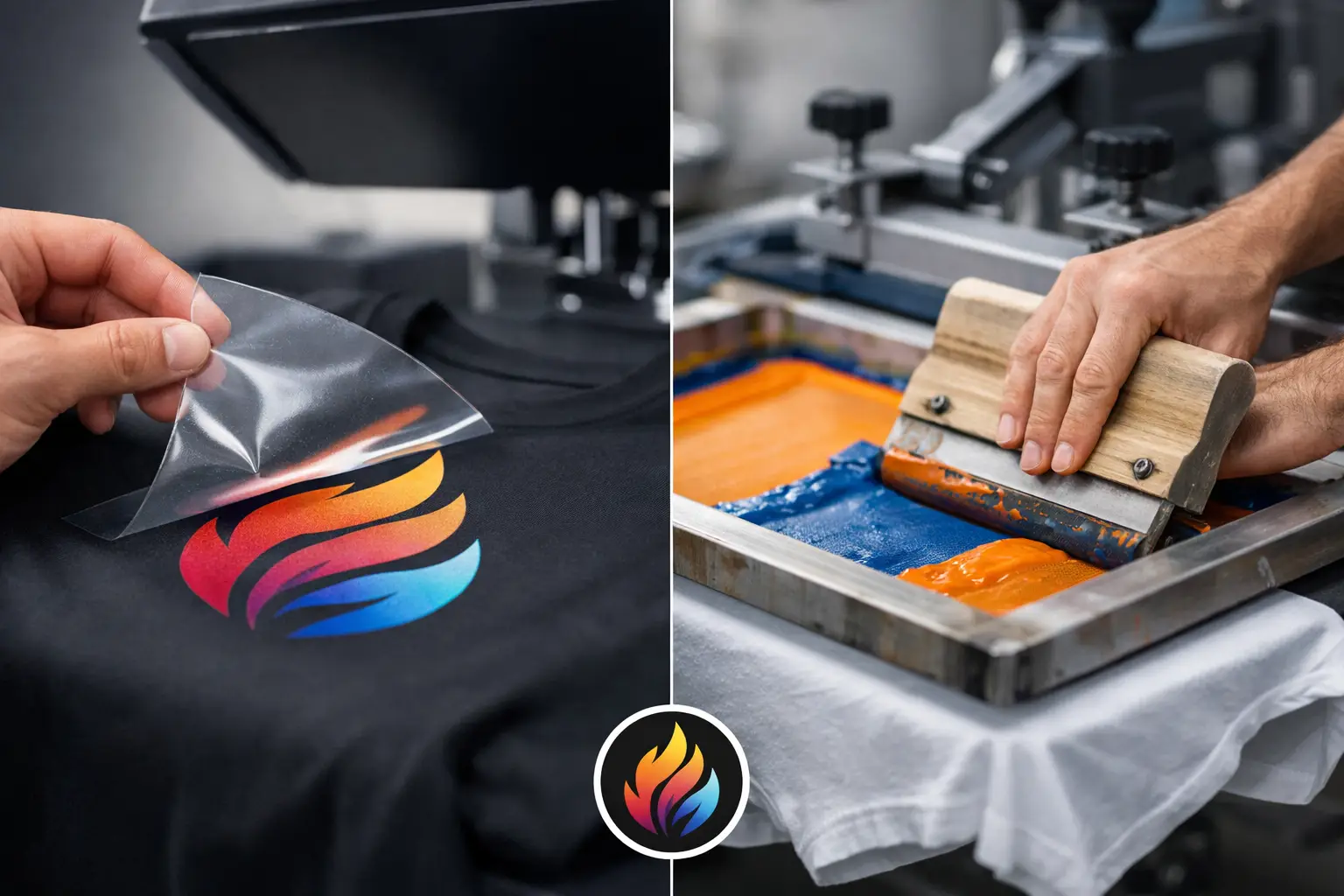
Heat transfer applies a design to a garment using heat and pressure. The artwork is typically printed or cut onto a transfer material first, then pressed onto the shirt, hoodie, bag, or other item. Depending on the transfer type, this can be a good fit for detailed graphics, names and numbers, and shorter runs.
Screen printing pushes ink through a mesh screen and directly onto the garment. Each color usually requires its own screen, which means setup is more involved at the front end. Once production is running, though, screen printing becomes very efficient for larger quantities and simple to moderately complex designs.
That difference in process drives most of the real-world trade-offs. Heat transfer is often more flexible for smaller or more customized orders. Screen printing usually delivers stronger value when you need volume, consistency, and a classic printed look.
When heat transfer makes more sense
Heat transfer is often the better fit when customization is part of the order. If every shirt needs a different name, number, title, or department label, transfers make that easier to manage without rebuilding a whole print setup for each variation.
It also works well for designs with fine detail, small text, or multicolor artwork that would be more expensive or less efficient to separate for screen printing. For some event shirts, staff apparel, or promotional pieces where the quantity is limited, heat transfer can keep the project practical.
Another advantage is placement flexibility. Heat transfers can be useful for smaller print locations like left chest marks, sleeve prints, hat panels, and branded add-ons where precision matters. For organizations ordering a mix of garments and accessories, that can simplify decorating across different product types.
That said, not every heat transfer feels or wears the same. Some have a smoother, more noticeable surface on top of the garment. Others are softer and more integrated. The result depends on the transfer method, the fabric, and how the item will be used.
When screen printing is the better investment
For many apparel orders, screen printing remains the standard because it performs well where buyers care most: cost per shirt at quantity, durability, and visual consistency. If you are ordering shirts for a company program, school spirit wear, volunteer teams, or a large community event, screen printing is often the strongest value.
Once screens are set up, the process is efficient. That setup cost gets spread across the run, which is why larger quantities tend to favor screen printing. A one-color or two-color design on dozens or hundreds of shirts is usually where it shines.
Screen printing also produces a familiar finished look that many buyers prefer for branded apparel. The print can feel soft or more substantial depending on the ink and garment, but overall it has the proven wearability people expect from printed T-shirts and sweatshirts.
If your design is straightforward and you need dependable results across a lot of pieces, screen printing is usually the cleaner answer.
Cost depends on quantity and design
This is where many buyers get tripped up. They ask which method is cheaper as if there is one permanent answer. There is not.
Heat transfer can be more cost-effective for short runs, especially when the order includes variable data like individual names or numbers. It can also make sense for highly detailed, full-color graphics in limited quantities because you avoid the screen setup tied to each ink color.
Screen printing often wins on price as quantity increases. If the same logo or design is going on a larger batch of garments, setup becomes less of a factor per piece. The simpler the design, the more attractive the economics usually get.
So if you are comparing quotes, do not just compare the total. Compare the job itself. A 24-piece staff order with individual names is a different production problem than 300 event shirts with one front print. The right process is the one that keeps the project efficient without forcing you to compromise the design or overspend on setup.
Print feel and appearance matter more than people think
Buyers often focus on price first, then start caring about feel after the order is delivered. That is backward. How the print sits on the garment affects how people wear it, keep it, and remember your brand.
Screen printing typically gives you a more traditional printed appearance. On many garments, the ink becomes part of the shirt visually and physically in a way customers recognize right away. For team shirts, company apparel, and event merch, that can be exactly what you want.
Heat transfer can create a sharper edge and cleaner detail, especially on small or intricate graphics. But some transfer applications leave a more defined layer on top of the fabric. That is not always a negative. For athletic numbering, logo applications, and specialty placements, it can be the right look. The key is matching the print style to the use case instead of assuming one finish is always better.
Durability is about method, garment, and use
A common question in the heat transfer vs screen printing conversation is which one lasts longer. In broad terms, screen printing has a reputation for long-term durability, especially on standard cotton and cotton-blend apparel used for repeated wear and washing.
Heat transfer durability can also be strong, but it varies more depending on the transfer type, how well it is applied, and how the garment is cared for. Some transfer applications hold up very well for business uniforms, athletic wear, and promotional apparel. Others are better suited for lighter-duty use.
The real question is not just which method lasts longer in theory. It is how the garment will actually be used. A shirt for warehouse staff, a one-day event tee, and a booster club fundraiser do not all have the same wear cycle. Matching the decoration method to that reality usually leads to the best outcome.
Design complexity changes the decision
Design is one of the biggest factors in method selection. If your artwork is bold, limited in color, and sized for standard print areas, screen printing is often an efficient fit. Logos, slogans, school graphics, and event branding frequently fall into this category.
If your design includes photo-style elements, very small text, or multiple color transitions, heat transfer may be more practical for certain order sizes. It can reduce the complications tied to separating and setting up multiple screens, especially when the quantity does not justify that extra production work.
This is also where buyers should think about brand consistency. If you are applying the same logo across shirts, outerwear, bags, and other promotional items, the production method should support a consistent appearance across product types, not just on one garment.
Choosing the right method for your project
The fastest way to make the right decision is to start with the business goal, not the print method. Ask what the apparel is supposed to do. Is it for daily employee wear, event visibility, fundraising, school spirit, or team identification? Then look at quantity, artwork, garment type, and how much customization the order requires.
If the order is larger, the design is fairly simple, and long-term wear matters, screen printing is often the stronger option. If the order is smaller, includes variable names or numbers, or uses artwork with finer detail, heat transfer may be the better fit.
For many organizations, the smartest move is not choosing one method for everything. It is using the right method for each item in the program. A company might use screen printing for core staff T-shirts, heat transfer for personalized athletic jerseys, and embroidery for polos and hats. That is often the most cost-effective way to build a branded apparel package that actually fits how the items will be used.
At Affordable-Printing, that is usually how projects get evaluated - by the end use, the artwork, and the budget, not by pushing one decoration method on every order. When you match the production method to the purpose, the apparel performs better and the spend makes more sense.
If you are deciding between heat transfer and screen printing, the best choice is usually the one that makes your design easier to produce, your budget easier to manage, and your branded apparel more useful once it is out in the real world.
Ready to start your order?
GET A FREE QUOTE