_1782777776334-CjnZ693B.png)
June 18, 2026
Corporate Apparel Ordering Guide for Teams
If your company needs polos for a sales team, jackets for field staff, or event shirts for a corporate program, the hard part usually is not picking a logo. It is figuring out what to order, how many to buy, which decoration method fits the job, and how to avoid delays. A good corporate apparel ordering guide should make those decisions simpler, especially for business buyers in Salt Lake City and across the Wasatch Front who need the order done right the first time.
Most apparel problems start with a vague plan. Someone says, "We need branded shirts," but nobody has settled the budget, the use case, or who will wear them. That leads to wrong garment choices, size issues, or decoration that looks fine on screen but not on the actual product. For your company, the best results come from making a few key decisions early.
Start your corporate apparel ordering guide with the job the apparel needs to do
Before you think about ink colors or thread, define the purpose. Apparel for a trade show booth is different from apparel for warehouse staff, office employees, restaurant teams, or a nonprofit volunteer group. If your employees will wear the garments every week, comfort, durability, and easy reordering matter more than a trendy style. If the order is for a one-time event, budget and fast distribution may matter more.
It also helps to decide whether the apparel is meant to look uniform or flexible. Some companies want every employee in the same polo in the same color. Others want a broader program, such as T-shirts for setup crews, quarter-zips for managers, and hats for outdoor staff. Neither approach is wrong. It depends on how formal your brand needs to look and how the apparel will be used in the real world.
When we talk with business clients in South Jordan, Salt Lake City, and nearby areas, this is usually the first place we start. Clear use cases lead to better garment choices and fewer surprises later.
Pick the garment before you pick the print method
A lot of buyers go straight to decoration, but the blank garment does most of the work. The fabric, fit, color, and price point affect the final result just as much as the logo application.
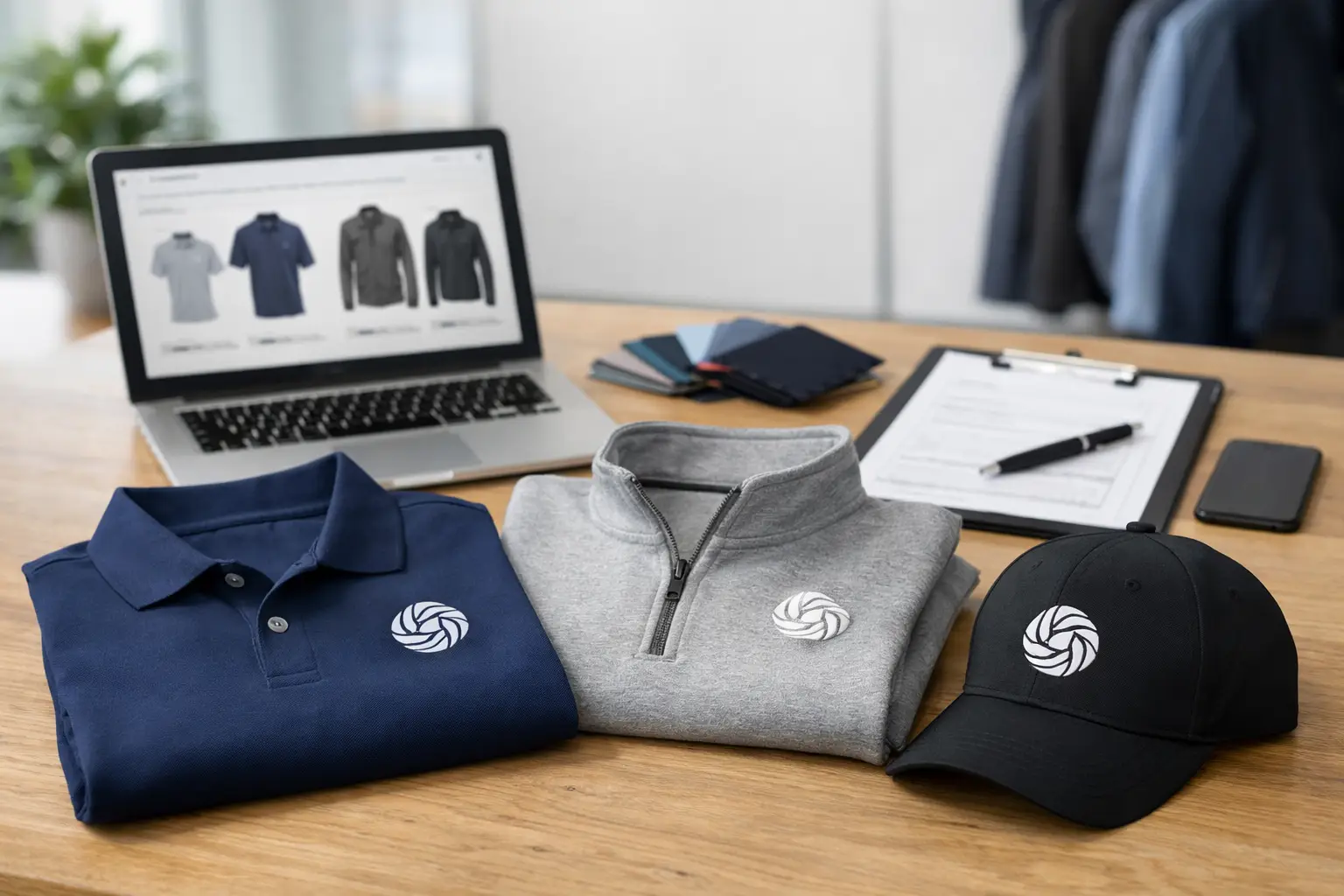
For team uniforms, polos and button-down work shirts are common because they look professional and hold up well. For company events, cotton or cotton-blend T-shirts often make more sense because they are cost effective and easy to size across a large group. For employee gifts or premium branding, outerwear, fleece, and performance layers can be worth the higher spend if people will actually wear them after the event.
This is also where budget gets real. A cheap shirt can reduce your upfront cost, but if the fit is poor or the fabric feels thin, your employees may stop wearing it. On the other hand, going too premium for a short-term event can tie up budget that might be better spent on more pieces or added branded items. There is always a trade-off between price, appearance, and longevity.
In many cases, it is more cost effective to have the garments supplied as part of the order rather than sourcing them separately. It also reduces headaches if there is an inventory issue, decoration concern, or replacement need.
Choose the right decoration method
No corporate apparel ordering guide is complete without talking about decoration, because the right method depends on the garment, artwork, and quantity.
Screen printing
Screen printing is a strong choice for larger runs, especially on T-shirts and similar garments. It gives you a clean, durable print and works well when your company logo uses solid colors. If brand consistency matters, Pantone color matching is a major advantage. For many event shirts, staff shirts, and team apparel programs, screen printing gives the best balance of quality and value.
The trade-off is setup. It is usually best suited for orders where the quantity justifies the process. If you need multiple names, small runs of mixed artwork, or highly variable designs, another method may fit better.
Embroidery
Embroidery is often the right choice for polos, jackets, hats, and other apparel where you want a more polished look. It holds up well, looks professional for client-facing teams, and gives your logo dimension. Thread matching is especially useful when your brand colors need to stay consistent.
The limitation is detail and placement. Very small text or highly intricate artwork may need adjustment to stitch cleanly. Embroidery also adds more structure, so it is not always the best fit for lightweight garments.
DTF and DTG
DTF and DTG are useful when the artwork is more detailed, has gradients, or does not fit the standard screen printing setup. They can be a smart option for full-color graphics, smaller programs, or projects where flexibility matters.
These methods are not automatically better or worse than screen printing or embroidery. They solve different problems. The right choice depends on the fabric, logo style, and order size.
Get quantities and sizes right the first time
This is where business orders often get expensive. Underordering means a second run, which can cost more per piece and create inconsistencies if garments are no longer available. Overordering ties up budget and leaves your company with boxes of unworn sizes.
Start with a real headcount, not a guess. Separate full-time staff, part-time staff, event volunteers, and managers if they need different items. Then decide whether the order is for immediate use only or if you want extras for new hires and replacements. If your company has frequent onboarding, ordering a small cushion can save time later.
Size curves matter too. Many buyers underestimate larger sizes or assume everyone wants the same fit. If your team includes men and women across different departments, make sure the size run reflects that. A simple size collection process inside your company prevents waste and awkward last-minute substitutions.
For decorated apparel, our minimum order is 12 pieces. That works well for most company departments, staff uniforms, event teams, and office groups. If your order is close to the minimum, planning carefully matters even more because every piece counts.
Build your timeline backward from the wear date
One of the most useful parts of any corporate apparel ordering guide is timing. If your event is on a Friday, that does not mean you can place the order the week before and hope for the best.
Standard turnaround is 12 business days from artwork approval, and many projects are completed sooner. But artwork approval is its own step. So are garment selection, quoting, and confirming quantities. If multiple people at your company need to sign off, build that into the schedule.
Rush orders are possible in some cases, but they depend on product availability, decoration method, and production capacity at the time. The sooner your team makes decisions, the more options you have.
If your company has a conference, hiring push, seasonal promotion, or employee appreciation event coming up in Ogden, Provo, or anywhere along the Wasatch Front, it is smart to start earlier than you think you need to. That gives room for proofing, size confirmation, and any adjustments before production starts.
Prepare artwork, but do not overcomplicate it
Many business buyers assume they need perfect production files before asking for a quote. That is not usually true. What helps most is having your current logo, any brand color requirements, and a clear idea of where you want the design placed.
If your company has brand standards, send them. If not, a decent logo file and a simple explanation of what the apparel is for will go a long way. A left chest logo on polos, a full front print on event shirts, or an embroidered hat logo each call for a slightly different setup.
This is also where practical guidance matters. Sometimes the logo that works on a website header does not scale well for embroidery. Sometimes a full-color graphic is possible, but a simplified one-color version will look better and cost less. A good apparel partner should explain those trade-offs clearly.
Think beyond the first order
For many companies, the first order is really the start of an apparel program. If your business plans to reorder for new employees, add seasonal items, or build out event kits, consistency matters. That means keeping decoration methods, colors, and garment types aligned enough that future orders still look like your brand.
It also helps to think about whether apparel should connect with your broader promotional products. If your corporate event includes drinkware, bags, lanyards, pens, or other swag, coordinating those items with your apparel can make the whole program feel more organized without making it complicated for your team.
The best ordering process is not the one with the most options. It is the one that gets your company into the right products, with the right decoration, on the right timeline, without wasting budget or creating extra work for your staff.
If you are planning branded apparel for your team, employees, or corporate event, we can help you sort through garment options, decoration methods, quantities, and timing. Request a free quote at affordable-printing.com/request-a-quote/ or call (801) 260-0606 and our team will help you get the order moving.
Ready to start your order?
GET A FREE QUOTE