_1782777776334-CjnZ693B.png)
May 28, 2026
Construction Company Branded Apparel That Works
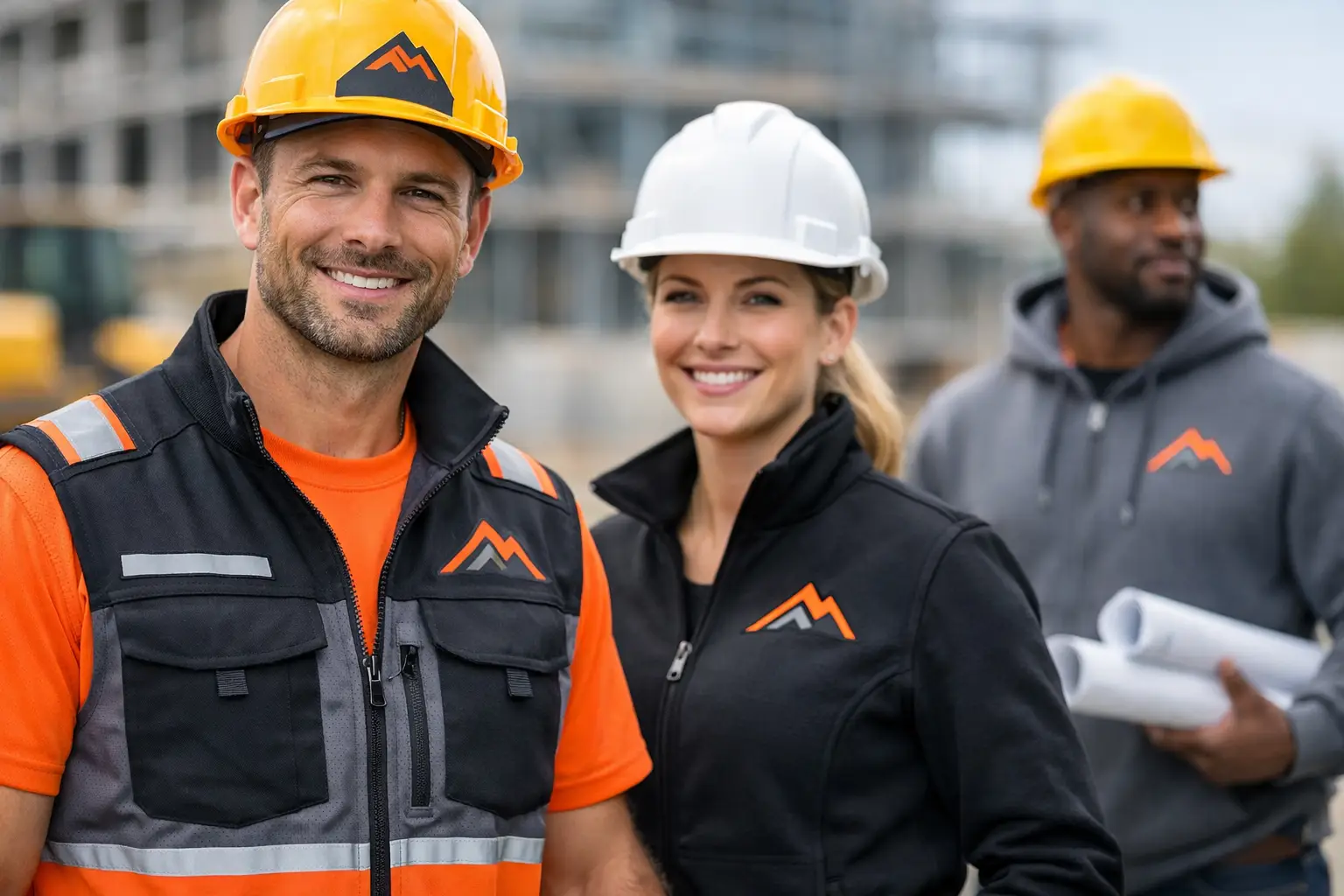
A foreman shows up in a faded T-shirt, a project manager wears a different logo than the field crew, and new hires are left guessing what counts as company gear. It seems minor until clients, inspectors, subcontractors, and your own team all get a different impression of the business. Construction company branded apparel fixes that fast when it is planned around real jobsite use, not just a logo on a shirt.
For construction businesses, branded apparel does more than make people look matched. It helps with identification, reinforces professionalism, supports safety visibility, and keeps your company name in front of customers and prospects. The right program can also make hiring, onboarding, and event prep easier. The wrong one usually wastes budget on gear nobody wants to wear.
Why construction company branded apparel matters
In construction, appearance carries weight. When your team arrives on site in consistent branded gear, it sends a message that the company is organized and established. That matters during client walkthroughs, municipal inspections, trade events, and even routine service calls. People notice whether a crew looks prepared.
There is also a practical side. On active jobsites, quick identification matters. Branded outerwear, polos, tees, and hats help distinguish your team from subcontractors, visitors, and vendors. In office settings, branded apparel gives estimators, sales staff, and project managers a clean, consistent look without forcing a formal dress code that does not fit the industry.
The other reason is simple marketing value. Every truck stop, supplier pickup, lunch break, open house, and community event creates another brand impression. Apparel is not a one-time ad. It keeps working over time, especially when employees actually like wearing it.
What to include in a construction apparel program
A good apparel program usually starts with role-based thinking. Your office staff, field crew, supervisors, and event team do not all need the same garments. Trying to force one item across every role often leads to poor fit, low usage, or unnecessary cost.
For field crews, the basics often include durable T-shirts, long sleeve shirts, hoodies, and outerwear that can handle regular wear. Depending on the work environment, high-visibility options may also make sense. For supervisors and project managers, polos, quarter-zips, and jackets often create a more polished look while still fitting the industry. For recruiting events, trade shows, and customer-facing meetings, branded caps and clean embroidered layers can help round out the presentation.
That mix matters because construction is not a single setting. A framing crew in the summer, a remodel team entering occupied homes, and a leadership team meeting developers all represent the same company in different conditions.
Apparel should fit the work, not just the brand guide
A lot of buyers start with color and logo placement. Those matter, but garment performance usually matters more. If shirts shrink too much, jackets feel stiff, or hoodies are too heavy for the season, people stop wearing them. Then the branding value drops with it.
Think about fabric weight, weather, layering, ease of movement, and how often garments will be washed. Construction apparel gets used hard. The best choice is not always the cheapest unit cost if it wears out quickly or ends up sitting in a truck.
Choosing the right decoration method
The method you use affects cost, durability, appearance, and turnaround. For construction company branded apparel, there is no single best option across every item. It depends on the logo, the garment, and how the apparel will be used.
Screen printing is a strong choice for larger runs of T-shirts, hoodies, and other everyday crew apparel. It is cost-effective at volume and works well for bold, simple branding. If your team needs a stack of standard shirts for regular wear, this is often the most practical place to start.
Embroidery is a smart fit for polos, jackets, hats, and quarter-zips where you want a cleaner, more structured look. It tends to hold up well and gives office staff, supervisors, and customer-facing employees a more finished presentation. It can cost more than print on some items, but the result often fits better for management and sales roles.
DTF and DTG can help when artwork is more detailed, color-heavy, or when garment flexibility matters. These methods can be useful for certain logo applications or smaller mixed apparel needs. The main point is to match the decoration method to the garment and the purpose instead of defaulting to one process for everything.
Durability depends on more than the imprint
Buyers often ask which decoration method lasts longest. That is a fair question, but real durability comes from the full combination of garment quality, artwork placement, wash cycles, and daily wear. A great print on a poor shirt still leads to disappointment. A strong embroidery file on the wrong jacket can also underperform.
That is why it helps to work backward from actual use. Daily field wear has different demands than branded apparel for bid meetings or recruiting events.
Common mistakes that waste budget
The biggest mistake is ordering based on appearance alone. A shirt may look good on a sales sheet and still fail on the job. Construction teams need comfort, function, and consistency. If the apparel does not fit the season or task, reorders become messy and the original spend does not go far.
Another mistake is overloading the design. Front chest logo, full back logo, sleeve print, job title, and sponsor marks can turn useful workwear into something employees avoid outside the site. More branding is not always better branding. Clear and readable usually wins.
Sizing is another issue. If you are ordering for a mixed crew and trying to cover office staff at the same time, size planning matters. It helps to think through who is getting what, how layers fit, and whether certain items run small or large. A poor size range creates waste fast.
Then there is inconsistency. If hats use one logo, shirts use another, and jackets use a third variation with different colors, the company starts to look fragmented. Construction brands benefit from simple standards that can be applied across apparel and promotional items without constant redesign.
How to build a smarter apparel order
Start with use cases. Are you outfitting a crew for daily work, preparing for a hiring push, standardizing manager attire, or getting ready for a customer-facing event? That answer should shape both the garments and the decoration method.
Next, separate must-have items from nice-to-have extras. For many companies, the core order is everyday shirts and outerwear. After that, hats, polos, and event-specific items can fill in the rest. This keeps the budget focused on items that will get regular use.
It also helps to think beyond apparel alone. A construction business may benefit from pairing wearable items with branded promo products for recruiting, safety programs, client gifts, or community events. Keeping apparel and swag coordinated creates a stronger impression than treating each order as a separate project.
If you are managing multiple departments or locations, standardization saves time. A defined set of approved garments, logo placements, and colors makes future orders easier and reduces decision fatigue.
Branded apparel and hiring
Construction hiring is competitive, and presentation plays a role. New hires notice whether the company has a clear system for branded gear. Candidates at job fairs notice which teams look established. Even employee referrals can improve when current staff are wearing gear they are comfortable being seen in off the clock.
This is where practical branding beats flashy branding. Clean logos, wearable garments, and role-appropriate apparel make the company feel more credible. That can support recruiting without turning apparel into a gimmick.
When local production support helps
If your team operates on real deadlines, coordination matters as much as product choice. Construction schedules shift, event dates move, and staffing needs change. Working with a provider that can handle multiple decoration methods and promotional categories in one place simplifies planning. That is especially useful for companies managing branded needs across crew wear, office apparel, and event materials.
For businesses in the greater Salt Lake City area, Affordable-Printing supports that kind of practical ordering by offering screen printing, embroidery, DTG, DTF, and promotional product sourcing under one roof. The benefit is straightforward: fewer handoffs, better consistency, and more flexibility when the order includes more than one type of branded item.
Construction company branded apparel should earn its place
The best construction company branded apparel is not the item with the biggest logo or the highest price tag. It is the gear your team reaches for because it fits the job, looks professional, and holds up over time. When that happens, every shirt, jacket, and hat starts doing two jobs at once - supporting the workday and reinforcing the brand.
If you are planning your next order, think less about buying apparel and more about building a usable system. The right mix can make your company easier to recognize, easier to represent, and easier to trust.
Ready to start your order?
GET A FREE QUOTE