_1782777776334-CjnZ693B.png)
May 21, 2026
Best Trade Show Booth Swag That Gets Kept
The fastest way to waste an event budget is to order trade show booth swag that looks good in a catalog but gets tossed before attendees reach the parking lot. The better approach is simpler. Pick items people will actually use, make sure the branding is clear without being overwhelming, and match the giveaway to the kind of attention you want at your booth.
That sounds obvious, but it is where many event plans break down. A product can be inexpensive and still perform well. It can also be trendy and still miss the mark. Good swag is not just about cost per piece. It is about visibility after the show, how well the item fits your audience, and whether it helps your team start better conversations during the event.
What good trade show booth swag actually does
A useful giveaway does more than fill a bowl on a table. It gives people a reason to stop, something to remember you by, and in the best cases, repeated brand exposure after the event. If someone uses your item at work, in a car, at school, or while traveling, your logo keeps doing its job long after the booth comes down.
That is why practical products usually outperform novelty items. A stress toy might get a quick smile. A solid pen, a tote bag, or a drinkware item may stay in rotation for months. The right choice depends on your audience, but utility tends to win because it extends the life of the impression.
There is also a trade-off between reach and perceived value. Lower-cost items let you hand something to almost everyone. Higher-value items can create stronger interest, but they make more sense when you are targeting qualified prospects rather than general foot traffic. If your team wants lead quality, not just booth volume, the swag strategy should reflect that.
Start with the event goal, not the product
Before choosing colors, imprint methods, or packaging, decide what the giveaway needs to accomplish. Some booths need steady traffic. Others need to support scheduled meetings, product demos, recruiting, donor outreach, or school and community engagement. The same item will not serve all of those goals equally well.
If your priority is booth traffic, fast-grab items work because they reduce hesitation. Pens, stickers, mints, and small handouts can help create movement. If your priority is brand recall, items with longer useful life usually make more sense. Think notebooks, drinkware, bags, or desk accessories. If your priority is premium engagement, a better-quality item can support a more intentional exchange, especially when it is reserved for attendees who complete a demo or speak with your team.
This is where many buyers overspend on the wrong category. They choose based on what they personally like instead of what the booth needs to do. A strong giveaway strategy starts with the outcome and works backward.
The swag categories that tend to work best
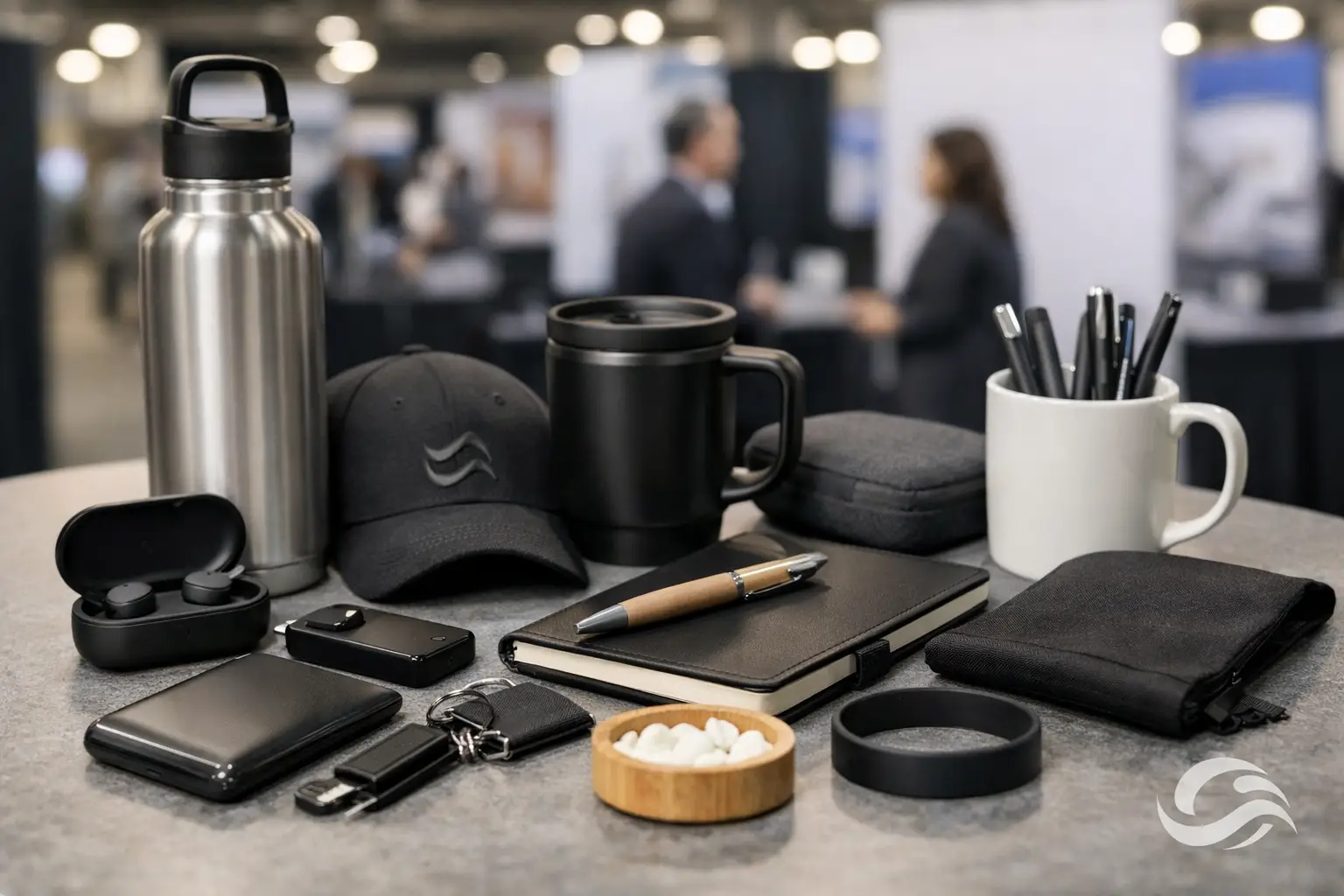
Some product types consistently perform because they are easy to carry, easy to use, and easy to brand. Pens still work for a reason. They are familiar, affordable, and useful in almost any setting. The downside is that they are common, so print quality and barrel style matter more than people think.
Tote bags are another strong option, especially at larger events where attendees collect materials all day. A bag gets immediate use on the show floor, which means your branding starts circulating right away. The trade-off is cost and storage space, so they work best when the audience is broad and the event has enough traffic to justify them.
Drinkware can deliver strong long-term value because people keep and reuse it. Water bottles, tumblers, and travel mugs generally feel more substantial than lower-cost items. They can be highly effective, but only if the print quality is solid and the item itself feels dependable. Cheap drinkware can hurt the brand more than help it.
Notebooks and jotters are reliable for business-focused events, schools, training conferences, and recruiting fairs. They pair well with pens, create a more complete handout, and give your logo a professional setting. Phone accessories, chargers, and tech items can also do well, though the product needs to feel current and functional rather than gimmicky.
Apparel can be smart trade show booth swag too, but usually in more selective use. A giveaway T-shirt can draw attention, especially at community events, campus events, and nonprofit outreach, but sizing and inventory make it more complex. Hats and beanies can work well when the audience is narrow enough that style and fit are less of a guessing game.
What to avoid when choosing trade show booth swag
The biggest mistake is picking products with no real use case. If an item requires effort to use, store, assemble, or carry, people often leave it behind. Bulkier products can also create friction at the booth because attendees have limited bag space and little patience.
Another common issue is over-branding. Your logo should be visible, but the item should still look like something a person wants to keep. Huge imprints, cluttered messaging, and too many colors can make a product feel promotional in the worst way. Clean branding usually gets more repeat use.
It is also easy to ignore audience fit. A giveaway that works at a home services expo may not work at a medical conference, school event, or regional business trade show. If your audience is mostly office professionals, desk and workday items often make more sense than novelty pieces. If the event is outdoors or community-focused, reusable bags, drinkware, and weather-friendly items can be stronger choices.
Timing matters too. Even a great product loses value if it arrives too close to the event to check quality, sort inventory, or build a distribution plan. Good swag decisions are not just about product selection. They depend on production planning, imprint method, and quantity strategy.
Branding choices that improve results
The product gets attention first, but the decoration determines how your brand is remembered. A useful item with poor print placement or weak imprint quality does not perform the way it should. The branding needs to feel intentional.
Keep the design simple. Most swag items have limited imprint space, so prioritize a readable logo or short message rather than trying to include every brand element. If the item is small, clarity matters more than detail. If the item is larger, you have more room to balance logo size with visual appeal.
Color choice also affects usability. A bright item may stand out at the booth, but a more neutral color may get used more often afterward. That is not always an either-or decision. In many cases, a practical base color with a sharp contrasting imprint gives you both visibility and usability.
This is where working with a vendor that handles both custom apparel and promotional products can save time. If your team shirts, table presentation, and giveaway items all share a consistent look, the booth feels more organized and more credible. Affordable-Printing helps organizations manage that kind of brand consistency across apparel and swag without turning the ordering process into a project of its own.
How much should you spend?
There is no perfect number because it depends on attendance, booth goals, and the value of each lead. A company targeting a few high-value prospects may benefit from spending more per item. A school, nonprofit, or community event may need lower per-piece costs to reach more people.
A practical way to think about budget is by tier. One set of items can be available to general booth traffic. Another can be reserved for stronger conversations, scheduled meetings, or specific actions like signing up, booking a follow-up, or attending a demo. That structure helps you control spend without making the booth feel restrictive.
It also helps to be realistic about quantity. Running out early can be frustrating, but overordering event-specific items can leave you with inventory that is hard to reuse. Products with more universal branding and longer shelf life usually give you more flexibility across multiple events.
Matching swag to your audience
The best trade show booth swag feels relevant to the people receiving it. For a corporate audience, think items that fit the workday. For schools and campus events, focus on products students will actually carry or wear. For nonprofits and community organizations, choose giveaways that support visibility without stretching the budget. For recruiting events, younger audiences often respond well to useful tech, drinkware, and casual branded items that do not feel overly sales-driven.
Regional context can matter too. In Utah, where many events blend business networking with community participation and outdoor activity, products like drinkware, bags, outerwear accessories, and everyday carry items often have broader appeal than fragile or purely decorative giveaways. The point is not to over-localize every item. It is to choose products that fit how people actually live and work.
A better way to think about booth giveaways
The right swag is not the item with the lowest price or the flashiest look. It is the one that supports the conversation you want to have and keeps your brand visible after the show. If an item is useful, well branded, and matched to the audience, it keeps working when your booth is gone.
That is the standard worth aiming for. Choose fewer throwaway ideas, put more thought into utility, and treat your giveaways like part of the marketing plan instead of an afterthought.
Ready to start your order?
GET A FREE QUOTE