_1782777776334-CjnZ693B.png)
May 27, 2026
10 best branded products for conferences
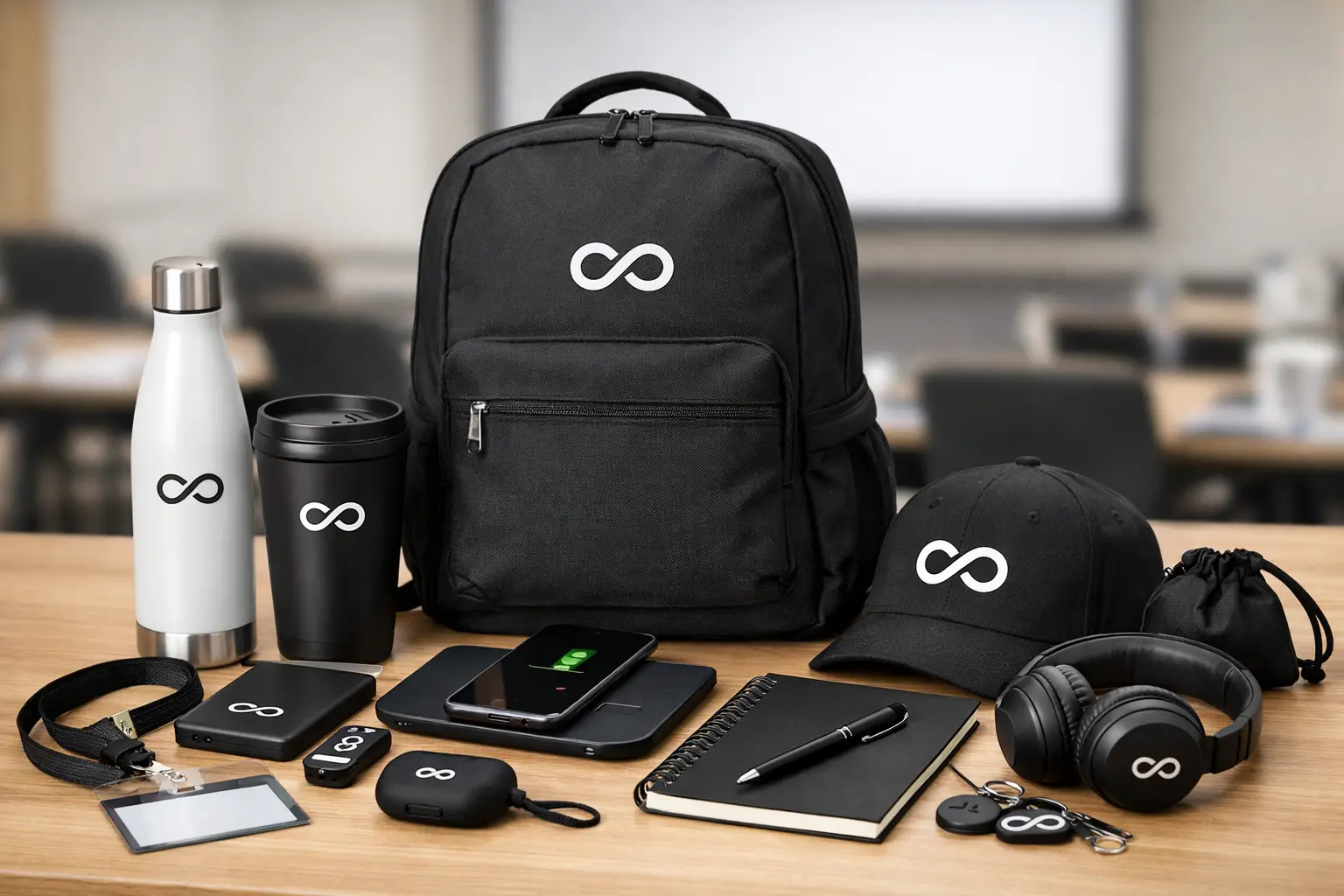
Conference tables fill up fast with forgettable swag. The best branded products for conferences are the ones people actually keep, use, and associate with your business after the event ends. If your goal is more booth traffic, better brand recall, and smarter use of your event budget, product choice matters more than quantity.
A good conference giveaway does three jobs at once. It gets attention in a crowded room, gives attendees something useful, and keeps your logo visible beyond the event. That sounds simple, but not every item can do all three. Some products are cheap but disposable. Others look impressive but cost too much to hand out at scale. The right mix depends on your audience, budget, and what kind of event you are attending.
How to choose the best branded products for conferences
Start with behavior, not the catalog. Ask what attendees will carry all day, use during the event, and bring back to the office or home. A product that fits naturally into that routine usually delivers stronger value than something chosen only because it has a large imprint area.
You also need to think about distribution. Booth handouts, VIP gifts, staff apparel, sponsor bags, and follow-up mailers serve different purposes. A low-cost item can work well for broad reach, while a higher-value piece makes more sense for qualified prospects, speakers, or partners. Most conference programs benefit from a layered approach instead of one single item.
Branding method matters too. Apparel may call for screen printing, embroidery, DTG, or DTF depending on design detail, fabric, and quantity. Promotional products have their own imprint methods and size limits. If your logo has small text, gradients, or multiple colors, that can affect which products look sharp and which do not.
10 best branded products for conferences
1. Tote bags
Tote bags stay near the top of the list because they solve a real problem on the event floor. People collect brochures, samples, notebooks, chargers, and snacks. If your bag is sturdy and easy to carry, it becomes part of their day immediately.
They also offer strong logo visibility because attendees move through the venue with them. The trade-off is that conferences are often flooded with bags, so quality and design matter. A cheap bag with weak handles gets tossed. A clean design on a durable tote has a much longer life.
2. Water bottles and tumblers
Drinkware performs well because it combines utility with repeat exposure. At conferences, attendees are often moving between sessions and want a bottle or tumbler they can use right away. After the event, it can stay on a desk, in a car, or in a gym bag.
This category works especially well for brands that want a more premium feel without jumping to a very high price point. The main consideration is budget. Basic bottles can support wider distribution, while insulated tumblers are better for targeted gifting.
3. Notebooks
A notebook is one of the safest conference choices because it fits almost any audience. Attendees still take notes in sessions, meetings, and workshops, even when they travel with laptops or tablets. A well-branded notebook feels practical instead of promotional.
It also pairs easily with other items. If you are building a conference kit, notebooks work well alongside pens, stickers, folders, or drinkware. The downside is that generic notebooks do not stand out much, so cover material, size, and print quality make a difference.
4. Pens
Pens remain effective because they are inexpensive, easy to distribute, and broadly useful. They are not exciting, but they are dependable. If your conference strategy needs reach, pens still deserve consideration.
That said, not all pens help your brand. A pen that writes poorly or feels flimsy creates the wrong impression. If you go with pens, choose a style people will actually keep in a bag, pocket, or desk drawer. Small upgrades in quality usually pay off here.
5. Lanyards and badge accessories
If the event uses name badges, lanyards are high-visibility products. They are worn throughout the conference, photographed in networking spaces, and seen across the venue. That gives your logo repeated exposure without requiring attendees to make an active choice.
This category is strongest when you have sponsorship visibility or event-level placement. As a standard booth giveaway, it is less universal unless the event format supports it. Badge holders, reels, and accessories can also work for industries where ID use continues back at work.
6. Tech accessories
Phone stands, charging cables, power banks, webcam covers, and cord organizers perform well because conference attendees rely on devices all day. These products feel current and useful, especially for business audiences traveling between meetings and sessions.
The biggest advantage here is relevance. The biggest risk is overcomplicating the item. A simple accessory with everyday use usually outperforms a novelty gadget. If you want your logo connected to convenience and problem-solving, tech accessories are a smart lane.
7. Branded apparel
T-shirts, polos, quarter-zips, and hats are some of the best branded products for conferences when the goal is visibility plus longer-term wear. Apparel works in two ways. It can outfit your own team for a more professional booth presence, and it can serve as a giveaway or incentive for attendees.
For staff, consistency matters more than trendiness. For attendee gifts, comfort and fit matter most. A soft shirt with a design people would actually wear can keep your brand in circulation long after the event. Decoration method matters here, so the right print or embroidery approach should match the garment and artwork.
8. Stickers
Stickers are a low-cost add-on that can increase interaction at the table. People place them on laptops, notebooks, water bottles, and packaging. If the design is clean and the message is short, they can deliver surprisingly long visibility.
They work best as part of a broader mix, not as the only giveaway. For schools, nonprofits, startups, and community events, stickers can be especially effective because they feel casual and easy to share. For a more formal B2B conference, they tend to support the main item rather than carry the campaign.
9. Desk items
Mouse pads, calendars, note cubes, and desk organizers remain useful when your audience works in offices, schools, or administrative settings. These items are not flashy, but they have strong staying power. A desk item can keep your brand in front of someone for months.
This category makes the most sense when long-term visibility matters more than event-floor buzz. It is less about drawing a crowd and more about supporting follow-up recognition. If your sales cycle is longer, that can be a worthwhile trade.
10. Snack packs and consumables
Edible items create immediate engagement. People stop for coffee, mints, candy, or packaged snacks because they are useful in the moment. That can help booth traffic, especially in exhibit halls where attendees are moving quickly.
The limitation is obvious. Once consumed, the item is gone. That means snack packs work best when paired with another product that stays around. Think of them as a traffic booster rather than your only branded investment.
Matching the product to the conference goal
Not every conference requires the same product mix. If your top priority is booth traffic, practical giveaways and consumables can help start conversations. If your focus is lead quality, a better approach may be to reserve higher-value items for demos, meetings, or qualified prospects.
For internal teams attending trade shows, branded apparel often deserves more attention than giveaways. A coordinated look helps people identify your staff quickly and makes the booth feel organized. For sponsors, large-visibility items like bags or lanyards may create more overall impressions than small handouts.
Audience type changes the equation too. School administrators, nonprofit leaders, healthcare teams, construction firms, and tech buyers do not all respond to the same products. A notebook and pen set may work well in one setting, while a tumbler or charging accessory performs better in another. The best choice is usually the item that fits the attendee's real workday.
Budget, quantity, and quality trade-offs
Conference buying often comes down to balance. You can spread budget across a large quantity of simple items, or narrow the audience and increase perceived value. Neither is automatically better. It depends on whether success means more impressions, more conversations, or stronger follow-up with selected prospects.
This is where a one-source partner can help simplify decisions. A company that handles decorated apparel and promotional merchandise can align your team wear, table swag, and giveaway strategy around the same brand standards and budget target. For organizations in the Salt Lake City area managing events across departments or campaigns, that kind of coordination reduces guesswork.
The other practical factor is lead time. The best product on paper is not the best product if it arrives late or forces design compromises. It helps to choose items that fit your timeline, artwork, and event plan from the start rather than chasing a trend that does not match production realities.
A conference is a short window to make a lasting impression. Pick branded products that earn their place in someone's bag, on their desk, or in their routine, and your event budget starts working after the booth comes down.
Ready to start your order?
GET A FREE QUOTE